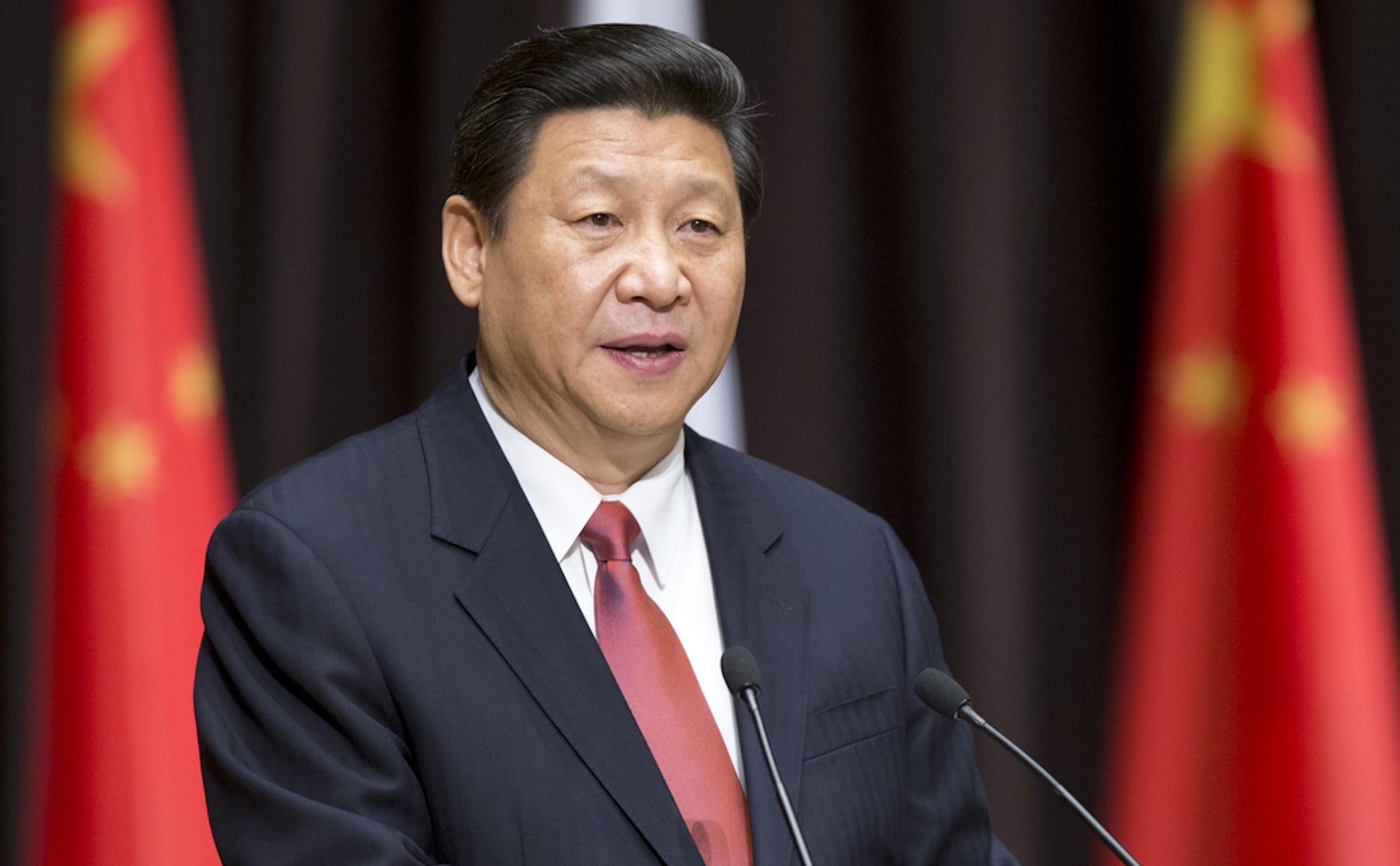

China will send a team to Saudi-hosted Ukraine peace talks, the Chinese foreign ministry said Friday.
Special Representative of the Chinese Government on Eurasian Affairs Li Hui will join leaders and representatives from more than 40 countries in Jeddah for a meeting on a possible pathway to peace for Ukraine. Dozens of countries, including the U.K., South Africa, Poland, the U.S. and the EU, have confirmed attendance at the talks
“China stands ready to work with the international community to continue to play a constructive role in seeking a political settlement of the Ukraine crisis,” said Foreign Ministry spokesperson Wang Wenbin in a statement.
A longtime ally of Russia, China did not participate in similar peace talks held in Copenhagen earlier in the year. Western diplomats reportedly said Saudi Arabia was picked to host this round of talks partly in hopes of persuading China — which has close ties to Saudi Arabia — to participate.
“It matters what China does. Most of the participants last time around regretted that China did not participate,” said one senior European official involved in preparations for the meeting, who was granted anonymity to speak freely.
Despite some countries showing skepticism at China’s attempt to enter a dialogue on peace in Ukraine, due to its lasting ties with the Kremlin and silence on condemning Putin’s actions, Ukrainian President Volodymyr Zelenskyy has remained open to a dialogue with Beijing. Zelenskyy said this week he sees the gathering as a step on the road toward a global peace summit, which he hopes will be held in the fall.
Russia — which launched a full-scale invasion of Ukraine in February 2022, and continues to pound Ukraine with missile attacks — was not invited to the talks. The Kremlin said it would monitor the meeting.

Rachel Reeves confirmed the move in Washington. Rachel Reeves has unveiled plans to spend billions of pounds on the UK’s infrastructure after changing the way…
<img src="https://api.follow.it/track-rss-story-loaded/v1/z2mWviCQXLJq5Bdi14Fb4Hn9ye8UNv30" border=0 width="1" height="1" alt="Split Supreme Court blocks first religious charter school in Oklahoma" title="Split Supreme Court blocks first religious charter school in Oklahoma"> <p>The Supreme Court on Thursday morning left in place a ruling by the Oklahoma Supreme Court rejecting an effort by a Catholic virtual charter school to become the country’s first religious charter school. In an unsigned one-sentence order, the justices indicated that, with Justice Amy Coney Barrett recused from the case, they had divided 4-4. The order did not indicate how any of the justices voted. That tie means the state supreme court’s opinion remains good law, although it is binding only in Oklahoma and does not have nationwide effect. </p> <span id="more-528745"></span> <p>Barrett did not state why she did not participate in the case. But the charter school was represented at the Supreme Court by the religious liberty clinic at Notre Dame’s law school, where Barrett taught for 15 years before becoming a federal judge and later a justice. And Nicole Stelle Garnett, who is a law professor at Notre Dame and a leading advocate for allowing the use of public funds at religious schools, is a close friend of Barrett’s. Barrett is godmother to one of Garnett’s children.</p> <p>The dispute began in 2023, when Oklahoma’s charter school board approved an application by the archdiocese of Oklahoma City and the diocese of Tulsa to create a virtual Catholic charter school, St. Isidore of Seville, named after the patron saint of the internet. The school was intended to be an explicitly religious one that would participate in “the evangelizing mission of the church.” The school’s contract with the charter school board specifically allowed the school to freely exercise its religious beliefs. </p> <p>Gentner Drummond, Oklahoma’s Republican attorney general, went to the state supreme court, asking it to invalidate the charter school board’s contract with St. Isidore. </p> <p>The state supreme court granted that request. Because St. Isidore is a public school, it concluded, state laws require it to be non-sectarian. That mandate, it added, is consistent with both the state and federal constitution, which bar the state from “using public money for the establishment of a religious institution.” </p> <p>The school and the charter school board came to the Supreme Court last fall, asking the justices to take up their case and reverse the state court’s ruling. </p> <p>Since 2017, the justices have sided with parents and religious institutions in three challenges to state policies that barred them from receiving education-related funds that were available for secular, but not religious, recipients. First, they ruled that <a href="https://www.scotusblog.com/2017/06/opinion-analysis-church-prevails-funding-dispute/">Missouri violated the Constitution</a> when it barred a church preschool from a state-run program to resurface its playground. In 2020, they ruled that <a href="https://www.scotusblog.com/cases/case-files/espinoza-v-montana-department-of-revenue/">Montana could not exclude religious schools</a> from a tax-credit program used to provide funding for children to attend private schools. And in 2022, <a href="https://www.scotusblog.com/2022/06/court-strikes-down-maines-ban-on-using-public-funds-at-religious-schools/">they invalidated a Maine policy</a> that allowed public funds to be used to pay tuition at non-sectarian schools but not at religious schools. </p> <p>At the April 30 oral argument, several of the justices – including, critically, Chief Justice John Roberts – suggested that the charter school case was different from the trio of cases in which the court had ruled against the state. Those cases, Roberts suggested, “involved fairly discrete state involvement,” while the state’s involvement in the operation of a Catholic virtual charter school would be “a much more comprehensive involvement.” </p> <p>The justices also seemed concerned about what the impact of a ruling either for or against the state might be. On the one hand, Justice Elena Kagan warned, a ruling for the charter school board might require a state to approve a religious school whose curriculum bears little resemblance to a traditional public school. </p> <p>On the other hand, Justice Brett Kavanaugh expressed concern that upholding the Oklahoma Supreme Court’s opinion could mean that other faith-based services, like Catholic Social Services or Catholic Charities, would also be deemed “government entities” that are unable to exercise their religion. </p> <p>After more than two hours of debate last month, the justices appeared divided. Thursday’s order confirmed that with Barrett not participating, they were unable to find five votes for either outcome. </p>
<p>The post <a href="https://www.scotusblog.com/2025/05/split-supreme-court-blocks-first-religious-charter-school-in-oklahoma/">Split Supreme Court blocks first religious charter school in Oklahoma</a> appeared first on <a href="https://www.scotusblog.com">SCOTUSblog</a>.</p>
<p><img width="150" height="150" src="https://www.scotusblog.com/wp-content/uploads/2024/02/supremecourt3-150x150.jpg" class="attachment-thumbnail size-thumbnail wp-post-image" alt="Supreme Court rules U.S. must pay more for Native American tribes’ health care" title="Supreme Court rules U.S. must pay more for Native American tribes’ health care" style="float:right;" decoding="async" srcset="https://www.scotusblog.com/wp-content/uploads/2024/02/supremecourt3-150x150.jpg 150w, https://www.scotusblog.com/wp-content/uploads/2024/02/supremecourt3-570x570.jpg 570w, https://www.scotusblog.com/wp-content/uploads/2024/02/supremecourt3-500x500.jpg 500w, https://www.scotusblog.com/wp-content/uploads/2024/02/supremecourt3-1000x1000.jpg 1000w" sizes="(max-width: 150px) 100vw, 150px" />The Supreme Court on Thursday ruled that the federal government must provide additional funding to cover some administrative costs incurred by Native American tribes that operate their own health-care programs. By a vote of 5-4, with Justice Neil Gorsuch – perhaps the strongest ally of...</p>
<p>The post <a href="https://www.scotusblog.com/2024/06/supreme-court-rules-u-s-must-pay-more-for-native-american-tribes-health-care/">Supreme Court rules U.S. must pay more for Native American tribes’ health care</a> appeared first on <a href="https://www.scotusblog.com">SCOTUSblog</a>.</p>