


The idea of space-based solar power (SBSP) – using satellites to collect energy from the sun and “beam” it to collection points on Earth – has been around since at least the late 1960s. Despite its huge potential, the concept has not gained sufficient traction due to cost and technological hurdles.
Can some of these problems now be solved? If so, SBSP could become a vital part of the world’s transition away from fossil fuels to green energy.
We already harvest energy from the sun. It’s collected directly through what we generally call solar power. This comprises different technologies such as photovoltaics (PV) and solar-thermal energy. The sun’s energy is also gathered indirectly: wind energy is an example of this, because breezes are generated by uneven heating of the atmosphere by the sun.
But these green forms of power generation have limitations. They take up lots of space on land and are limited by the availability of light and wind. For example, solar farms don’t collect energy at night and gather less of it in winter and on cloudy days.
PV in orbit won’t be limited by the onset of night. A satellite in geostationary orbit (GEO) – a circular orbit around 36,000 km above the Earth – is exposed to the Sun for more than 99% of the time during a whole year. This allows it to produce green energy 24/7.
GEO is ideal for when energy needs to be sent from the spacecraft to an energy collector, or ground station, because satellites here are stationary with respect to the Earth. It’s thought that there’s 100 times more solar power available from GEO, than the estimated global power demands of humanity by 2050.
Transferring energy collected in space to the ground requires wireless power transmission. Using microwaves for this minimises the energy lost in the atmosphere, even through cloudy skies. The microwave beam sent by the satellite will be focused towards the ground station, where antennas convert the electromagnetic waves back into electricity. The ground station will need to have a diameter of 5 km, or more at high latitudes. However, this is still smaller than the areas of land needed to produce the same amount of power using solar or wind.
Evolving concepts
Numerous designs have been proposed since the first concept by Peter Glaser in 1968.
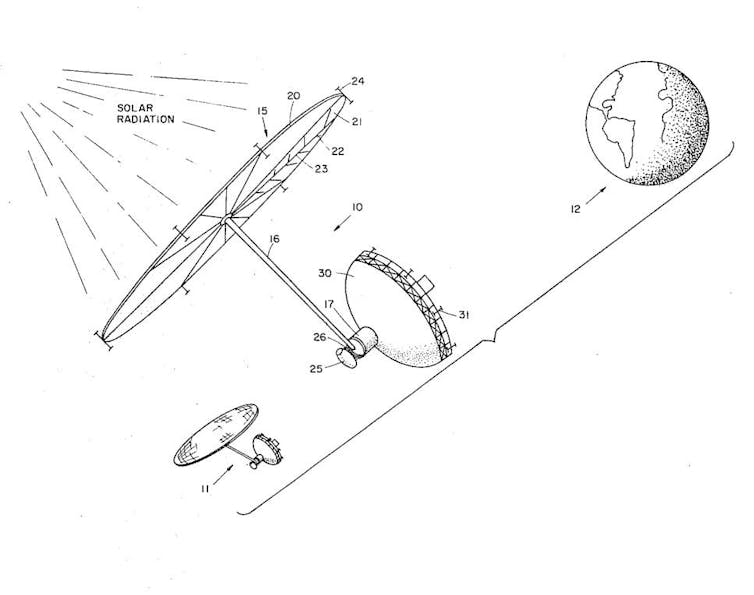
Drawing depicting Peter Glaser’s satellite-based method for converting solar radiation to electrical power.U.S. Patent Office
In SBSP, the energy is converted several times (light to electricity to microwaves to electricity), and some of it is lost as heat. In order to inject 2 gigawatts (GW) of power into the grid, about 10 GW of power will need to be collected by the satellite.
A recent concept called CASSIOPeiA consists of two 2km-wide steerable reflectors. These reflect the sunlight into an array of solar panels. These power transmitters, approximately 1,700 metres in diameter, can be pointed at the ground station. It is estimated that the satellite could have a mass of 2,000 tonnes.
Another architecture, SPS-ALPHA, differs from CASSIOPeiA in that the solar collector is a large structure formed by a huge number of small, modular reflectors called heliostats, each of which can be independently moved. They are mass-produced to reduce cost.

Artistic impression of the SPS-ALPHA concept.NASA/John Mankins
In 2023, scientists at Caltech launched MAPLE, a small-scale satellite experiment which beamed a tiny amount of power back to Caltech. MAPLE proved the technology could be used to deliver power to Earth.
National and international interest
SBSP could play a crucial role to meet the UK’s net-zero target by 2050 – but the government’s current strategy does not include it. An independent study found that SBSP could generate up to 10GW of electricity by 2050, one-quarter of the UK’s current demand. SBSP provides a secure and stable energy supply.
It will also create a multi billion-pound industry, with 143,000 jobs across the country. The European Space Agency is currently evaluating the viability of SBSP with its SOLARIS initiative. This could be followed by a full development plan for the technology by 2025.
Othercountries have recently announced the intention to beam power to Earth by 2025, moving to larger systems within the next two decades.
A massive satellite
If the technology is ready, why is SBSP not being used? The main limit is the enormous amount of mass that needs to be launched into space, and its cost per kilogram. Companies such as SpaceX and Blue Origin are developing heavy-lift launch vehicles, with a focus on reusing parts of those vehicles after they have flown. This can bring the cost of the venture down by 90%.
Even using SpaceX’s Starship vehicle, which can launch 150 tonnes of cargo into low Earth orbit, the SBSP satellite will require hundreds of launches. Some components, such as long structural trusses – structural elements designed to span long distances – could be 3D-printedin space.
Challenges and risks
An SBSP mission will be challenging – and risks need to be still fully assessed. While the electricity produced is fully green, the impact of the pollution from hundreds of heavy-lift launches is difficult to predict.
Additionally, controlling such a large structure in space will require substantial amounts of fuel, which involves engineers working with sometimes very toxic chemicals. The photovoltaic solar panels will be affected by degradation, reducing efficiency over time from 1% to 10% per year. However, servicing and refuellingcould be used to extend the satellite’s lifetime almost indefinitely.
A beam of microwaves powerful enough to reach the ground could also harm anything that got in the way. For safety, then, the power density of the beam will have to be restricted.
The challenge of building platforms like this in space like this may seem daunting, but space-based solar power is technologically feasible. To be economically viable, it requires large-scale engineering, and therefore long-term and decisive commitment from governments and space agencies.
But with all that in place, SBSP could make a fundamental contribution to delivering net zero by 2050 with sustainable, clean energy from space.
Matteo Ceriotti does not work for, consult, own shares in or receive funding from any company or organisation that would benefit from this article, and has disclosed no relevant affiliations beyond their academic appointment.

<img src="https://www.mtlblog.com/media-library/a-man-poses-with-his-back-to-the-camera-in-tokyo-japan-right-aerial-view-over-the-columbus-monument-at-night-in-barcelona-sp.jpg?id=55347610&width=1245&height=700&coordinates=2%2C0%2C3%2C0"/><br/><br/><p>If you're already dreaming of your next vacation and planning travel for 2025, listen up! A new <a href="https://www.mtlblog.com/canada-travel-advisory-december-2024">list of at-risk destinations</a> is highlighting places that are being harmed by over-tourism, and some of these tourist hotspots might already be on your bucket list. </p><p>Every year, the travel experts at Fodor's release <a href="https://www.fodors.com/news/news/fodors-no-list-2025" rel="noopener noreferrer" target="_blank">a "No List,"</a> which shines a light on destinations suffering from untenable popularity. These spots are breathtakingly beautiful and culturally significant—but the very things that make them so appealing are also putting them at risk. </p><p>According to Fodor's No List, a big part of the problem is that governments often focus on making these places more appealing to tourists, sometimes at the expense of local communities. This can lead to skyrocketing costs of living for residents, environmental damage, and even the destruction of the culture and landscapes that made the destination unique in the first place. </p><p>It's worth noting that Fodor's doesn't advocate for boycotting these destinations altogether, as this can hurt local economies and often doesn't actually address the root issues. Instead, the No List is meant to encourage travellers to think twice about their choices and consider the impact of their trips before taking them. </p><p>With that in mind, here's a closer look at the 15 destinations that made <a href="https://www.mtlblog.com/places-you-should-not-visit-2024" target="_self">Fodor's No List</a> for 2025, why they're so popular, and why you should consider skipping them.</p><h3>Bali, Indonesia</h3><br/><blockquote class="instagram-media" data-instgrm-permalink="https://www.instagram.com/p/DBu9eYySBlW/?utm_source=ig_web_copy_link&igsh=MzRlODBiNWFlZA==" data-instgrm-version="4" style="background:#FFF; border:0; border-radius:3px; box-shadow:0 0 1px 0 rgba(0,0,0,0.5),0 1px 10px 0 rgba(0,0,0,0.15); margin: 1px; max-width:658px; padding:0; width:99.375%; width:-webkit-calc(100% - 2px); width:calc(100% - 2px);">
<div style="padding:8px;">
<div style="background:#F8F8F8; line-height:0; margin-top:40px; padding:50% 0; text-align:center; width:100%;">
<div style="background:url(data:image/png;base64,iVBORw0KGgoAAAANSUhEUgAAACwAAAAsCAMAAAApWqozAAAAGFBMVEUiIiI9PT0eHh4gIB4hIBkcHBwcHBwcHBydr+JQAAAACHRSTlMABA4YHyQsM5jtaMwAAADfSURBVDjL7ZVBEgMhCAQBAf//42xcNbpAqakcM0ftUmFAAIBE81IqBJdS3lS6zs3bIpB9WED3YYXFPmHRfT8sgyrCP1x8uEUxLMzNWElFOYCV6mHWWwMzdPEKHlhLw7NWJqkHc4uIZphavDzA2JPzUDsBZziNae2S6owH8xPmX8G7zzgKEOPUoYHvGz1TBCxMkd3kwNVbU0gKHkx+iZILf77IofhrY1nYFnB/lQPb79drWOyJVa/DAvg9B/rLB4cC+Nqgdz/TvBbBnr6GBReqn/nRmDgaQEej7WhonozjF+Y2I/fZou/qAAAAAElFTkSuQmCC); display:block; height:44px; margin:0 auto -44px; position:relative; top:-22px; width:44px;">
</div>
</div>
<p style=" margin:8px 0 0 0; padding:0 4px;">
<a href="https://www.instagram.com/p/DBu9eYySBlW/?utm_source=ig_web_copy_link&igsh=MzRlODBiNWFlZA==" style=" color:#000; font-family:Arial,sans-serif; font-size:14px; font-style:normal; font-weight:normal; line-height:17px; text-decoration:none; word-wrap:break-word;" target="_top">See on Instagram</a>
</p>
</div>
</blockquote><script async="" defer="" src="//platform.instagram.com/en_US/embeds.js"></script><p>Why it's popular: Bali is a tropical paradise known for its lush rice paddies, golden beaches, and vibrant cultural traditions, making it a dream destination for millions of travellers every year.<br/></p><p>Why you should pass: Rapid development and skyrocketing tourism have overwhelmed Bali's natural and cultural heritage, according to the experts who spoke to Fodor's. Beaches are buried in trash, water systems are strained, and waste management is struggling to keep up. Experts warn that without major changes, the island's fragile ecosystems and traditions could disappear entirely.</p><h3>Lisbon, Portugal</h3><br><p>Why it's popular: With its charming cobblestone streets, incredible food, and historic landmarks, it's hardly surprising that Lisbon attracts millions of tourists every year.</p><p>Why you should pass: The housing crisis has hit locals hard—60% of homes are now vacation rentals, and the cost of living has skyrocketed as a result of over-tourism. The city has lost nearly a third of its population in the last decade due to the impact.</p><h3>Mallorca, Spain</h3><br/><p>Why it's popular: This Balearic Island is an affordable Mediterranean paradise known for its sandy beaches, warm weather, and lively party scene.<br/></p><p>Why you should pass: Local people have been protesting against the significant amount of tourists allowed to visit every year, citing overcrowded beaches and rising living costs. The situation has become so tense locals have been seen protesting with signs aimed at tourists reading "your luxury, our misery."</p><h3>Venice, Italy</h3><br><blockquote class="instagram-media" data-instgrm-permalink="https://www.instagram.com/p/DDkFyW1i4Nv/?utm_source=ig_web_copy_link&igsh=MzRlODBiNWFlZA==" data-instgrm-version="4" style="background:#FFF; border:0; border-radius:3px; box-shadow:0 0 1px 0 rgba(0,0,0,0.5),0 1px 10px 0 rgba(0,0,0,0.15); margin: 1px; max-width:658px; padding:0; width:99.375%; width:-webkit-calc(100% - 2px); width:calc(100% - 2px);">
<div style="padding:8px;">
<div style="background:#F8F8F8; line-height:0; margin-top:40px; padding:50% 0; text-align:center; width:100%;">
<div style="background:url(data:image/png;base64,iVBORw0KGgoAAAANSUhEUgAAACwAAAAsCAMAAAApWqozAAAAGFBMVEUiIiI9PT0eHh4gIB4hIBkcHBwcHBwcHBydr+JQAAAACHRSTlMABA4YHyQsM5jtaMwAAADfSURBVDjL7ZVBEgMhCAQBAf//42xcNbpAqakcM0ftUmFAAIBE81IqBJdS3lS6zs3bIpB9WED3YYXFPmHRfT8sgyrCP1x8uEUxLMzNWElFOYCV6mHWWwMzdPEKHlhLw7NWJqkHc4uIZphavDzA2JPzUDsBZziNae2S6owH8xPmX8G7zzgKEOPUoYHvGz1TBCxMkd3kwNVbU0gKHkx+iZILf77IofhrY1nYFnB/lQPb79drWOyJVa/DAvg9B/rLB4cC+Nqgdz/TvBbBnr6GBReqn/nRmDgaQEej7WhonozjF+Y2I/fZou/qAAAAAElFTkSuQmCC); display:block; height:44px; margin:0 auto -44px; position:relative; top:-22px; width:44px;">
</div>
</div>
<p style=" margin:8px 0 0 0; padding:0 4px;">
<a href="https://www.instagram.com/p/DDkFyW1i4Nv/?utm_source=ig_web_copy_link&igsh=MzRlODBiNWFlZA==" style=" color:#000; font-family:Arial,sans-serif; font-size:14px; font-style:normal; font-weight:normal; line-height:17px; text-decoration:none; word-wrap:break-word;" target="_top">See on Instagram</a>
</p>
</div>
</blockquote><script async="" defer="" src="//platform.instagram.com/en_US/embeds.js"></script><p>Why it's popular: Known as the city of romance, Venice's canals, gondolas, and historic beauty make it one of Europe's most famous (and popular) destinations.<br/></p><p>Why you should pass: Despite a new entry fee for day-trippers, locals are still protesting the overwhelming crowds and environmental strain caused by over-tourism, particularly from cruises.</p><h3>The Canary Islands, Spain</h3><br><p>Why it's popular: These volcanic islands boast year-round sunshine, unique landscapes, and an escape from mainland hustle.</p><p>Why you should pass: Tourism accounts for 35% of the local GDP, but residents feel the pressure of overcrowded beaches and unaffordable living costs. Protests reflect growing frustration with unsustainable tourism practices.</p><h3>Barcelona, Spain</h3><br/><p>Why it's popular: Barcelona is an undeniably popular tourist hotspot, famous—particularly across Europe— for its stunning Gaudí architecture, city beaches, and vibrant nightlife.</p><p>Why you should pass: With over 10,000 vacation rentals exponentially driving up housing costs, locals have had enough. Protests against overtourism have become common, and the city's infrastructure is buckling under the pressure. Officials plan to revoke short-term rental licenses, but for some it's too little, too late.</p><h3>Koh Samui, Thailand</h3><br/><blockquote class="instagram-media" data-instgrm-permalink="https://www.instagram.com/p/C4IqO-EMfxD/?utm_source=ig_web_copy_link&igsh=MzRlODBiNWFlZA==" data-instgrm-version="4" style="background:#FFF; border:0; border-radius:3px; box-shadow:0 0 1px 0 rgba(0,0,0,0.5),0 1px 10px 0 rgba(0,0,0,0.15); margin: 1px; max-width:658px; padding:0; width:99.375%; width:-webkit-calc(100% - 2px); width:calc(100% - 2px);">
<div style="padding:8px;">
<div style="background:#F8F8F8; line-height:0; margin-top:40px; padding:50% 0; text-align:center; width:100%;">
<div style="background:url(data:image/png;base64,iVBORw0KGgoAAAANSUhEUgAAACwAAAAsCAMAAAApWqozAAAAGFBMVEUiIiI9PT0eHh4gIB4hIBkcHBwcHBwcHBydr+JQAAAACHRSTlMABA4YHyQsM5jtaMwAAADfSURBVDjL7ZVBEgMhCAQBAf//42xcNbpAqakcM0ftUmFAAIBE81IqBJdS3lS6zs3bIpB9WED3YYXFPmHRfT8sgyrCP1x8uEUxLMzNWElFOYCV6mHWWwMzdPEKHlhLw7NWJqkHc4uIZphavDzA2JPzUDsBZziNae2S6owH8xPmX8G7zzgKEOPUoYHvGz1TBCxMkd3kwNVbU0gKHkx+iZILf77IofhrY1nYFnB/lQPb79drWOyJVa/DAvg9B/rLB4cC+Nqgdz/TvBbBnr6GBReqn/nRmDgaQEej7WhonozjF+Y2I/fZou/qAAAAAElFTkSuQmCC); display:block; height:44px; margin:0 auto -44px; position:relative; top:-22px; width:44px;">
</div>
</div>
<p style=" margin:8px 0 0 0; padding:0 4px;">
<a href="https://www.instagram.com/p/C4IqO-EMfxD/?utm_source=ig_web_copy_link&igsh=MzRlODBiNWFlZA==" style=" color:#000; font-family:Arial,sans-serif; font-size:14px; font-style:normal; font-weight:normal; line-height:17px; text-decoration:none; word-wrap:break-word;" target="_top">See on Instagram</a>
</p>
</div>
</blockquote><script async="" defer="" src="//platform.instagram.com/en_US/embeds.js"></script><p>Why it's popular: This lush island in the Gulf of Thailand is famous for its luxury resorts, stunning beaches, and vibrant nightlife. It's also where numerous famous movies and TV shows have been filmed, including the new season of <em>The White Lotus</em>, set to air in 2025.</p><p>Why you should pass: Koh Samui is struggling with waste management issues, unregulated development, and environmental degradation. With 200,000 tons of trash piling up and fragile ecosystems at risk, experts worry that a surge in <em>The White Lotus</em>-inspired visitors could push the island's resources past their breaking point.</p><h3>Mount Everest, Nepal</h3><br/><p>Why it's popular: Mount Everest, the world's tallest peak, is unsurprisngly a bucket-list destination for millions of travellers across the globe. </p><p>Why you should pass: Overcrowding and waste are taking a serious toll on Everest, according to the experts who spoke to Fodor's. With record numbers of climbers and trekkers, the mountain is buried under trash and human waste. The safety of local guides is also a growing concern, as inexperienced tourists push limits without proper skills.</p><h3>Agrigento, Sicily, Italy</h3><br/><p>Why it's popular: Agrigento is home to the Valley of the Temples, a UNESCO World Heritage site featuring ancient Greek ruins surrounded by breathtaking landscapes. As Italy's 2025 Capital of Culture, it's set to draw even more visitors next year.</p><p>Why you should pass: The city is grappling with a severe water crisis worsened by climate change and aging infrastructure. Residents face water rationing, and hotels are struggling to meet basic needs like running water. Fodor's No List warns that increased tourism could further strain the fragile system and threaten what makes it so special to begin with.</p><h3>British Virgin Islands</h3><br/><blockquote class="instagram-media" data-instgrm-permalink="https://www.instagram.com/p/DCzGjFLxFGX/?utm_source=ig_web_copy_link" data-instgrm-version="4" style="background:#FFF; border:0; border-radius:3px; box-shadow:0 0 1px 0 rgba(0,0,0,0.5),0 1px 10px 0 rgba(0,0,0,0.15); margin: 1px; max-width:658px; padding:0; width:99.375%; width:-webkit-calc(100% - 2px); width:calc(100% - 2px);">
<div style="padding:8px;">
<div style="background:#F8F8F8; line-height:0; margin-top:40px; padding:50% 0; text-align:center; width:100%;">
<div style="background:url(data:image/png;base64,iVBORw0KGgoAAAANSUhEUgAAACwAAAAsCAMAAAApWqozAAAAGFBMVEUiIiI9PT0eHh4gIB4hIBkcHBwcHBwcHBydr+JQAAAACHRSTlMABA4YHyQsM5jtaMwAAADfSURBVDjL7ZVBEgMhCAQBAf//42xcNbpAqakcM0ftUmFAAIBE81IqBJdS3lS6zs3bIpB9WED3YYXFPmHRfT8sgyrCP1x8uEUxLMzNWElFOYCV6mHWWwMzdPEKHlhLw7NWJqkHc4uIZphavDzA2JPzUDsBZziNae2S6owH8xPmX8G7zzgKEOPUoYHvGz1TBCxMkd3kwNVbU0gKHkx+iZILf77IofhrY1nYFnB/lQPb79drWOyJVa/DAvg9B/rLB4cC+Nqgdz/TvBbBnr6GBReqn/nRmDgaQEej7WhonozjF+Y2I/fZou/qAAAAAElFTkSuQmCC); display:block; height:44px; margin:0 auto -44px; position:relative; top:-22px; width:44px;">
</div>
</div>
<p style=" margin:8px 0 0 0; padding:0 4px;">
<a href="https://www.instagram.com/p/DCzGjFLxFGX/?utm_source=ig_web_copy_link" style=" color:#000; font-family:Arial,sans-serif; font-size:14px; font-style:normal; font-weight:normal; line-height:17px; text-decoration:none; word-wrap:break-word;" target="_top">See on Instagram</a>
</p>
</div>
</blockquote><script async="" defer="" src="//platform.instagram.com/en_US/embeds.js"></script><p>Why it's popular: With stunning beaches, crystal-clear waters, and world-class sailing, the British Virgin Islands are a dream destination for luxury travellers all over the world.</p><p>Why you should pass: The heavy focus on cruise tourism is straining local resources but leaving little economic benefit for residents as cruise passengers are reluctant to spend off-board. Meanwhile, inadequate infrastructure and environmental issues, including coral reef damage and slow recovery from past hurricanes, highlight the islands' struggle to balance tourism with sustainability.</p><h3>Kerala, India</h3><br/><p>Why it's popular: Known as "God's Own Country," it's not hard to see why Kerala's palm-lined beaches, serene backwaters, and lush greenery attract so many tourists.</p><p>Why you should pass: Unregulated tourism and overdevelopment have led to landslides, pollution, and shrinking natural landmarks. Houseboat tourism, once eco-friendly, now contributes to severe environmental damage, threatening aquatic life and local livelihoods. The region's increasing disaster risks continue to cause concern among experts and locals alike.</p><h3>Oaxaca, Mexico</h3><br/><p>Why it's popular: Oaxaca is well known for its vibrant Indigenous culture, mezcal distilleries, and world-famous festivals like Día de Muertos and Guelaguetza, set against a backdrop of colonial architecture and natural beauty.</p><p>Why you should pass: Over-tourism is displacing residents and commercializing Oaxaca's cultural heritage. Skyrocketing rents and overrun public services, like water access, are straining local communities. Tourists also often unknowingly disrupt sacred traditions, creating further tension among locals.</p><h3>Kyoto and Tokyo, Japan</h3><br/><blockquote class="instagram-media" data-instgrm-permalink="https://www.instagram.com/p/C5-pAQMIA-h/?utm_source=ig_web_copy_link&igsh=MzRlODBiNWFlZA==" data-instgrm-version="4" style="background:#FFF; border:0; border-radius:3px; box-shadow:0 0 1px 0 rgba(0,0,0,0.5),0 1px 10px 0 rgba(0,0,0,0.15); margin: 1px; max-width:658px; padding:0; width:99.375%; width:-webkit-calc(100% - 2px); width:calc(100% - 2px);">
<div style="padding:8px;">
<div style="background:#F8F8F8; line-height:0; margin-top:40px; padding:50% 0; text-align:center; width:100%;">
<div style="background:url(data:image/png;base64,iVBORw0KGgoAAAANSUhEUgAAACwAAAAsCAMAAAApWqozAAAAGFBMVEUiIiI9PT0eHh4gIB4hIBkcHBwcHBwcHBydr+JQAAAACHRSTlMABA4YHyQsM5jtaMwAAADfSURBVDjL7ZVBEgMhCAQBAf//42xcNbpAqakcM0ftUmFAAIBE81IqBJdS3lS6zs3bIpB9WED3YYXFPmHRfT8sgyrCP1x8uEUxLMzNWElFOYCV6mHWWwMzdPEKHlhLw7NWJqkHc4uIZphavDzA2JPzUDsBZziNae2S6owH8xPmX8G7zzgKEOPUoYHvGz1TBCxMkd3kwNVbU0gKHkx+iZILf77IofhrY1nYFnB/lQPb79drWOyJVa/DAvg9B/rLB4cC+Nqgdz/TvBbBnr6GBReqn/nRmDgaQEej7WhonozjF+Y2I/fZou/qAAAAAElFTkSuQmCC); display:block; height:44px; margin:0 auto -44px; position:relative; top:-22px; width:44px;">
</div>
</div>
<p style=" margin:8px 0 0 0; padding:0 4px;">
<a href="https://www.instagram.com/p/C5-pAQMIA-h/?utm_source=ig_web_copy_link&igsh=MzRlODBiNWFlZA==" style=" color:#000; font-family:Arial,sans-serif; font-size:14px; font-style:normal; font-weight:normal; line-height:17px; text-decoration:none; word-wrap:break-word;" target="_top">See on Instagram</a>
</p>
</div>
</blockquote><script async="" defer="" src="//platform.instagram.com/en_US/embeds.js"></script><p>Why it's popular: Tokyo has been dazzling visitors for decades with its futuristic skyline, rich culture, and world-class cuisine, while Kyoto offers serene temples, historic streets, and traditional geisha districts. Together, they're iconic destinations for any tourists visiting Japan.</p><p>Why you should pass: Overcrowding has led to "tourism pollution," disrupting local life and inflating costs for residents. Kyoto's landmarks, like Fushimi Inari and Nishiki Market, are so packed experts say it's becoming harder to appreciate their charm. Meanwhile, Tokyo faces surging hotel prices and a loss of authentic local experiences due to tourism-focused businesses.</p><p>Over-tourism in these cities has become so extreme that the Japanese tourism board has worked with Japan Airlines to <a href="https://www.narcity.com/canadians-travelling-to-japan-free-flights" rel="noopener noreferrer" target="_blank">offer free internal flights to travellers</a> (including those from Canada) to encourage them to explore regions outside of hotspots like Tokyo, Osaka, and Kyoto.</p><h3>Scotland North Coast 500</h3><br/><p>Why it's popular: This stunning 500-mile loop through Scotland's North Highlands features rugged coastlines, ancient castles, tranquil lochs, and charming villages.</p><p>Why you should pass: The NC500's popularity has led to congested roads, inadequate camping facilities, and environmental damage, with trash and human waste now littering the route. Rising living costs are also displacing locals, and small communities along the route are struggling to handle the influx of visitors.</p></br></br></br><p><em>Before you get going, check out our <a href="https://www.mtlblog.com/responsible-travel-guidelines" target="_blank">Responsible Travel Guide</a> so you can be informed, be safe, be smart, and most of all, be respectful on your trip.</em></p>
China will drop tariffs on 'Unusual' daylight shooting sparks major police response in Cairns https://twitter.com/AlboMP/status/1773254590223327494 He praised a "calm and consistent approach" that he said…