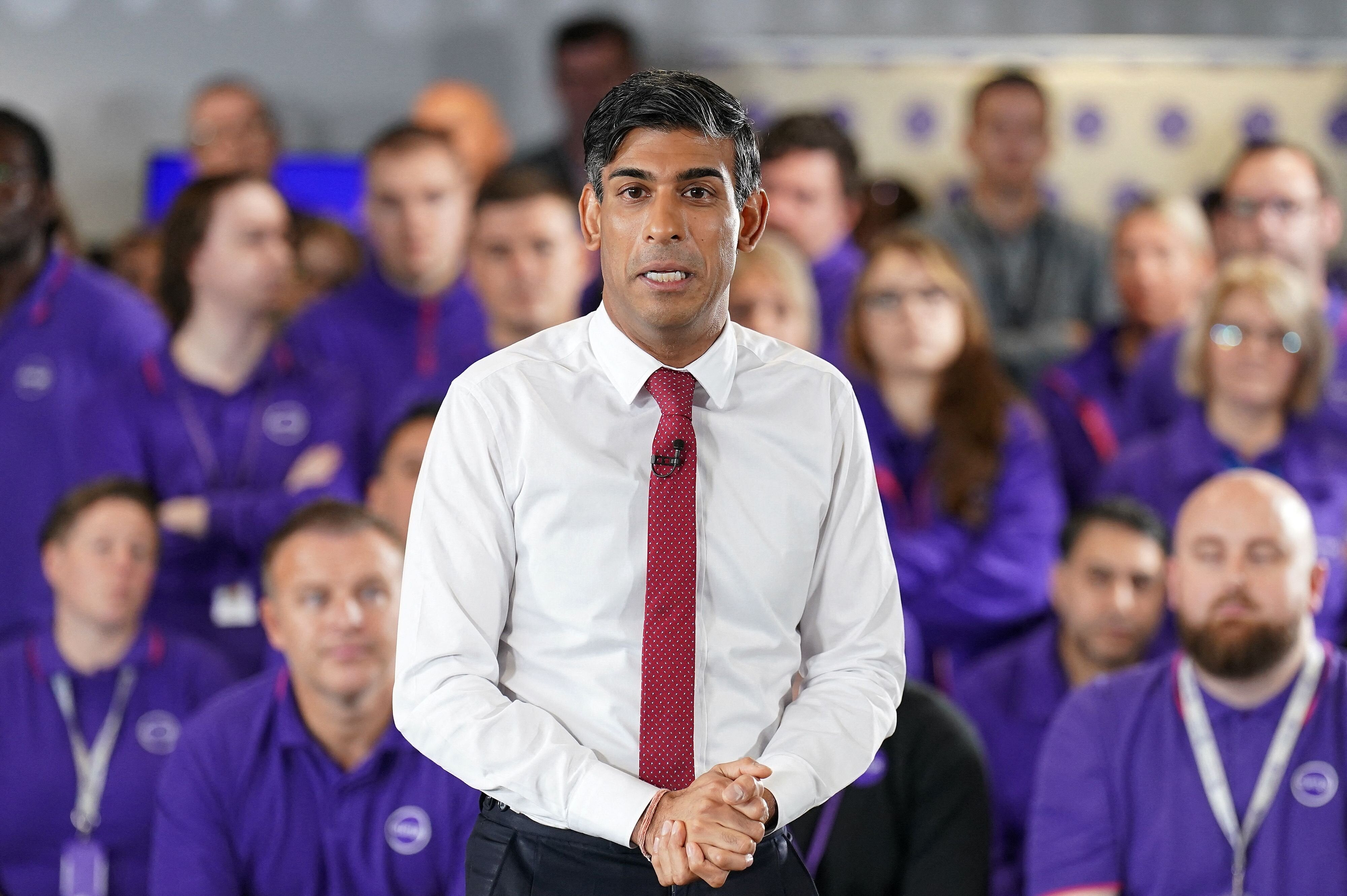
As anniversary presents go, losing two previously-safe Tory seats to Labour is far from ideal.
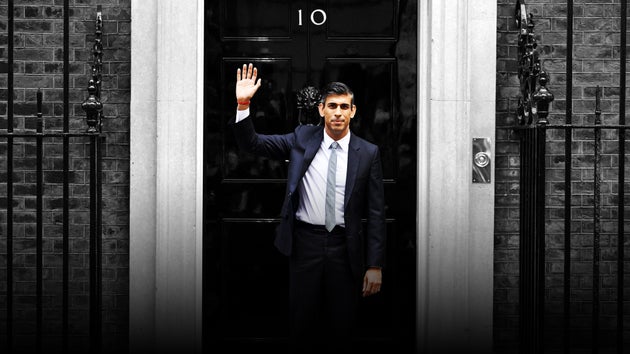
But, as he prepares to mark one year in 10 Downing Street on Wednesday, that is where Rishi Sunak finds himself.
Despite all of the pledges, relaunches and policy announcements, the Tories find themselves pretty much where they were when Sunak took over from Liz Truss 12 months ago – miles behind Labour in the polls and without a clear, coherent strategy for turning things around before the next election.
One senior Conservative MP told HuffPost UK that there is still time for Sunak to pull it out the fire, but he and chancellor Jeremy Hunt must first throw off their inherent caution.
“Next month’s autumn statement is crucial – if we just have more of the same then we are doomed,” he said.
“We’re running out of time and we need some big headline takeaway policy from that to get the Tory vote motivated and energised. If we have more of the same and steady as she goes it will be a massive opportunity missed.
“Personally, I’d like to see us scrap inheritance tax. That would be hugely symbolic. But if there’s no big bang moment, there will be no shifting in the polls.”
A former cabinet member said: “We’re now in ‘waiting for something to turn up’ territory, which is not a great place to be.”
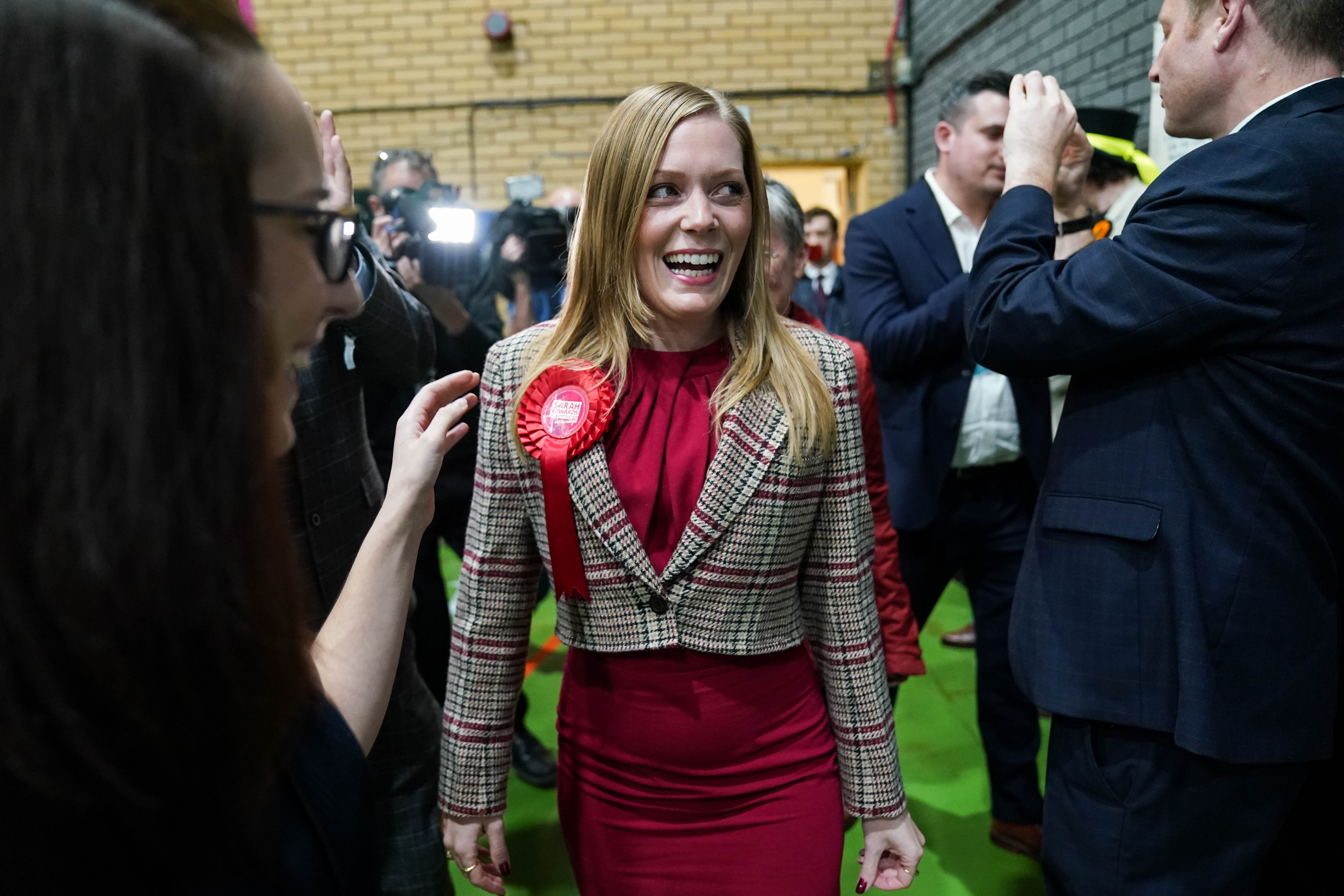
Newly elected Labour MP Sarah Edwards (second left) with party leader Keir Starmer at Tamworth Football Club, after winning the Tamworth by-election.
Sunak has undoubtedly brought calm and professionalism to the Downing Street operation after the chaos of Boris Johnson and Liz Truss.
But clearing that low bar has not shielded him from the harsh political reality that the Tories find themselves in.
The party has fought no fewer than nine Westminster by-elections since Sunak became PM, but have only won one – the Uxbridge and South Ruislip contest, which effectively became a referendum on Sadiq Khan’s controversial decision to extend London’s ultra-low emission zone (ULEZ).
Sunak’s five pledges to voters at the start of the year have left the public underwhelmed, while his failure to “stop the boats” carrying asylum seekers across the Channel has earned him the unenviable reputation of being someone who over-promises but under-delivers.
His Tory conference speech earlier this month saw him scrap the Manchester leg of HS2, announce the end of A-levels and begin the phasing out of smoking. But once again, it was to little or no avail as far as public opinion is concerned.
One senior Tory source said: “Sunak inherited a toxic and fractured party in which he was not the first preference for the job. He spent a large amount of the last 12 months not saying much and then suddenly woke up before conference and decided to become presidential.
“His conference speech was full of ‘I’ and ‘me’ not “‘we’ or ‘the party’. His wife did a First Lady impression by giving a speech and telling us how nice her hubby is. None of us particularly want nice, we would settle for competent -which he isn’t.”
The PM’s next big call will be when to hold the next election, which must take place by January 2025 at the latest.
One MP said: “I’ve always thought October next year, but more and more colleagues are saying that if we hang on till then we’ll have even more small boats coming next summer, so he needs to go in the spring.”
Another senior Tory said: “He will have to go to the country sooner rather than later as we just risk further mistakes and a total wipeout. If he holds out until January 2025 then I’m leaving the country as I can’t imagine a more miserable existence than an election campaign across Christmas and new year.”
Despite some excited speculation that Sunak could face a leadership challenge, few MPs truly believe that is a realistic prospect.
“There’s no feeling abroad in the party that there’s going to be a move against him,” one minister said.
“From reading the Tory WhatsApp groups and talking to colleagues, everybody appreciates that now is the time to put our shoulders to the wheel and stick together.”
Sunak knew what he was getting into when he became Tory leader a year ago, but he would have expected to have at least made some progress towards blocking Labour’s route to power.
If he wants to have more than another year in No.10, he needs to change the fortunes of his party – and the country – very soon.
<img src="https://api.follow.it/track-rss-story-loaded/v1/BiXBAMZx0XhReqN0dgpcyHn9ye8UNv30" border=0 width="1" height="1" alt="Supreme Court likely to embrace expanded tax exemption for religious charities" title="Supreme Court likely to embrace expanded tax exemption for religious charities"> <img width="150" height="150" src="https://www.scotusblog.com/wp-content/uploads/2025/03/supremecourt-5-150x150.jpg" class="attachment-thumbnail size-thumbnail wp-post-image" alt="Supreme Court likely to embrace expanded tax exemption for religious charities" title="Supreme Court likely to embrace expanded tax exemption for religious charities" style="float:right;" decoding="async" srcset="https://www.scotusblog.com/wp-content/uploads/2025/03/supremecourt-5-150x150.jpg 150w, https://www.scotusblog.com/wp-content/uploads/2025/03/supremecourt-5-570x570.jpg 570w, https://www.scotusblog.com/wp-content/uploads/2025/03/supremecourt-5-500x500.jpg 500w, https://www.scotusblog.com/wp-content/uploads/2025/03/supremecourt-5-1000x1000.jpg 1000w" sizes="(max-width: 150px) 100vw, 150px" /><p><a class="a2a_button_facebook" href="https://www.addtoany.com/add_to/facebook?linkurl=https%3A%2F%2Fwww.scotusblog.com%2F2025%2F03%2Fsupreme-court-likely-to-embrace-expanded-tax-exemption-for-religious-charities%2F&linkname=Supreme%20Court%20likely%20to%20embrace%20expanded%20tax%20exemption%20for%20religious%20charities" title="Facebook" rel="nofollow noopener" target="_blank"></a><a class="a2a_button_linkedin" href="https://www.addtoany.com/add_to/linkedin?linkurl=https%3A%2F%2Fwww.scotusblog.com%2F2025%2F03%2Fsupreme-court-likely-to-embrace-expanded-tax-exemption-for-religious-charities%2F&linkname=Supreme%20Court%20likely%20to%20embrace%20expanded%20tax%20exemption%20for%20religious%20charities" title="LinkedIn" rel="nofollow noopener" target="_blank"></a><a class="a2a_button_twitter" href="https://www.addtoany.com/add_to/twitter?linkurl=https%3A%2F%2Fwww.scotusblog.com%2F2025%2F03%2Fsupreme-court-likely-to-embrace-expanded-tax-exemption-for-religious-charities%2F&linkname=Supreme%20Court%20likely%20to%20embrace%20expanded%20tax%20exemption%20for%20religious%20charities" title="Twitter" rel="nofollow noopener" target="_blank"></a><a class="a2a_button_email" href="https://www.addtoany.com/add_to/email?linkurl=https%3A%2F%2Fwww.scotusblog.com%2F2025%2F03%2Fsupreme-court-likely-to-embrace-expanded-tax-exemption-for-religious-charities%2F&linkname=Supreme%20Court%20likely%20to%20embrace%20expanded%20tax%20exemption%20for%20religious%20charities" title="Email" rel="nofollow noopener" target="_blank"></a><a class="a2a_button_printfriendly" href="https://www.addtoany.com/add_to/printfriendly?linkurl=https%3A%2F%2Fwww.scotusblog.com%2F2025%2F03%2Fsupreme-court-likely-to-embrace-expanded-tax-exemption-for-religious-charities%2F&linkname=Supreme%20Court%20likely%20to%20embrace%20expanded%20tax%20exemption%20for%20religious%20charities" title="PrintFriendly" rel="nofollow noopener" target="_blank"></a><a class="a2a_dd addtoany_no_icon addtoany_share_save addtoany_share" href="https://www.addtoany.com/share#url=https%3A%2F%2Fwww.scotusblog.com%2F2025%2F03%2Fsupreme-court-likely-to-embrace-expanded-tax-exemption-for-religious-charities%2F&title=Supreme%20Court%20likely%20to%20embrace%20expanded%20tax%20exemption%20for%20religious%20charities" data-a2a-url="https://www.scotusblog.com/2025/03/supreme-court-likely-to-embrace-expanded-tax-exemption-for-religious-charities/" data-a2a-title="Supreme Court likely to embrace expanded tax exemption for religious charities">Share</a></p><p>The Supreme Court on Monday appeared sympathetic to the argument by a Catholic Charities chapter that Wisconsin violated the Constitution when it refused to give the group the same exemption from the state’s unemployment tax that it provides to churches, religious schools, and some religious groups. Justices from both sides of the ideological spectrum seemed to agree that the state’s denial of the exemption amounted to discrimination against Catholic Charities, with Justice Elena Kagan suggesting that it was “pretty fundamental that we don’t treat some religions better than others. And we certainly don’t do it based on the content of the religious doctrine that those religions preach.”</p>
<p>Catholic Charities is a social ministry arm of each Roman Catholic diocese in Wisconsin. This case was brought by the chapter for the diocese of Superior, which is in the northwestern part of the state, as well as four separate groups operating under the Catholic Charities umbrella that provide social services to people with disabilities.<span id="more-319403"></span></p>
<p>The dispute began in 2016, when Catholic Charities sought an exemption from having to pay a Wisconsin unemployment tax for its employees. It contended that its employees are covered by a provision of the statute that carves out from the definition of “employment” anyone who works for (as relevant here) “an organization operated primarily for religious purposes” because the group carries out its charitable works to put Catholic principles into operation.</p>
<p>A state labor commission ruled that the exemption did not apply because even if Catholic Charities has religious motivations, its activities are secular. </p>
<p>The Wisconsin Supreme Court agreed that the exemption was not available. Although Catholic Charities may have religious motivations, it acknowledged, the group was not operated primarily for religious purposes because it does not “attempt to imbue” people who participate in its programs “with the Catholic faith nor supply any religious materials to program participants or employees.” Moreover, the state supreme court noted, Catholic Charities both employs people of all faiths and provides its services to them.</p>
<p>At the Supreme Court on Monday, lawyer Eric Rassbach, representing Catholic Charities, told the justices that the Wisconsin Supreme Court had improperly interpreted the unemployment tax exemption “to favor what it called ‘typical’ religious activity.” Moreover, he added, it “held that helping the poor can’t be religious, because secular people help the poor too. To resolve this case,” he stressed, “this Court need do nothing more than say that the Constitution doesn’t allow courts to do that.”</p>
<p>Rassbach faced some skeptical questions about the limits of his proposed rule. Kagan asked whether any group that contended it was a religious group with religious activities and a religious purpose would qualify for the exemption.</p>
<p>Rassbach countered that the group’s beliefs must be sincere, and they must be religious, rather than philosophical.</p>
<p>Justice Ketanji Brown Jackson, perhaps the state’s strongest supporter, suggested that the Wisconsin Supreme Court was asking the wrong questions about what it means to be an organization “operated primarily for religious purposes.” The Wisconsin law mirrors a federal unemployment tax law, she noted. And when Congress enacted that law, she explained, it distinguished between institutions like “a college devoted to preparing students for the ministry” on the one hand, which would be entitled to the exemption, and – on the other hand – a church-affiliated orphanage or nursing home, which would not be entitled to the exemption. That history, she contended, indicates that for the federal law, Congress intended to draw a line between charitable organizations run by the church – like Catholic Charities – and “organizations run by the church that are like training programs for priests.”</p>
<p>And Justice Amy Coney Barrett questioned Rassbach’s argument that the exemption violates the church autonomy doctrine – the principle that the government should not interfere in internal church affairs, and in particular in how a religious institution governs itself. “It seems to me,” Barrett said, “that there’s a difference between telling a church what to do or interfering in its internal affairs” and giving the church an incentive “to do certain things.”</p>
<p>Rassbach pushed back, countering that it “really matters what the incentives are.”</p>
<p>Representing Wisconsin, Assistant Attorney General Colin Roth told the justices that the state’s unemployment tax exemption was intended to address “a particular problem” – specifically, to avoid having the state decide whether employees complied with religious doctrine when churches and religious institutions fire their employees, who then file for unemployment benefits. “So Wisconsin gives those kinds of employers a wide berth by prophylactically exempting them,” Roth explained. But to limit the number of employers who do not pay into the unemployment system, Roth added, only the “employers most likely to draw the state into doctrinal disputes” qualify for the exemption.</p>
<p>By contrast, Roth asserted, Catholic Charities asks the court to adopt a “motive-only test” without any limits. That test, he warned, “would leave potentially over one million employees nationwide without unemployment coverage, like nurses and janitors at religiously affiliated hospitals, even though the state can virtually always determine their benefit eligibility without confronting religious doctrine.”</p>
<p>If a few justices had pressed Rassbach, almost all of them had questions for Roth. Thomas queried whether Catholic Charities would qualify for the exemption if it were incorporated as part of the church, rather than as a separate nonprofit.</p>
<p>When Roth answered that it would, Thomas shot back, “What’s the difference? If the function is exactly the same, but it’s a separate entity, what’s the difference? Religiously?”</p>
<p>Perhaps to highlight what he saw as the artificial line that the law draws, Chief Justice John Roberts asked Roth to explain “the simplest thing that Catholic Charities would have to do to qualify for the religious exemption in Wisconsin.”</p>
<p>Roth responded that proselytization – soliciting others to join the Catholic faith – as a condition of receiving a service from Catholic Charities would qualify.</p>
<p>Justice Neil Gorsuch then jumped in, asking Roth where to draw the line. Does Catholic Charities have to require the people receiving their services to “repent,” he asked, or it won’t receive the exemption? Or, Gorsuch continued, “is mandatory church attendance versus optional church attendance, that’s the line?”</p>
<p>Roberts later interjected, “You want a test that is the easiest one for you to apply.”</p>
<p>Gorsuch and Barrett both suggested that a rule that hinges on whether the religious nonprofit is proselytizing would result, as Gorsuch observed, in the government becoming involved in religion “a whole lot more than” a rule that requires the government not to discriminate between religions.</p>
<p>Kagan acknowledged that there “are lots of hard questions in this area.” But, she continued, the Wisconsin Supreme Court’s ruling focuses on two issues – the idea that Catholic Charities serves people of all faiths, which the state is no longer defending, and the idea that it does not proselytize. “Some religions proselytize,” Kagan said. “Other religions don’t. Why are we treating some religions better than others based on that element of religious doctrine?” The state’s rule, she concluded, “basically puts the state on the side of some religions with some doctrine versus other religions with a different doctrine.”</p>
<p>Gorsuch echoed Kagan’s concerns a few minutes later. “Isn’t it a fundamental premise of our First Amendment,” he asked Roth, “that the state shouldn’t be picking and choosing between religions, between certain evangelical sects, and Judaism and Catholicism on the other, for example?”</p>
<p>In his rebuttal, Rassbach stressed that the United States is a “religiously pluralist society. And that calls,” he said, “for a generous approach to religious exemptions, not a stingy one.” A majority of the justices seemed inclined to agree.</p>
<p><em>This article was <a href="https://amylhowe.com/2025/03/31/supreme-court-likely-to-embrace-expanded-tax-exemption-for-religious-charities/">originally published at Howe on the Court</a>. </em></p>
<p>The post <a href="https://www.scotusblog.com/2025/03/supreme-court-likely-to-embrace-expanded-tax-exemption-for-religious-charities/">Supreme Court likely to embrace expanded tax exemption for religious charities</a> appeared first on <a href="https://www.scotusblog.com">SCOTUSblog</a>.</p>
There’s more to breast cancer than finding a lump, and new research carried out by Ohio State University Comprehensive Cancer Center (OSUCCC) revealed 93% of…


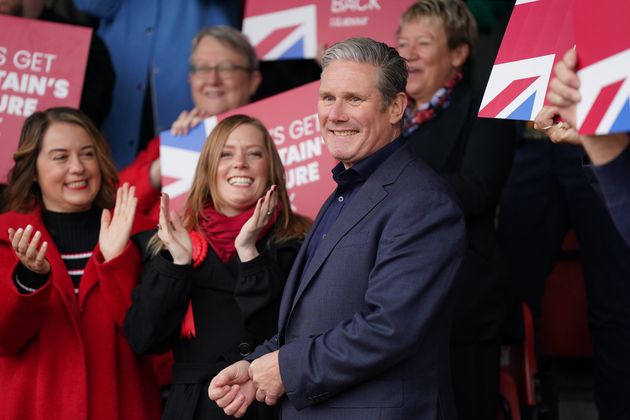 Newly elected Labour MP Sarah Edwards (second left) with party leader Keir Starmer at Tamworth Football Club, after winning the Tamworth by-election.