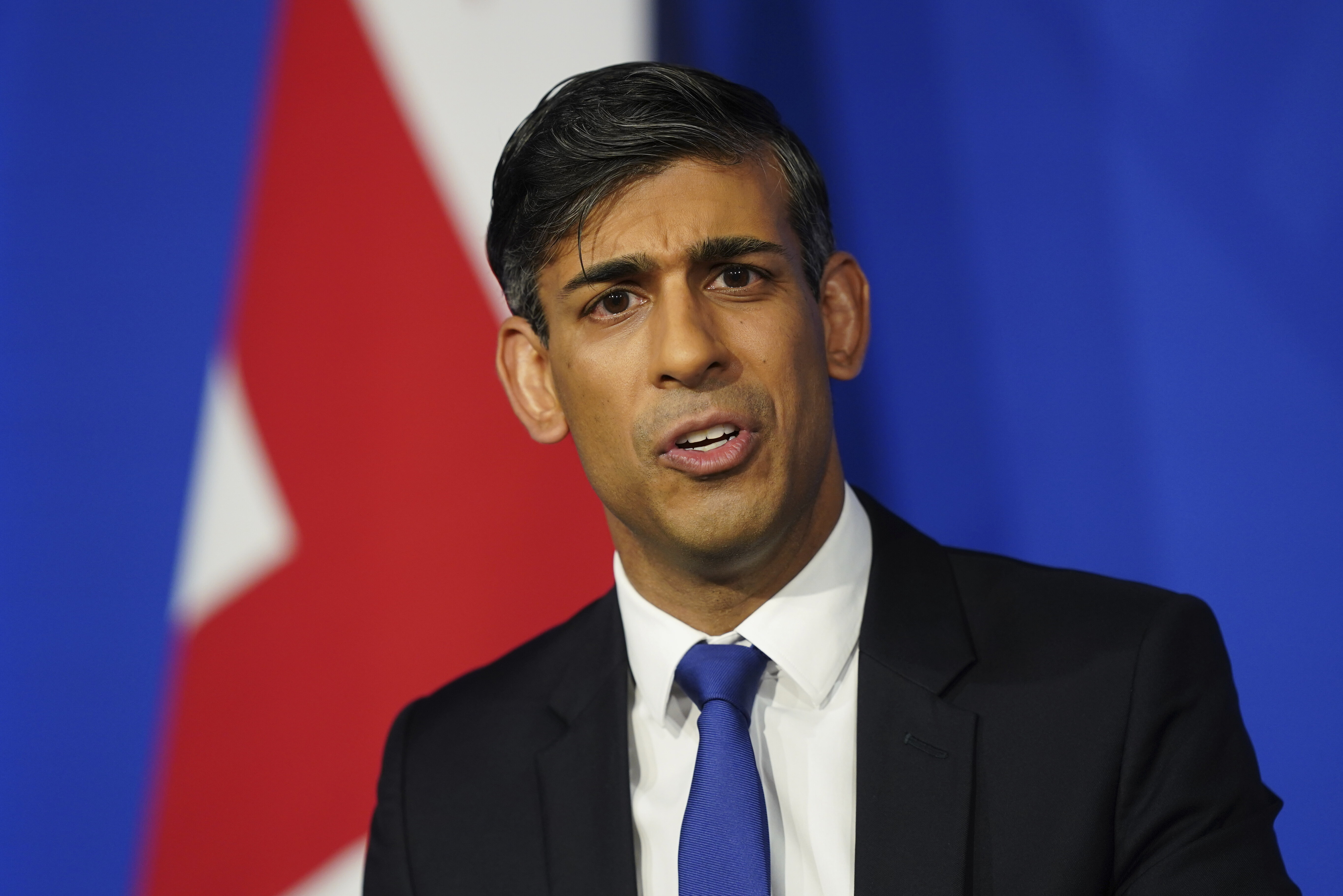
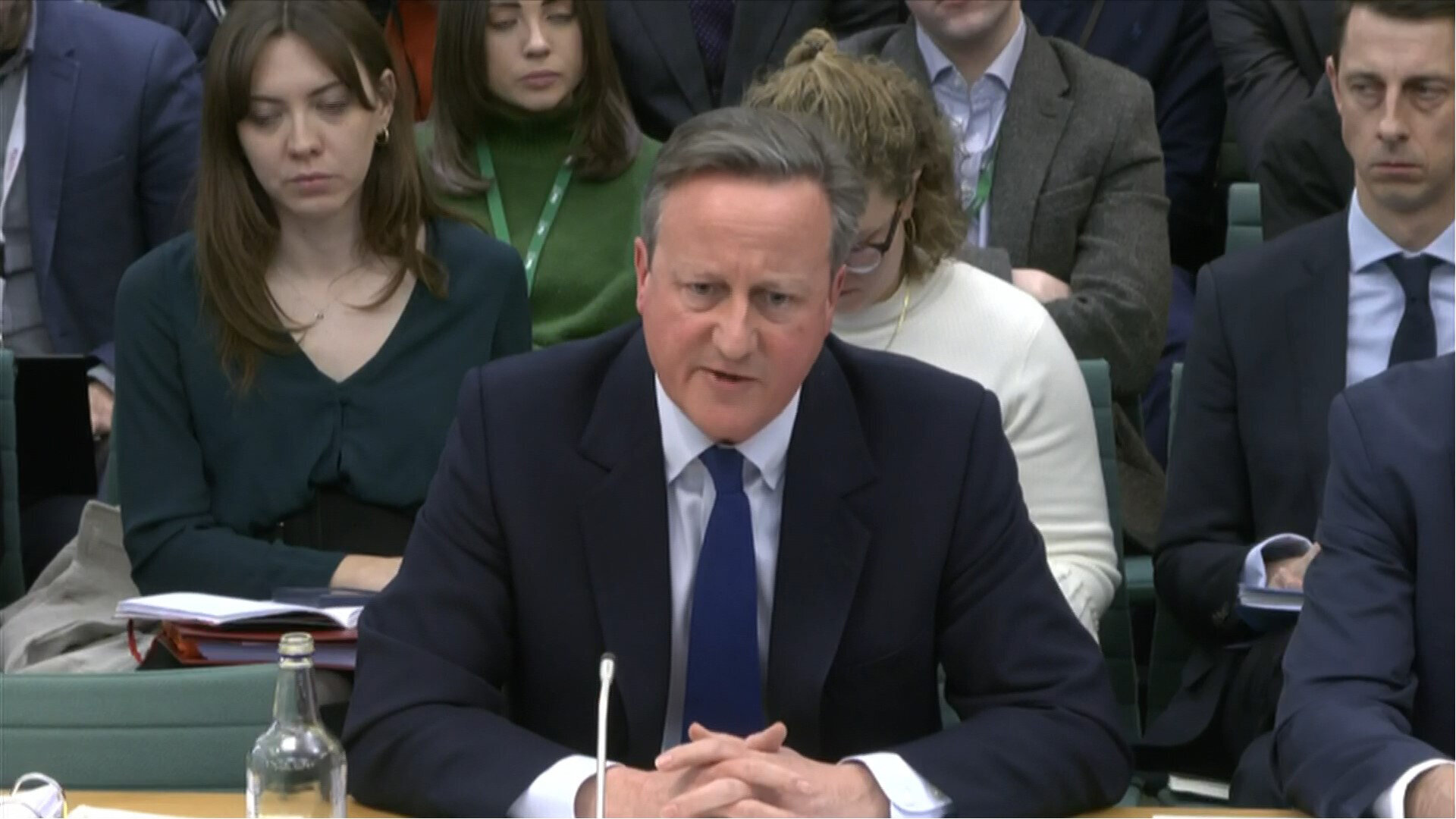
The Conservative government has been criticised over the UK’s “nose-diving” record after a “dismal year for human rights”.
Human Rights Watch (HRW) has just torn into the UK over the government’s policy decisions from the last year, demolishing its action (or inaction) on migration, LGBTQ+ rights and its foreign policy – to name just a few.
In its 740-page World Report 2024, released on Friday, the specialists left no stone unturned – and concluded that the UK government “eroded domestic human rights protections and reneged on important international obligations.”
The report pointed to the government’s 2023 legislation criminalising protesters, the Public Order bill, and its attempts to introduce anti-boycott laws.
Then the scathing report moved onto the new legislation meant to ban those who arrive “irregularly” to the UK – the Illegal Migration Act.
It said this was a “flagrant breach of the UK’s international obligations, including under the UN Refugee Convention”.
The UK had another dismal year for human rights in 2023.Yasmine Ahmed, UK Director at Human Rights Watch
It also lashed out at the Tories for failing to “take meaningful steps to tackle institutional racism and address past wrongs” within the UK, including those still waiting for compensation from the Windrush scandal.
HRW noted the government had “failed to set social security payments at a level that ensures recipients can enjoy their rights and live with dignity” even amid an ongoing cost of living crisis. It noted how food bank usage, and homelessness, have increased, too.
It then moved onto women’s rights, noticing how the gender pay gap was still a problem, that there have been recent campaign efforts for the government to overhaul outdated abortion laws in England and Wales.
The specialists recognised that there’s been a surge in anti-LGBT violence in the UK too, and called out the “government’s undermining of protections for the rights of trans women and over-representation of LGBT people among the unhoused population.”
PM Rishi Sunak was slammed over the decision to backtrack on key climate policies too, and called to do more to “tackle racial disparities of climate change effects in the UK”.
Britain was praised for its actions highlighting Russia’s invasion of Ukraine – but HRW was swift to then criticise it for appearing to be “turning a blind eye to ongoing abuses” in Rwanda amid the plan to deport asylum seekers who arrive “illegally”.
The report added: “UK anti-immigrant policies at home have contributed to the government’s failure to resettle vulnerableAfghans.”
Finally, it touched on the UK’s abstention from a UN Security Council resolution in October calling for full humanitarian aid to Gaza, and the release of Hamas hostages amid the ongoing Israel-Hamas war.
And so, the specialists concluded: “The UK’s nose-diving domestic human rights record undermined its efforts to promote the rule of law and human rights globally.”
<img src="https://api.follow.it/track-rss-story-loaded/v1/SMUiTwXeIm8RFlX8Wo9Dlnn9ye8UNv30" border=0 width="1" height="1" alt="Court rules for Coast Guard reservist in "national emergency” pay dispute" title="Court rules for Coast Guard reservist in "national emergency” pay dispute"> <p>The Supreme Court on Wednesday ruled that an air traffic controller who was called up to serve on active duty in the U.S. Coast Guard “during a national emergency” is entitled to have the government pay him the difference between his civilian salary and his military pay, without having to show that his service was connected to a specific emergency. </p> <p>By a vote of 5-4, <a href="https://www.supremecourt.gov/opinions/24pdf/23-861_7lh8.pdf">the court rejected</a> the government’s narrower interpretation of the law at issue in the case, which would make it harder for reservists like Coast Guard reservist Nick Feliciano to recover differential pay. The justices splintered in an unusual line-up, with Justice Sonia Sotomayor joining four of her more conservative colleagues – Chief Justice John Roberts and Justices Neil Gorsuch, Brett Kavanaugh, and Amy Coney Barrett – in the majority. </p> <span id="more-505579"></span> <p>Justice Clarence Thomas dissented, in a 17-page opinion joined by Justices Samuel Alito, Elena Kagan, and Ketanji Brown Jackson.</p> <p>At issue in this case is the interpretation of a federal law known as the “differential pay” statute, which is intended to compensate reservists who are federal employees for the difference between their salaries while on active duty and their federal civilian salaries. </p> <p>The law provides that federal civilian employees are entitled to differential pay while on active duty “pursuant to a call or order to active duty under” a provision that includes, among others, “any other provision of law during a war or during a national emergency declared by the President or Congress.” </p> <p>Feliciano was called up to serve in the Coast Guard as part of the operations in Iraq and the war following the Sept. 11 attacks. He served from July 2012 until February 2017. While he was on active duty, he served on a Coast Guard ship that escorted other ships to and from a harbor. Feliciano’s pay rate was lower during his five years on active duty than what he earned as a federal employee for the Federal Aviation Administration.</p> <p>Feliciano went to the Merits Systems Protection Board and then to the U.S. Court of Appeals for the Federal Circuit, seeking differential pay – which he had not received for most of the time that he was on active duty. The Federal Circuit ruled that reservists seeking differential pay under the law at issue here must demonstrate that they were “directly called to serve in a contingency operation.” </p> <p>Feliciano then went to the Supreme Court, which agreed to decide whether federal civilian employees are entitled to differential pay even if their duties are not directly connected to the national emergency. </p> <p>The dispute hinges on the meaning of the word “during” in the phrase “during a national emergency.” Writing for the majority, Gorsuch explained that the word “during” usually “means ‘contemporaneous with,’” and “does not generally imply a substantive connection.” </p> <p>Gorsuch acknowledged that Congress sometimes uses a word in a way that is intended to be different from its regular meaning. But there is no reason to believe, he continued, that Congress did so hear. </p> <p>“Given all that,” Gorsuch concluded, “we think Mr. Feliciano’s reading more consistent with the statutory language before us. Just ask yourself how an ordinary American might approach the law’s terms. Would he have any reason to think that a reservist called up to active duty ‘during’ a national emergency is entitled to differential pay if, and only if, he can prove his service has a ‘substantive connection’ to a particular emergency? We doubt it.” </p> <p>Gorsuch added that a “number of contextual clues” further supported the majority’s decision. First, he noted, Congress did make clear in other laws that both a temporal and a substantive connection are required. Its failure to do so here “supplies a telling clue,” Gorsuch posited. </p> <p>Requiring a substantive connection to obtain differential pay would raise additional questions, Gorsuch continued, such as exactly what reservists must show: Are they required to show that they served in support of a contingency operation while on active duty, as the government contends, or directly in a contingency operation, as the Federal Circuit contends? “How might we choose between these two rules? The statute,” Gorsuch observed, “does not say.” </p> <p>The majority rejected the contention that its rule could create problems – for example, by requiring the government to provide differential pay even when Congress might not have intended it, such as a reservist who is called up to active duty to face a court martial. Gorsuch indicated that such scenarios are for Congress, rather than the courts, to address. </p> <p>In his dissent, Thomas countered that reservists are called to serve “during a national emergency” only when they are called up “in the course of an operation responding to a national emergency.” </p> <p>Thomas resisted Gorsuch’s contention that the word “during” normally means “contemporaneous with.” Although it sometimes serves that purpose, Thomas acknowledged, at other times it can be used “to reference only events that are substantively connected to the ongoing event—that is, events that occur ‘in the course of’ or ‘in the process of’ the ongoing event.” </p> <p>Because the meaning of “during” is not, standing alone, clear, Thomas continued, courts should instead look at the broader context of the phrase “during a national emergency.” And those “contextual clues,” Thomas wrote, indicate that the phrase only applies to reservists who are called to serve in operations responding to a national emergency.</p> <p>This does not, Thomas stressed, necessarily mean that Feliciano will not receive differential pay. “As even the Government admits,” Thomas wrote, “Feliciano’s ‘orders indicate that [he] would have been entitled to differential pay’ under a proper reading of the” law.” Thomas therefore would send the case back to the Federal Circuit for it to take another look. </p>
<p>The post <a href="https://www.scotusblog.com/2025/05/court-rules-for-coast-guard-reservist-in-national-emergency-pay-dispute/">Court rules for Coast Guard reservist in “national emergency” pay dispute</a> appeared first on <a href="https://www.scotusblog.com">SCOTUSblog</a>.</p>
Listen on Spotify Apple Music Amazon Music – Nächstes Zugeständnis: Friedrich Merz sieht sich womöglich mit der Forderung einer Frauenquote in der Unions-Fraktion konfrontiert. –…
WASHINGTON D.C. — U.S. President Joe Biden and U.K. Prime Minister Keir Starmer brushed off Russian President Vladimir Putin’s threats Friday as they met to…