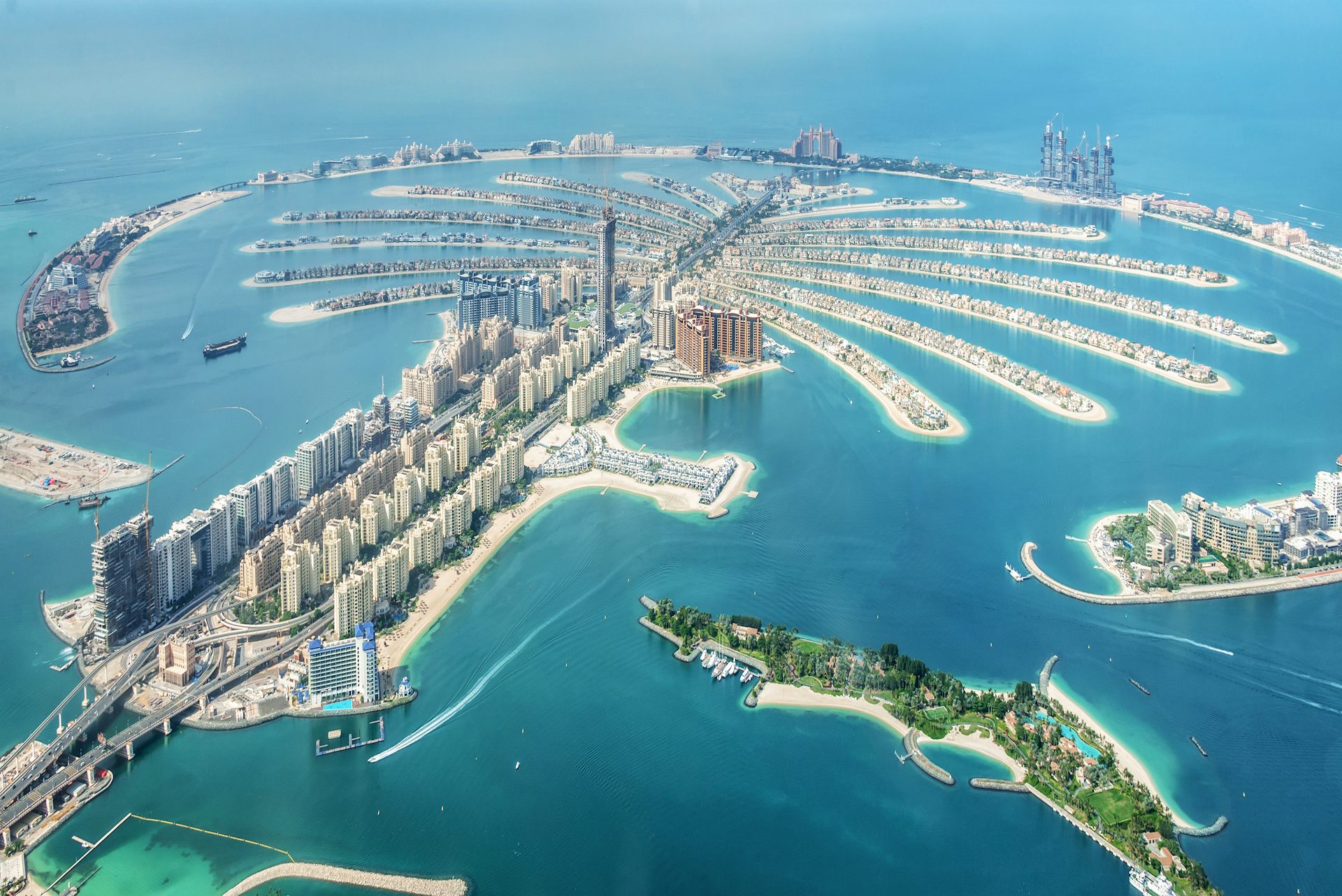

Palm Jumeirah, an artificial island in Dubai, United Arab Emirates.Delpixel/Shutterstock
Dubai’s famous Palm Jumeirah is not the only man-made island to have emerged from the sea this century. Over the past 20 years, many islands have been built to accommodate both tourists and well-heeled residents – especially in the Arabian Gulf states and China.
In an era of sea-level rise and increased storm activity, new islands may seem a risky venture. Yet the desire for a sea view and to put blue water between yourself and the noise, traffic and crime of the mainland is keeping the market buoyant.
Residential artificial islands cater for the rich and have serious environmental consequences. But they ride high on big promises. How else to explain the continuing expansion of Eko Atlantic, a complex of islands sprouting off coastal Lagos in Nigeria
Construction firms broke ground on Eko Atlantic’s boulevards and high-rise apartments in 2009. The city government has recently announced five more artificial islands “to open up the city”, and claims that the new islands generate and attract wealth and have already created “30,000 direct new jobs”, mostly in construction and maintenance.
The fashion for island-building shows no signs of abating. But instead of an answer to the desperate need for new housing among people who are set to be displaced by rising seas, new islands are offering yet another distraction for the wealthy.
How to build an island
As research for my book The Age of Islands, I visited all sorts of new enclaves that have been reclaimed from the sea. I was amazed at how quickly they can be built. In shallow water, creating an island is not technically complex: usually, the sea bed across a wide area is hoovered up and ground down, then sprayed and pummelled into a stable base.
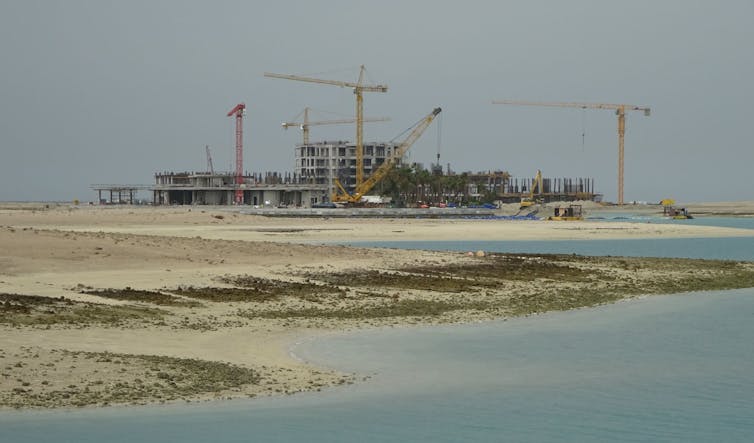
Construction on The World islands in Dubai.Alastair Bonnett
In Lagos, the Gulf states and other island-building hotspots like the shores of the Chinese island province of Hainan, developers know their creations must be defended from the sea. Nigeria has the Great Wall of Lagos, a sea barrier containing about 100,000 concrete blocks and rising nine metres above the sea, to protect Eko Atlantic. More modest structures are favoured elsewhere, usually in the form of artificial reefs that are dragged and dropped into place, creating a shield against surging seas.
Will any of this be enough? Such barriers provide enough protection long enough to make island-building an economic proposition. But this calculation misses something important: all these islands rely on the mainland – that’s where they get their energy, water and food. Lagos is a low-lying city and large parts are in danger of flooding. The boulevards of Eko Atlantic won’t look so chic if they are marooned.
Critics of new islands point to the havoc they cause to coastal and river systems, changing patterns of sediment deposition and erosion and creating silty, warm lagoons that turn living marine environments into dead zones.
This is one of the reasons the Chinese government intervened to halt island-building around Hainan. From its shores you can see 11 projects, some in full swing, most paused.
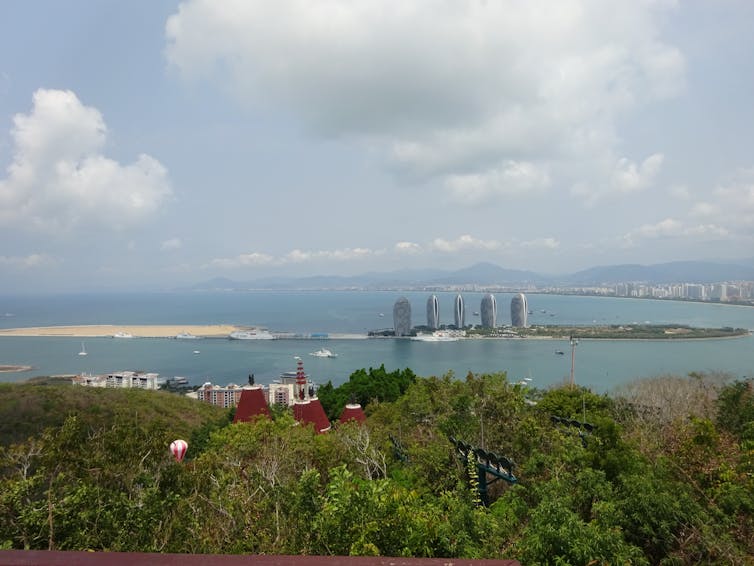
Phoenix Island, Hainan, from above.Alastair Bonnett
The world’s biggest and most spectacular new island, Ocean Flower, is found here. It is shaped like a lotus with scrolling leaves and is already crowded with apartment blocks and outlandish architecture, including European-style castles, grandiose hotels and amusement parks. The plan was to have 28 museums, 58 hotels and the world’s largest conference centre.
Even in the hyperbolic world of island building, it sounds extreme. The developer, Evergrande, is now in financial trouble and 39 residential towers on Ocean Flower have been deemed to have flouted environmental and planning regulations and ordered to be demolished.
Boom-and-bust cycles would appear to plague new islands. But these tales shouldn’t mislead us into thinking this is an ailing industry. The financial incentives remain enormous and island makers are an adaptive breed.
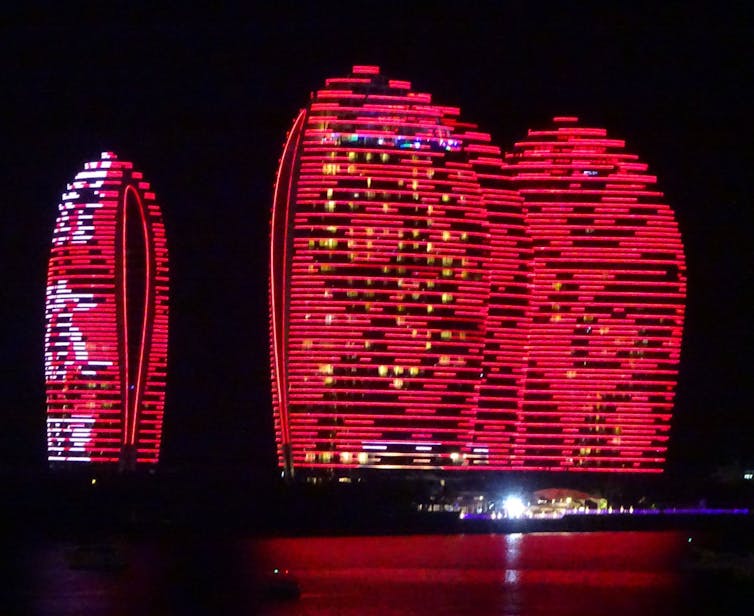
Towers on Phoenix Island, Hainan.Alastair Bonnett
Floating for a few
Floating islands have come to the fore recently: anchored platforms whose construction does not involve scraping away the seabed, making them less disruptive to the marine environment.
Plans for floating cities keep bubbling up. One prospect, Green Float, led by the Japanese company Shimz, would be a floating Pacific city designed to float on the equator “just like a lily pad” and house 40,000 people.
Building on the high seas will always be challenging, so it’s no surprise that ventures closer to shore, such as the Floating City in the Maldives, have been the first to materialise. Floating City is slated as a 500-acre development with 5,000 low-rise homes for 20,000 people arranged in a coral-like scatter of closely connected islets. The first islands have already been towed into place.
The Dutch architect of the scheme, Koen Olthuis, hopes that the Floating City will not be the preserve of the rich (unlike the others I’ve mentioned). His vision is of ordinary Maldivians, having lost homes and livelihoods to rising seas, finding a safe anchorage in the Floating City.
But from what I’ve seen, the world of artificial islands caters to the few not the many. Island-building is led by private developers, not environmentalists – or even states. Foreigners are already being induced to buy into Floating City and told this will be their ticket to a Maldivian residence permit. The bond between wealth and island building will not be easily broken.

Don’t have time to read about climate change as much as you’d like?
Alastair Bonnett does not work for, consult, own shares in or receive funding from any company or organisation that would benefit from this article, and has disclosed no relevant affiliations beyond their academic appointment.

<img src="https://www.mtlblog.com/media-library/a-tropical-resort-in-punta-cana-at-dusk-featuring-a-winding-crystal-blue-pool-lined-with-tall-palm-trees-and-lush-greenery.png?id=58393694&width=1200&height=600&coordinates=0%2C245%2C0%2C245"/><br/><br/><p class="">If you're planning a spring getaway — whether it's relaxing on a beach in Mexico, exploring historical sites in Italy, or enjoying the nightlife in the Dominican Republic — make sure to check <a href="https://www.mtlblog.com/tag/canada-travel-advisories">Canada's latest travel advisories</a> before you go.</p><p>The Government of Canada has recently updated its <a href="https://www.mtlblog.com/canadian-passport-expiry-warning">travel warnings</a> for several popular destinations, including locations in Europe and <a href="https://www.mtlblog.com/things-montrealers-should-know-travelling-caribbean-mexico">the Caribbean</a>. These advisories range from routine safety recommendations to more serious warnings such as "Avoid non-essential travel" in certain areas.</p><p>While these travel advisories don't necessarily mean you should cancel your trip, they do highlight potential safety concerns — including crime, civil unrest, and infrastructure issues — that could affect your travel experience.</p><p>Some countries, like the United Kingdom and France, continue to carry long-standing <a href="https://www.mtlblog.com/canada-travel-advisories-europe-2025">advisories related to the threat of terrorism</a>. Others, such as Cuba, have seen more recent updates that point to concerns over basic services and traveller safety.</p><p>Whether you're planning a beach holiday or a cultural city escape, staying informed about <a href="https://www.mtlblog.com/canadian-travel-advisories-caribbean">travel advisories</a> can help you plan accordingly and avoid unnecessary risks.</p><p>If you're heading out of the country this spring, here's what you need to know about some of the top destinations that currently come with a travel warning.</p><h3>Dominican Republic</h3><br/><p>Last Updated: March 18, 2025</p><p>Risk Level: Exercise a high degree of caution in the Dominican Republic due to crime.</p><p>Details: The Dominican Republic is a go-to destination for Canadians craving warm beaches and vibrant nightlife, but officials say staying alert is essential. </p><p>Petty theft, like pickpocketing and bag-snatching, happens often, especially in crowded areas and resorts. More serious crimes, including armed robbery and assault, have been reported, particularly after dark. Thieves on motorcycles target pedestrians and even reach into cars at red lights. </p><p>The border with Haiti remains closed, and security near border areas is unpredictable. To stay safe, keep valuables secure, avoid isolated areas at night, and choose accommodations with strong security measures.</p><p><a href="https://travel.gc.ca/destinations/dominican-republic" target="_blank">Dominican Republic Travel Advisory</a></p><h3>Cuba</h3><br/><p>Last Updated: March 18, 2025</p><p>Risk Level: Exercise a high degree of caution in Cuba due to shortages of basic necessities including food, medicine and fuel.</p><p>Details: Thanks to its white-sand beaches, vibrant culture and dreamy resorts, Cuba is a favourite among Canadian tourists. However, if you're visiting this spring, make sure to be prepared for potential challenges.</p><p>Cuba's ongoing power outages and fuel shortages can affect everything from transportation to hotel services, and even finding bottled water or medication could be tricky, so make sure to pack any supplies that are essential to you. </p><p>Petty theft is common in tourist areas, and scams — whether it's overpriced taxis or fake tour operators — are something to watch out for. While violent crime is rare, burglaries and assaults can happen, and solo female travellers may face harassment. </p><p>If you're heading to Cuba, pack essentials, stay in reputable accommodations, and always confirm prices before paying.</p><p><a href="https://travel.gc.ca/destinations/cuba" target="_blank">Cuba Travel Advisory</a></p><h3>Bahamas </h3><br/><p>Last Updated: March 6, 2025</p><p>Risk Level: Exercise a high degree of caution in The Bahamas due to high rates of crime, especially in Nassau and Freeport.</p><p>Details: The Bahamas is the perfect spring vacation destination for many Canadian travellers, thanks to its warm weather, turquoise waters, white-sand beaches, and all-inclusive resorts. But while it's a beautiful place to visit, crime remains a concern —especially in places like Nassau and Freeport, where reports of theft, armed robbery, and even violent attacks have been recorded, sometimes in broad daylight.</p><p>Petty crime, such as pickpocketing and bag snatching, is common in tourist areas, cruise ship terminals, and busy marketplaces. Thieves often target visitors withdrawing cash from ATMs, and even hotel safes have been compromised in some cases. During festivals, regattas, and holiday periods, crime tends to spike, making it especially important to stay alert.</p><p>Officials say women should be particularly cautious, as incidents of sexual assault have occurred, even at big resorts.</p><p><a href="https://travel.gc.ca/destinations/bahamas" target="_blank">Bahamas Travel Advisory</a></p><h3>United Kingdom</h3><br/><p>Last Updated: March 20, 2025</p><p>Risk Level: Exercise a high degree of caution in the United Kingdom due to the threat of terrorism.</p><p>Details: Before you go exploring London's iconic landmarks, visiting historic castles, and, of course, enjoying a traditional Sunday roast, make sure to check the Government of Canada's latest travel advisory for the U.K.</p><p>The U.K. has experienced multiple terrorist attacks in recent years, some involving knife attacks, vehicle rammings, and explosions in busy public areas. While most incidents have occurred in London, other cities have also been affected. High-risk locations include government buildings, transportation hubs, shopping centres, and crowded tourist attractions. </p><p>Petty crime is another issue, especially in London. Restaurants, pubs, and hotel lobbies are prime targets, so never leave bags on chairs or unattended. Vehicle theft and theft from parked cars, particularly in roadside rest areas, have been reported.</p><p>Demonstrations happen frequently and can escalate quickly, sometimes leading to clashes with security forces.</p><p><a href="https://travel.gc.ca/destinations/united-kingdom" target="_blank">United Kingdom Travel Advisory</a></p><h3>Mexico</h3><br/><p>Last Updated: March 18, 2025</p><p>Risk Level: Exercise a high degree of caution in Mexico due to high levels of criminal activity and kidnapping.</p><p>Details: Mexico is one of the most popular spring destinations for Canadians looking for sun, golden beaches, and delicious food, but safety remains a concern in some areas. </p><p>The Canadian government advises against non-essential travel to several areas due to high levels of organized crime and violence. Even in popular tourist areas, violent incidents have occurred in restaurants, hotels, and nightclubs. Armed robberies, assaults, and petty theft are common, especially in busy areas like airports and public transit. Border regions are particularly risky, with reports of illegal roadblocks and armed clashes. </p><p>If you're heading to Mexico, stay in secure accommodations, avoid travelling at night, especially alone, and remain extra cautious.</p><p><a href="https://travel.gc.ca/destinations/mexico" rel="noopener noreferrer" target="_blank">Mexico Travel Advisory</a></p><h3>France</h3><br/><p>Last Updated: March 17, 2025</p><p>Risk Level: Exercise a high degree of caution in France due to the elevated threat of terrorism.</p><p>Details: Whether you dream of sipping coffee in a Parisian cafe, strolling through historic streets, or visiting world-famous landmarks like the Eiffel Tower, France is a bucket-list destination for many Canadians. But while it offers incredible experiences, officials warn that crime and terrorism remain a concern.</p><p>France has seen multiple terrorist attacks in recent years, some planned and others opportunistic. The country is currently at its highest alert level, meaning another attack is considered likely. Public places such as government buildings, religious sites, markets, and busy transit hubs are at higher risk. </p><p>In response, armed military patrols are stationed in major cities, particularly in Paris, where security has been increased at key tourist attractions. Travellers should remain vigilant, especially at large events and during religious celebrations.</p><p>Petty crime, including pickpocketing and purse-snatching, is common, particularly in crowded areas like the Paris Metro, train stations, hotel lobbies, and tourist hotspots. Thieves often work in groups and use distraction tactics like spilling drinks or asking for help to steal valuables.</p><p><a href="https://travel.gc.ca/destinations/france" rel="noopener noreferrer" target="_blank">France Travel Advisory</a></p><h3>Costa Rica</h3><br/><p>Last Updated: March 18, 2025</p><p>Risk Level: Exercise a high degree of caution in Costa Rica due to crime.</p><p>Details: Costa Rica's lush rainforests, stunning beaches, and incredible wildlife make it a top travel destination for many, but officials say crime remains a concern. </p><p>Pickpocketing, purse-snatching, and passport theft are common, especially in busy tourist areas, public transit hubs, hotel lobbies, and restaurants with outdoor seating. What's more, incidents tend to spike during peak tourist seasons like spring break.</p><p>Certain areas of San José, the Pacific Coast (Jacó, Manuel Antonio, Montezuma), and the Caribbean Coast (Puerto Limón, Puerto Viejo) are known for higher theft rates. Residential break-ins, including at rentals, also occur, so travellers should choose accommodations with strong security and lock doors and windows.</p><p>Car break-ins and theft are widespread, particularly in supermarket and restaurant parking lots, national parks, and beaches. Rental cars are frequent targets, and roadside scams involving staged flat tires have been reported.</p><p>Violent crime, including armed robberies and assaults, occurs, often linked to drug trafficking. Provinces like San José, Limón, and Puntarenas have higher crime rates.</p><p><a href="https://travel.gc.ca/destinations/costa-rica" rel="noopener noreferrer" target="_blank">Costa Rica Travel Advisory</a></p><h3>Thailand</h3><br/><p>Last Updated: March 6, 2025</p><p>Risk Level: Exercise a high degree of caution in Thailand due to ongoing political tensions and sporadic demonstrations in Bangkok and elsewhere in the country.</p><p>Details: If the latest season of <em>White Lotus</em> has you dreaming of a Thai escape this spring, listen up! The country is known for its stunning beaches, bustling cities, and vibrant nightlife, but Canadian travellers should stay alert to political instability and crime.</p><p>The Canadian government advises avoiding all travel to Narathiwat, Pattani, Songkhla, and Yala due to ongoing separatist attacks, including bombings and shootings. Martial law is in place, allowing authorities to impose curfews and detain suspects without charge. Border areas near Myanmar and Cambodia can also be unpredictable, with occasional violence and sudden closures. </p><p>Political demonstrations, particularly in Bangkok, can escalate quickly. Authorities have the power to ban gatherings, impose curfews, and restrict movement. Travellers should avoid large protests, as officials have used force in the past. </p><p>Petty crime, such as pickpocketing and bag-snatching, is common in markets, transit hubs, and tourist areas. Budget guesthouses have reported break-ins, and thefts can occur on long-distance buses. Tourists have also been targeted during Full Moon Parties on Koh Pha Ngan, with reports of robberies, assaults, and drink spiking. </p><p><a href="https://travel.gc.ca/destinations/thailand" rel="noopener noreferrer" target="_blank">Thailand Travel Advisory</a></p><h3>Italy</h3><br/><p>Last Updated: March 14, 2025</p><p>Risk Level: Exercise a high degree of caution in Italy due to the threat of terrorism.</p><p>Details: Before heading off on your dream European getaway to Italy, make sure you've checked the government's latest travel advisory for the country. Despite its charming small towns, dreamy vistas and world-class pizza and pasta, there are some things to be aware of.</p><p>Petty crime is widespread in Italy, especially in tourist hotspots, train stations, and restaurants. Pickpockets and bag snatchers often use distraction tactics, so keep an eye on your belongings and be cautious of overly friendly strangers.</p><p>Rental cars are common targets for theft, and scammers operate in busy areas. While violent crime is rare, sexual assaults have occurred, including against tourists. </p><p>Italy, like the rest of Europe, faces a potential terrorist threat, with public spaces and major events considered possible targets. With the upcoming Jubilee 2025 set to bring massive crowds to Rome, expect increased security and potential disruptions.</p><p><a href="https://travel.gc.ca/destinations/italy" target="_blank">Italy Travel Advisory</a></p><p><em>Before you get going, check out our <a href="https://www.mtlblog.com/responsible-travel-guidelines" target="_blank">Responsible Travel Guide</a> so you can be informed, be safe, be smart, and most of all, be respectful on your trip.</em></p><p><p><em>AI tools may have been used to support the creation or distribution of this content; however, it has been carefully edited and fact-checked by a member of MTL Blog's Editorial team. For more information on our use of AI, please visit our <a href="https://www.mtlblog.com/editorial-standards" target="_blank">Editorial Standards page</a>.</em></p></p>