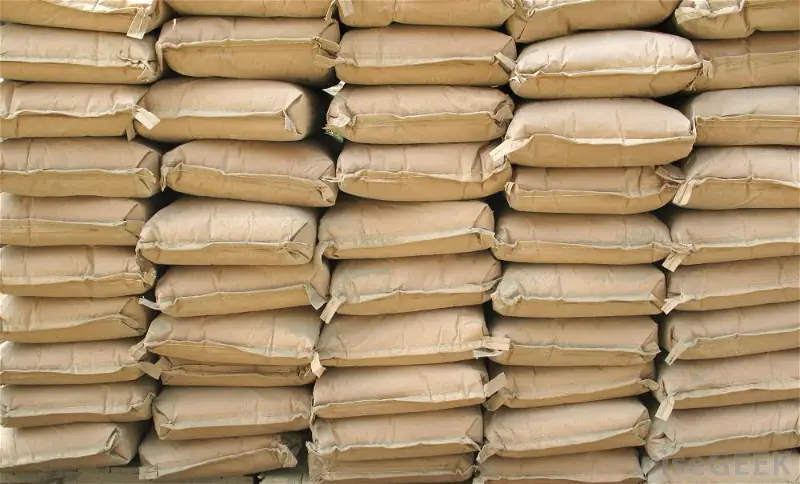
List Of Countries With Cheapest And Most Expensive Price Of Cement In The World
<p><img width="800" height="484" src="https://www.naijanews.com/wp-content/uploads/2024/03/cement.webp" class="attachment-post-thumbnail size-post-thumbnail wp-post-image" alt="" decoding="async" fetchpriority="high" srcset="https://www.naijanews.com/wp-content/uploads/2024/03/cement.webp 800w, https://www.naijanews.com/wp-content/uploads/2024/03/cement-300x182.webp 300w, https://www.naijanews.com/wp-content/uploads/2024/03/cement-768x465.webp 768w" sizes="(max-width: 800px) 100vw, 800px" /></p>
<h2>The cost of <a href="https://www.naijanews.com/topic/cement/">cement</a> varies significantly across the world due to factors like production costs, availability of raw materials, labour costs, and government policies.</h2>
<p>It’s important to note that cement prices are subject to change due to global economic conditions, fluctuations in demand and supply, changes in raw material costs, and other economic factors.</p>
<p>The figures can vary within each country based on specific market conditions at any given time.</p>
<p>Here's a look at some of the countries with the cheapest and most expensive cement prices based on available data and reports:</p>
<p><strong>Countries with the Cheapest Cement Prices</strong></p>
<p>1. India: Cement in India is relatively cheap due to efficient production processes, vast limestone deposits, and intense market competition. The average price can be around $60 to $100 per metric ton.</p>
<p>2. Indonesia: Due to large domestic production and efficient manufacturing processes, Indonesia has some of the lowest cement prices, approximately $30 to $60 per metric ton.</p>
<p>3. China: As the world's largest producer of cement, China benefits from economies of scale, with prices ranging between $35 and $75 per metric ton.</p>
<p>4. Iran: Sanctions and a focus on domestic consumption have kept Iranian cement prices low, around $35 to $55 per metric ton.</p>
<p>5. Pakistan: Competitive local production and large limestone reserves contribute to Pakistan’s low cement prices, typically between $55 and $70 per metric ton.</p>
<p><strong>Countries with the Most Expensive Cement Prices</strong></p>
<p>1. Switzerland: High labor and production costs make Switzerland one of the countries with the most expensive cement, costing upwards of $160 per metric ton.</p>
<p>2. Norway: Similar to Switzerland, Norway has high production costs, leading to cement prices that can exceed $150 per metric ton.</p>
<p>3. Denmark: With limited domestic production and high labor costs, Denmark sees cement prices around $120 to $180 per metric ton.</p>
<p>4. Iceland: The island's remote location and import reliance drive up cement prices, often surpassing $150 per metric ton.</p>
<p>5. Australia: Despite significant domestic production, operational costs in Australia are high, resulting in cement prices of about $100 to $130 per metric ton.</p>
<p>The post <a href="https://www.naijanews.com/2024/04/05/list-of-countries-with-cheapest-and-most-expensive-price-of-cement-in-the-world/">List Of Countries With Cheapest And Most Expensive Price Of Cement In The World</a> appeared first on <a href="https://www.naijanews.com">Naija News</a>.</p>
The cost of cement varies significantly across the world due to factors like production costs, availability of raw materials, labour costs, and government policies.
It’s important to note that cement prices are subject to change due to global economic conditions, fluctuations in demand and supply, changes in raw material costs, and other economic factors. The figures can vary within each country based on specific market conditions at any given time. Here’s a look at some of the countries with the cheapest and most expensive cement prices based on available data and reports: Countries with the Cheapest Cement Prices 1. India: Cement in India is relatively cheap due to efficient production processes, vast limestone deposits, and intense market competition. The average price can be around $60 to $100 per metric ton. 2. Indonesia: Due to large domestic production and efficient manufacturing processes, Indonesia has some of the lowest cement prices, approximately $30 to $60 per metric ton. 3. China: As the world’s largest producer of cement, China benefits from economies of scale, with prices ranging between $35 and $75 per metric ton. 4. Iran: Sanctions and a focus on domestic consumption have kept Iranian cement prices low, around $35 to $55 per metric ton. 5. Pakistan: Competitive local production and large limestone reserves contribute to Pakistan’s low cement prices, typically between $55 and $70 per metric ton. Countries with the Most Expensive Cement Prices 1. Switzerland: High labor and production costs make Switzerland one of the countries with the most expensive cement, costing upwards of $160 per metric ton. 2. Norway: Similar to Switzerland, Norway has high production costs, leading to cement prices that can exceed $150 per metric ton. 3. Denmark: With limited domestic production and high labor costs, Denmark sees cement prices around $120 to $180 per metric ton. 4. Iceland: The island’s remote location and import reliance drive up cement prices, often surpassing $150 per metric ton. 5. Australia: Despite significant domestic production, operational costs in Australia are high, resulting in cement prices of about $100 to $130 per metric ton.
<p><img width="644" height="362" src="https://www.naijanews.com/wp-content/uploads/2017/08/NUC-logo.png" class="attachment-post-thumbnail size-post-thumbnail wp-post-image" alt="NUC Denies Releasing List Of 100 Professors In Nigeria" decoding="async" fetchpriority="high" srcset="https://www.naijanews.com/wp-content/uploads/2017/08/NUC-logo.png 644w, https://www.naijanews.com/wp-content/uploads/2017/08/NUC-logo-300x169.png 300w, https://www.naijanews.com/wp-content/uploads/2017/08/NUC-logo-390x220.png 390w, https://www.naijanews.com/wp-content/uploads/2017/08/NUC-logo-640x360.png 640w" sizes="(max-width: 644px) 100vw, 644px" /></p>
<h2>The National Universities Commission (<strong><a href="https://www.naijanews.com/topic/nuc/" target="_blank" rel="noopener">NUC</a></strong>) has announced that it is in the final stages of announcing the establishment of two additional universities in Nigeria.</h2>
<p>If announced, this will bring the total number of higher institutions in the country to 272, <strong>Naija News</strong> understands.</p>
<p>The acting Executive Secretary of the commission, Chris Maiyaki, who disclosed the latest development during a press briefing in Abuja on Thursday, emphasized that the NUC will continue to approve new universities to address the admissions gap in the country.</p>
<p>He highlighted that while approximately two million candidates apply for university admission yearly, the available admission slots range between 500,000 and 700,000.</p>
<p>Maiyaki's position contrasts the concerns raised by the Academic Staff Union of Universities (<strong><a href="https://www.naijanews.com/topic/asuu/" target="_blank" rel="noopener">ASUU</a></strong>) and other stakeholders in the tertiary education sector, who oppose the government's proliferation of institutions due to inadequate funding for existing universities.</p>
<p>These stakeholders have repeatedly called on the government and the NUC to cease granting approvals for new public universities.</p>
<p><i>“We have no choice but to, as a matter of deliberate policy, undertake the massification of universities,” Maiyaki said.</i></p>
<p>Maiyaki stated that each year, nearly two million individuals apply for university admission, yet only a range of 500,000 to 700,000 students are granted admission.</p>
<p>He added: <em>“You need to see the anguish and the frustration on the faces of families who are desperate to make sure that their children attend university education every admission session. It is very tough and challenging for university leaders and NUC so we have no choice but to continue to approve the universities.</em></p>
<p><em>“The approval for two more varsities to bring the number of universities in the country to 272 has been concluded and will be announced next week.”</em></p>
<p>Maiyaki asserted that Nigeria will continue to expand access to universities by approving the establishment of more universities to meet the demand for quality education.</p>
<p>He pointed out that countries like Brazil and Indonesia, which have smaller populations than Nigeria, have more than 1,000 universities. He mentioned that efforts are underway to revitalize the university system through transnational education, allowing foreign universities to operate in the country.</p>
<p>The Executive Secretary mentioned that the commission is currently reviewing applications for the establishment of distance learning centres, which will be closely monitored to ensure the provision of high-quality education.</p>
<p>However, the head of the NUC emphasized that this does not imply a return to the era of establishing distance learning centres.</p>
<p>In response to the invitation by the Economic and Financial Crimes Commission (<strong>EFCC</strong>)for proprietors of private universities and other higher learning institutions in Nigeria to charge fees in dollars, he firmly stated that no tertiary institution is permitted to collect tuition fees in dollars.</p>
<p>He further emphasized that the commission had thoroughly examined the accusation and conducted a comprehensive investigation, only to find that the alleged private university was not charging fees in dollars.</p>
<p><em>“On the dollarisation of tuition fees in this said university, we have investigated it, and the university is not charging fees in dollars.</em><br />
<em>They only charge dollars to foreign students. So I want the media to join hands with us to tell the public that no Nigeria university is allowed to charge fees in dollars,</em>” he said.</p>
<p>The post <a href="https://www.naijanews.com/2024/02/16/nuc-sets-to-announce-two-new-universities-in-nigeria/">NUC Sets To Announce Two New Universities In Nigeria</a> appeared first on <a href="https://www.naijanews.com">Naija News</a>.</p>
Today the Government has published Youth Matters: Your National Youth Strategy – a long-awaited, ten-year plan shaped by more than 14,000 young people. For youth…