NEW YORK — Former President Donald Trump posted a $175 million bond Monday to stop collection of a half-billion dollar judgment in the civil fraud case against him, preventing state authorities from seizing his assets while he appeals the verdict.
Trump’s posting of the bond comes after a panel of appellate judges last week ruled that he could post a bond in a significantly smaller amount than the $454 million he owes as a result of the verdict. That decision came after Trump’s lawyers said he lacked the cash to cover the full amount of the penalty and had been rejected by dozens of insurance companies for a bond for the full amount.
According to a court filing, the $175 million bond he and the other defendants posted Monday was provided by Los Angeles-based Knight Insurance Group. The filing didn’t specify which assets Trump used as collateral for the bond.
Knight’s president, Amit Shah, didn’t immediately respond to an email seeking information about the collateral.
Because Trump and the other defendants, including his adult sons and their business associates, posted the bond, he won’t have to immediately come up with the cash to pay the judgment. He’ll have to pay only if appeals courts eventually uphold the judgment — a process that could take months or years.
If he hadn’t posted the bond, New York Attorney General Tish James, who brought the lawsuit, could have begun freezing his bank accounts or seizing his property while the appeals process played out. But the bond blocks those collection measures.
Trump’s scramble to avoid — or at least delay — paying the massive verdict began in February after Justice Arthur Engoron found that the former president orchestrated pervasive business fraud by falsely inflating his net worth to obtain favorable rates from banks and insurers. Engoron fined Trump $354.8 million, but that figure ballooned to $454 million with interest, and it continues to climb.
Though the civil fraud verdict poses the biggest financial threat to Trump, other court cases threaten to shrink his wallet. Last month, Trump posted another bond of $91.6 million in a civil defamation case. That bond will prevent the writer E. Jean Carroll from enforcing an $83.3 million verdict while Trump appeals that case. In that instance, the bond was higher than the verdict because it covers interest.
Poland will temporarily bar refugees from claiming asylum in the country after crossing the border from neighboring Belarus, amid warnings that Russia and its allies…
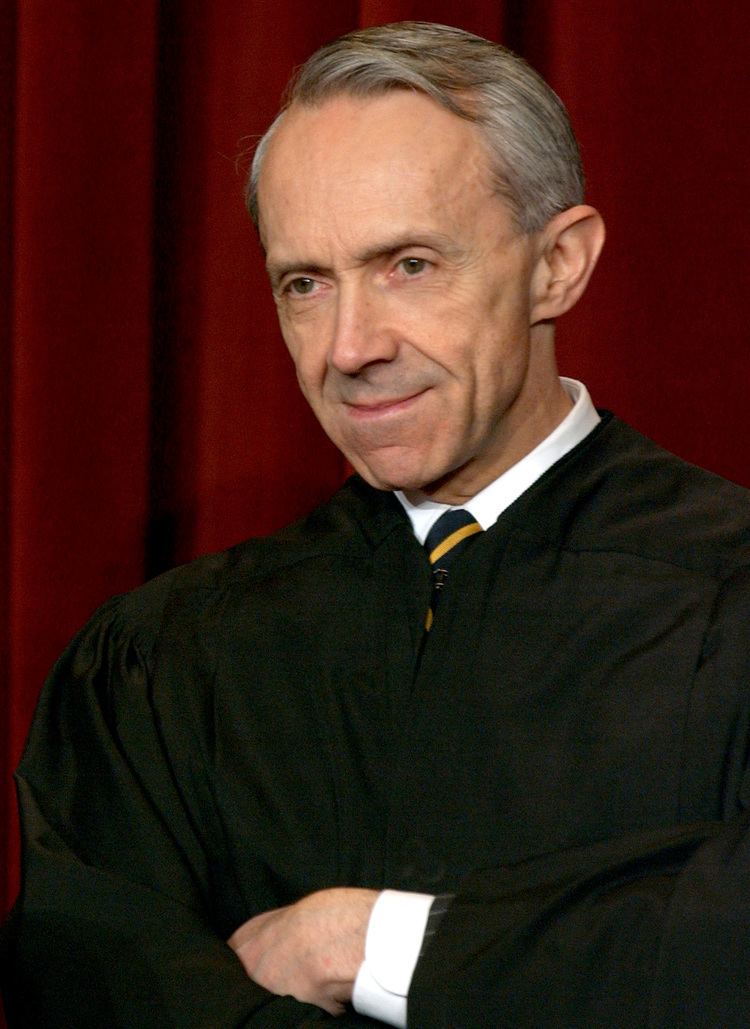
<img src="https://api.follow.it/track-rss-story-loaded/v1/_WmGlu29T9A71aOT_yufGXn9ye8UNv30" border=0 width="1" height="1" alt="David Souter, retired Supreme Court justice, dies at 85" title="David Souter, retired Supreme Court justice, dies at 85"> <p>Retired Justice David Souter, who was appointed to the Supreme Court by a Republican president but became a reliable member of the court’s liberal bloc during his 19 years there – so much so that the phrase “No more Souters” became a rallying cry when future Republican presidents had the opportunity to fill vacancies on the court – died on Thursday at his home in New Hampshire. He was 85 years old.</p> <p>In a <a href="https://www.supremecourt.gov/publicinfo/press/pressreleases/pr_05-09-25">statement released by the court’s Public Information Office</a> on Friday, Chief Justice John Roberts remembered Souter, saying that he “brought uncommon wisdom and kindness to a lifetime of public service.” Souter, Roberts concluded, “will be greatly missed.” </p> <span id="more-505856"></span> <p>David Hackett Souter was born on September 17, 1939, in Melrose, Mass. He graduated from Harvard College in 1961. He was named a Rhodes Scholar, spending two years at Oxford University’s Magdalen College, from which he received a master’s degree in jurisprudence in 1963. </p> <p>After graduating from Harvard Law School in 1966, Souter spent two years in private practice at Orr and Reno, a small firm in Concord. </p> <p>Souter then began a stint in state government, working for Warren Rudman, then the attorney general of New Hampshire. Over the next eight years, he served as an assistant attorney general and then a deputy attorney general before being appointed as the attorney general in 1976. He served in that role for two years before being named as a judge on a state trial court. In 1983, he was named to the state supreme court, where he served for seven years before he was unanimously confirmed by the U.S. Senate to the United States Court of Appeals for the 1st Circuit on May 25, 1990. </p> <p>But Souter’s initial stay on the 1st Circuit was fleeting. In July 1990, when he was just 50 years old, Republican George H.W. Bush nominated Souter to replace liberal lion Justice William Brennan. Bush called him “extraordinarily bright” and cited his reputation for being “extraordinarily fair.” </p> <p>Souter notably lacked a “paper trail”: He had not written any articles or given any speeches that might shed light on his views on controversial issues like abortion. What he did have was the backing of powerful New Hampshirites within the Bush administration, such as John Sununu, a former New Hampshire governor and Bush’s chief of staff, who had named him to the state supreme court. In an interview with the New York Times, Sununu said that he ”was looking for someone who would be a strict constructionist, consistent with basic conservative attitudes, and that’s what I got.” Sununu added that he ”was able to tell the President that I was sure he would do the same thing when he encountered Federal questions.”</p> <p>Rudman, then a U.S. senator, described Souter as “the single most intellectually brilliant mind I have ever met.” </p> <p>Questions and concerns about the possible effects of Souter’s confirmation on the Supreme Court’s 1973 ruling in <em><a href="https://supreme.justia.com/cases/federal/us/410/113/">Roe v. Wade</a></em>, establishing a constitutional right to an abortion, dominated Souter’s confirmation hearing. Molly Yard, then the president of the National Organization for Women, said, “I tremble for this country if you confirm David Souter,” warning that he would “be the fifth vote to overturn” that decision. </p> <p>Souter was eventually confirmed by a vote of 90-9 and began work on the court in Oct. 1990. </p> <p>Less than two years later, Souter would assuage the fears of abortion-rights advocates, and garner the ire of anti-abortion forces, when he joined Justices Anthony Kennedy and Sandra Day O’Connor to reaffirm the fundamental right to an abortion in <em><a href="https://www.oyez.org/cases/1991/91-744">Planned Parenthood v. Casey</a></em>.</p> <p>After 19 years on the bench, Souter <a href="https://www.supremecourt.gov/publicinfo/press/DHSLetter.pdf">stepped down from the court</a> at the relatively young (for a Supreme Court justice) age of 69 in 2009. Only three justices on the court at the time (Roberts and Justices Samuel Alito and Clarence Thomas) were younger than he was. Souter’s retirement was not entirely a surprise however, as he was long believed to have disliked Washington, D.C.: He had said once that he had “the world’s best job in the world’s worst city.”</p> <p>After he had announced his intent to retire but before he officially left the bench, Souter penned a dissent in <em><a href="https://www.oyez.org/cases/2008/08-205">Citizens United v. Federal Election Commission</a></em>, a lawsuit brought by a conservative nonprofit prohibited from showing a movie that criticized then-presidential candidate Hillary Clinton in the run-up to the 2008 elections. Souter’s draft was sharply critical of the majority opinion, which would have gone well beyond what the challengers requested to instead invalidate two major campaign-finance decisions. Writing in the New Yorker, Jeffrey Toobin described Souter’s draft dissent as an “extraordinary, bridge-burning farewell to the Court” that Chief Justice John Roberts feared “could damage the Court’s credibility.” Instead of deciding the case then, Toobin reported, the court heard oral argument in the case again the following term, instructing both sides to the dispute to brief the broader questions. </p> <p>After his retirement from the Supreme Court, Souter became a regular fixture back on the 1st Circuit, hearing hundreds of cases. In one of those cases, <em><a href="https://law.justia.com/cases/federal/appellate-courts/ca1/19-1746/19-1746-2020-10-29.html">Carson v. Makin</a></em>, Souter joined his colleagues in unanimously rejecting a challenge to a Maine program that paid tuition for some students to attend private schools, but barred the use of state funds for tuition at private schools that provide religious instruction. </p> <p>In June 2022, <a href="https://www.scotusblog.com/cases/case-files/carson-v-makin/">the Supreme Court reversed the 1st Circuit’s ruling</a>. Writing for a six-justice majority, Chief Justice John Roberts made clear that when state and local governments opt to subsidize private schools, they must allow families to use those subsidies to pay for religious schools. Any other result, Roberts explained, would be “discrimination against religion.” </p> <p>The court’s ruling in <em>Carson</em> was the third of three decisions opening the door for the use of public funding for religious schools. The justices heard oral arguments last week in <a href="https://www.scotusblog.com/cases/case-files/oklahoma-statewide-charter-school-board-v-drummond/">a case seeking to extend that trio of decisions</a> to allow the establishment of the country’s first religious charter school. A decision in that case is expected by late June or early July. </p>
<p>The post <a href="https://www.scotusblog.com/2025/05/david-souter-retired-supreme-court-justice-dies-at-85/">David Souter, retired Supreme Court justice, dies at 85</a> appeared first on <a href="https://www.scotusblog.com">SCOTUSblog</a>.</p>
By P.K.Balachandran/Eurasia Review Colombo, June 10: Governments in various parts of the world are now using contentious domestic issues to gain local support without considering…