The CIA warned Austrian authorities about a planned terrorist attack at a Taylor Swift concert in Vienna earlier this month, CIA Deputy Director David Cohen said Wednesday.
“The Austrians were able to make those arrests because the agency and our partners in the intelligence community provided them information about what this ISIS-connected group was planning to do,” he added.
Pop superstar Taylor Swift’s concerts in Vienna on August 8, 9 and 10 were called off by organizers after the Austrian police received the warning about a terror plot planned by men inspired by Islamic State.
Following the warning, Austrian authorities arrested two men on August 7 — a 19-year-old in the town of Ternitz, south of Vienna, and a second person in Vienna itself — who were preparing to carry out a terror attack. A third suspect, an 18 year-old Iraqi citizen, was arrested on August 8.
<p>Texas recently became the third state in two years, following Louisiana and Arkansas, to pass a law requiring Ten Commandments displays in public school classrooms. Soon after — like the […]</p>
<p>The post <a href="https://www.scotusblog.com/2025/07/the-ten-commandments-return-to-classrooms-what-will-the-supreme-court-do/">The Ten Commandments return to classrooms: What will the Supreme Court do?</a> appeared first on <a href="https://www.scotusblog.com">SCOTUSblog</a>.</p>
<img src="https://api.follow.it/track-rss-story-loaded/v1/Obw695ncoIEMCUlP9Uo27Xn9ye8UNv30" border=0 width="1" height="1" alt="Supreme Court allows Trump to ban transgender people from military" title="Supreme Court allows Trump to ban transgender people from military"> <p>The Supreme Court on Tuesday afternoon cleared the way for the Trump administration to enforce a Department of Defense policy prohibiting transgender people from serving in the U.S. military. With the court’s three Democratic appointees indicating that they would have denied the Trump administration’s request, <a href="https://www.supremecourt.gov/orders/courtorders/050625zr_6j37.pdf">the justices paused an order</a> by a federal judge in Washington state that had barred the government from implementing the policy anywhere in the United States. </p> <p>Shortly after taking office in 2021, then-President Joe Biden signed an executive order that allowed transgender troops to serve openly in the military. On Jan. 20 of this year, President Donald Trump revoked Biden’s order and issued another order requiring Secretary of Defense Pete Hegseth to put into effect a ban on “individuals with gender dysphoria” – the medical term for the psychological distress caused by a conflict between the sex someone is assigned at birth and that person’s gender identity. </p> <span id="more-505752"></span> <p>On Feb. 26, the Department of Defense <a href="https://www.defense.gov/Portals/1/Spotlight/2025/Guidance_For_Federal_Policies/Prioritizing_Military_Excellence_and_Readiness_P&R_Guidance.pdf">issued that ban</a>, which generally disqualifies anyone who either has gender dysphoria or has undergone medical interventions to treat gender dysphoria from serving in the military. The department explained that “the medical, surgical, and mental health constraints on individuals who have a current diagnosis or history of, or exhibit symptoms with, gender dysphoria are incompatible with the high mental and physical standards necessary for military service.” </p> <p>Seven current transgender members of the armed forces, along with one transgender person who would like to join the military and a nonprofit with members who either are transgender troops or would like to be, went to federal court to challenge the new policy. The lead plaintiff in the case, Commander Emily Shilling, has been a naval aviator for nearly two decades, and she estimates that the Navy has spent $20 million on her training. </p> <p>U.S. District Judge Benjamin Settle agreed with the plaintiffs that the ban violated (among other things) the Constitution’s guarantee of equal protection. He called the policy a “de facto blanket ban on transgender service.” </p> <p>After the U.S. Court of Appeals for the 9th Circuit rejected the government’s request to freeze Settle’s order while the government’s appeal went forward, the Trump administration came to the Supreme Court on April 24. </p> <p>Without the Supreme Court’s intervention, the Trump administration told the justices, the district court’s order will stay in place while litigation continues in the 9th Circuit and, if necessary, the Supreme Court. That is, the Trump administration said, “a period far too long for the military to be forced to maintain a policy that it has determined, in its professional judgment, to be contrary to military readiness and the Nation’s interests.” </p> <p>The challengers countered that if the Supreme Court were to pause Settle’s order, it would “upend the status quo by allowing the government to begin discharging thousands of transgender servicemembers, including” them, “thereby ending distinguished careers and gouging holes in military units.” </p> <p>In a brief unsigned order issued on Tuesday afternoon, the court granted the Trump administration’s request to pause Settle’s order while the government’s appeal proceeds in the 9th Circuit and, if necessary, the Supreme Court. As is often the case for emergency appeals, the court did not provide any explanation for its decision. </p> <p>The court’s three Democratic appointees – Justices Sonia Sotomayor, Elena Kagan, and Ketanji Brown Jackson – indicated that they would have denied the government’s request. But they too did not explain their reasoning. </p>
<p>The post <a href="https://www.scotusblog.com/2025/05/supreme-court-allows-trump-to-ban-transgender-people-from-military/">Supreme Court allows Trump to ban transgender people from military</a> appeared first on <a href="https://www.scotusblog.com">SCOTUSblog</a>.</p>
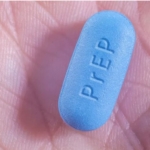
<img src="https://api.follow.it/track-rss-story-loaded/v1/W6gx4-E1MTmSetEp91y_nHn9ye8UNv30" border=0 width="1" height="1" alt="After oral argument, court calls for new briefs in HHS task force case" title="After oral argument, court calls for new briefs in HHS task force case"> <p>Four days after hearing oral arguments in a challenge to the constitutionality of a task force within the Department of Health and Human Services, the Supreme Court <a href="https://www.supremecourt.gov/orders/courtorders/042525zr_3dq3.pdf">asked both the federal government and the challengers to file new briefs</a> discussing the HHS secretary’s power to appoint members of the task force. </p> <p>The group at the center of the case, the U.S. Preventive Services Task Force, is an independent panel of experts that – under the Affordable Care Act of 2010 – makes recommendations about services that private health insurers must cover at no additional cost to patients. </p> <span id="more-505411"></span> <p>In 2020, a group of individuals and small businesses went to federal court in Texas, where they objected on religious grounds to the requirement that insurers cover pre-exposure prophylaxis medicines, known as PrEP, which are highly effective at preventing HIV. Access to the medication, they said, “encourage[s] homosexual behavior, intravenous drug use, and sexual activity outside of marriage.” They argued, among other things, that the structure of the task force is unconstitutional because its members are not appointed by the president and confirmed by the Senate. </p> <p>The lower courts agreed with that argument, and the Supreme Court took up the case earlier this year. </p> <p>Defending the task force, the government contends that the HHS secretary exercises enough control over members of the task force that they do not need to be nominated by the president and confirmed by the Senate – for example, the government emphasizes, the HHS secretary can remove members from the task force at any time. </p> <p>But at <a href="https://www.scotusblog.com/2025/04/court-appears-to-back-legality-of-hhs-preventative-care-task-force/">Monday’s oral argument</a>, some justices (and in particular, Justice Neil Gorsuch) questioned whether the HHS secretary actually has the power to appoint members of the task force, or at the very least whether the court should reach that issue when the lower court had not yet weighed in on it. Friday’s order seeks more information on that issue from both sides, suggesting that the justices continue to be interested in it. </p> <p>Friday’s order also specifically instructs the government and the challengers to discuss two 19th-century Supreme Court decisions: the 1868 case <em><a href="https://tile.loc.gov/storage-services/service/ll/usrep/usrep073/usrep073385/usrep073385.pdf">United States v. Hartwell</a></em> and the 1888 case <em><a href="https://supreme.justia.com/cases/federal/us/124/525/">United States v. Smith</a></em>, both of which involved the question whether government officials were “officers of the United States.” </p> <p>The justices directed each side to file its brief by 2 p.m. on May 5. </p>
<p>The post <a href="https://www.scotusblog.com/2025/04/after-oral-argument-court-calls-for-new-briefs-in-hhs-task-force-case/">After oral argument, court calls for new briefs in HHS task force case</a> appeared first on <a href="https://www.scotusblog.com">SCOTUSblog</a>.</p>