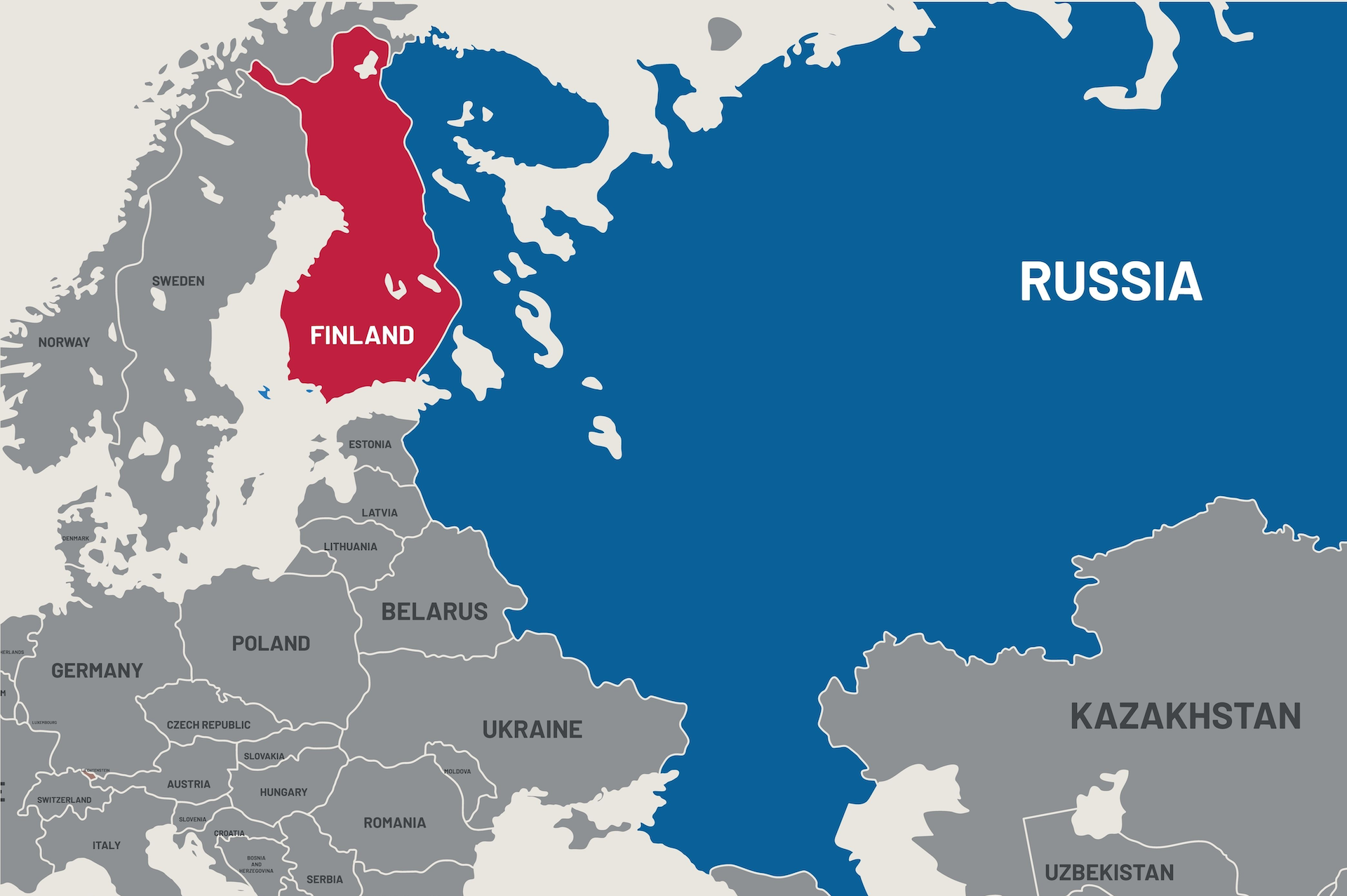

Ukraine’s allies should have supplied Kyiv with more arms before Moscow’s full-scale invasion to prevent the war, NATO’s former chief said Friday.
“If there’s anything I in a way regret and see much more clearly now is that we should have provided Ukraine with much more military support much earlier,” Jens Stoltenberg told the Financial Times. “I think we all have to admit, we should have given them more weapons pre-invasion.”
Stoltenberg, a former Norwegian prime minister, led NATO between 2014 and 2024, making him the second-longest-serving chief in the alliance’s history. Prior to Moscow’s full-scale invasion in early 2022, he said, “sending lethal weapons [to Ukraine] was a big discussion.”
“Most allies were against that, pre-invasion … they were very afraid of the consequences,” he said. “I’m proud of what we have done, but it would have been a great advantage if it started earlier.
“It maybe could even have prevented the invasion, or at least made it much harder for [Russia] to do what they’ve done.”
Throughout the conflict, Kyiv has begged its Western allies for more advanced weapons, including long-range missiles, battle tanks and Patriot air defense systems. Some, such as Germany, eventually relented on some requests while steadfastly refusing others.
Ukraine’s allies “should have given them more advanced weapons, faster, after the invasion,” Stoltenberg said. “I take my part of the responsibility,” he added.

Kyiv has begged its Western allies for more advanced weapons, including long-range missiles. | Lionel Bonaventure/Getty Images
During Stoltenberg’s decade at the NATO helm, the alliance withdrew from Afghanistan at the initiative of the United States. Stoltenberg said NATO’s speedy departure from the country amounted to a broken promise not to leave until “the Afghans can protect their own country and ensure the Taliban doesn’t return.”
He also presided over NATO during former U.S. President Donald Trump’s term and was lauded for keeping the alliance together, even as Trump repeatedly threatened to pull out unless other members boosted their military spending.
“Whether it was a 10 per cent likelihood that NATO would collapse under Trump or 90 per cent, it didn’t change what we had to do,” Stoltenberg said.
Stoltenberg was replaced by former Dutch Prime Minister Mark Rutte on Tuesday and is expected to take a new role as chairman of the Munich Security Conference.

An activist holds a banner against disability benefit cuts’ during a protest by People’s Assembly on June 7. Labour’s welfare reforms will push an extra…
<img src="https://api.follow.it/track-rss-story-loaded/v1/dml6b3XqgYli5M6MdcJlGXn9ye8UNv30" border=0 width="1" height="1" alt="Supreme Court divided over approving first religious charter school " title="Supreme Court divided over approving first religious charter school "> <p>The Supreme Court on Wednesday was divided over a Catholic virtual charter school’s bid to become the country’s first religious charter school. With Justice Amy Coney Barrett recused from the case, the outcome appeared to hinge on the vote of Chief Justice John Roberts, who asked probing questions of both sides but did not make his position clear. </p> <p>The case began two years ago, when Oklahoma’s charter school board approved an application by the archdiocese of Oklahoma City and the diocese of Tulsa to establish St. Isidore of Seville, a virtual Catholic charter school. Although the state law governing charter schools requires them to be non-religious “in their programs, admissions policies, and other operations,” the board’s contract with St. Isidore provided that the school could freely exercise its religious beliefs. </p> <span id="more-505563"></span> <p>Gentner Drummond, the state’s Republican attorney general, went to the Oklahoma Supreme Court, asking it to invalidate the board’s contract with St. Isidore. </p> <p>The state supreme court agreed to do so. St. Isidore, the state court ruled, is a public school and therefore required under state law to be non-religious. </p> <p>Representing the Oklahoma charter school board, James Campbell told the justices that the state’s charter school program relies on private organizations to create more educational options. “Fueled by private ingenuity,” Campbell emphasized, “those schools are thriving.” And he pointed to three of the Supreme Court’s recent cases – <em><a href="https://www.scotusblog.com/cases/case-files/trinity-lutheran-church-of-columbia-inc-v-pauley/">Trinity Lutheran v. Comer</a></em>, <em><a href="https://www.scotusblog.com/cases/case-files/carson-v-makin/">Carson v. Makin</a></em>, and <em><a href="https://www.scotusblog.com/cases/case-files/espinoza-v-montana-department-of-revenue/">Espinoza v. Montana Department of Revenue</a></em> – that, he said, stand for the proposition that when the government makes benefits or funds generally available to the public, it cannot exclude people or groups from such programs just because they are religious. </p> <p>Roberts pushed back against Campbell’s reliance on the trio of cases, suggesting that those cases “involved fairly discrete state involvement.” By contrast, Roberts said, “this does strike me as a much more comprehensive involvement.” </p> <p>Justice Elena Kagan agreed, telling Campbell that this case was “a fair bit different” from <em>Carson</em>, in which the Supreme Court struck down a Maine policy that allowed public funds to be used to pay tuition at non-sectarian schools but not at religious schools. The charter schools in this case, she said, “look like regular public schools” and are subject to the same kinds of requirements as traditional public schools – for example, they are free, they are open to everyone, they have to comply with proficiency standards, and the state can shut them down. “These are state-run institutions,” Kagan concluded. </p> <p>Justice Ketanji Brown Jackson also appeared dubious that the <em>Trinity Lutheran</em> line of cases was necessarily applicable here. In <em>Carson</em>, she noted, the Supreme Court ruled that a state can opt to provide a strictly secular education in its public schools. St. Isidore, she posited, is not being denied a benefit that everyone else is receiving but is instead being denied a benefit that no one else gets – the ability to establish a religious public school. Under the Supreme Court’s cases, she contended, it would have been a different story if St. Isidore wanted to establish a <em>secular</em> public school but its application was rejected because it is a religious institution. </p> <p>Another key focus of the argument was whether St. Isidore is a private actor that has a right to the free exercise of religion or is instead a government entity or a state actor, which would not have such a right. </p> <p>Representing Drummond, Gregory Garre argued that charter schools like St. Isidore have “all the hallmarks of government entities.” They are created by the state, he said – here, by the legislature under state law – and they remain under state supervision and control. The state, he maintained, exercises “extensive oversight of” charter schools’ curriculum, far more than it wields for private schools in the state. Indeed, he noted, federal law requires charter schools to operate under “public supervision and direction.” The state has designated charter schools as public entities, and the public understands them to be public schools, he said. </p> <p>But Campbell pushed back on that characterization, telling the justices that St. Isidore had been created by two private organizations and is controlled by an outside board. </p> <p>Justice Neil Gorsuch seemed receptive to this characterization. He later observed that if the lack of supervision by a school’s board resulted in a determination that a charter school is not a government entity, states could respond by initiating more oversight for charter schools – for example, by placing public officials on the board. </p> <p>Justice Samuel Alito focused on comments made by Drummond in opposing St. Isidore’s application to open a virtual charter school, when he noted that approving St. Isidore’s application would mean that the board would also have to approve a religious charter school operated by a minority religion. You have, he told Garre, a “very serious <em>Masterpiece Cakeshop </em>problem,” referring to the 2018 case of a Colorado baker who refused to make a custom wedding cake for a same-sex couple. The court issued a narrow ruling for the baker, finding that a Colorado administrative agency had been too hostile to his sincerely held religious beliefs. The opposition “reeks of hostility to” Islam, Alito stressed. </p> <p>The justices also spent time exploring the implications of a ruling in either direction. Kagan described a hypothetical involving a school in a Hasidic community in New York that wanted to adopt a curriculum focused on the Talmud and other ancient texts, with instruction in Yiddish or Hebrew. Does New York have to approve this charter school, Kagan queried, even though the curriculum is “super different”? The state wanted to adopt a charter-school program to offer flexibility, but a ruling for the charter school in this case would require it to fund all kinds of religious schools if it wants to have programs at all. </p> <p>Gorsuch countered that it might be a “neutral rule” to require charter schools to teach a standard curriculum that included subjects like math, science, and English. </p> <p>Other justices, including Roberts, asked Garre to address the court’s decision in <em><a href="https://www.scotusblog.com/cases/case-files/fulton-v-city-of-philadelphia-pennsylvania/">Fulton v. City of Philadelphia</a></em>, holding that the city violated the free exercise clause when it refused to enter into a contract with Catholic Social Services to place children in foster homes because of the agency’s policy of not certifying same-sex couples as foster parents. </p> <p>Garre responded that the case before the court on Wednesday was “fundamentally different” from <em>Fulton</em>, because in that case Catholic Social Services was not funded or controlled by the state. </p> <p>Justice Brett Kavanaugh, one of the justices who was most openly sympathetic to the charter school, echoed the arguments by the school and the board that upholding the Oklahoma Supreme Court’s opinion could mean that other faith-based services, like Catholic Social Services or Catholic Charities, would also be deemed government entities and be unable to exercise their religion. </p> <p>Garre again tried to distinguish St. Isidore from those kinds of services, telling Kavanaugh that the other faith-based services are not established by the state itself. </p> <p>Gorsuch pressed Garre further, observing that Catholic Social Services could in fact provide adoption services only with “incredible oversight” from the city. How, Gorsuch asked, would we draw the line between faith-based services that would or would not be government entities? “We have to have a test,” Gorsuch concluded. </p> <p>Toward the end of his time at the lectern, Garre told the justices that if they rule for the board and the school, it will have a “dramatic effect” on the charter-school system. It would mean, he said, that both the federal law governing charter schools and virtually all state charter-school laws would also be unconstitutional, because they require charter schools to be “non-sectarian.” Congress and state governments could adopt new laws, he acknowledged, but in the interim he contended that there would be “uncertainty, confusion, and disruption.” </p> <p>The Individuals with Disabilities Education Act, the federal law ensuring that students with disabilities receive a free appropriate public education, applies to charter schools because they are understood to be public schools, Garre continued. But that understanding could be upended by a ruling for the school and the board. </p> <p>And if religious schools can qualify as public charter schools, Garre continued, it will raise questions about who can be admitted to such schools, whom the schools can hire as teachers, and what the curricula at those schools will be. </p> <p>But several of the justices saw the issue before the court very differently. In Kavanaugh’s view, the religious schools weren’t asking for favoritism; they were simply seeking not to be excluded from the charter-school program based on their religion. The school and the board appeared to have four votes – Justice Clarence Thomas along with Alito, Gorsuch, and Kavanaugh. Whether the chief justice will join them to overturn the Oklahoma Supreme Court’s decision seems possible, but remains to be seen. </p>
<p>The post <a href="https://www.scotusblog.com/2025/04/supreme-court-divided-over-approving-first-religious-charter-school/">Supreme Court divided over approving first religious charter school </a> appeared first on <a href="https://www.scotusblog.com">SCOTUSblog</a>.</p>