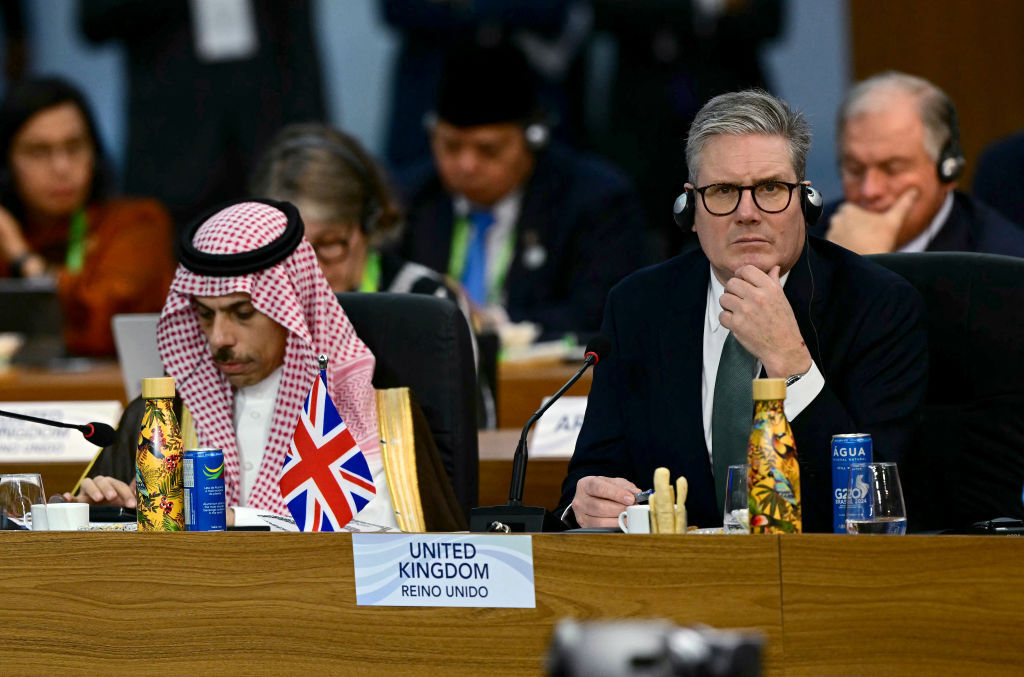
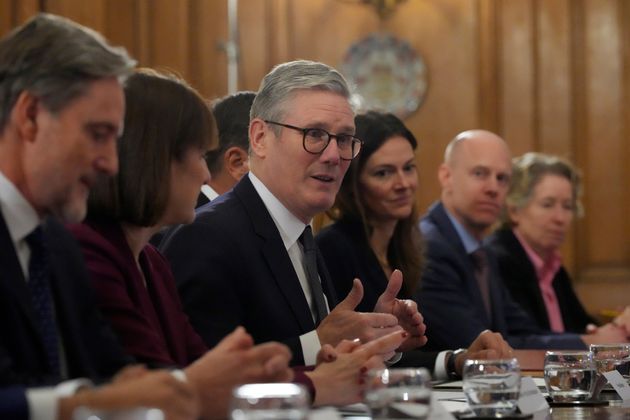
Keir Starmer has endured a torrid start to his time in office.
Less than five months since the general election, hundreds of thousands of people have signed a petition calling for another one.
Just a day after it was first created on parliament’s website, more than a million have so far put their names to it, and the numbers are going up every minute.
That means the petition has easily passed the 100,000 threshold needed for it to be debated in the House of Commons.
The petition says: “I would like there to be another general election.
“I believe the current Labour government have gone back on the promises they laid out in the lead up to the last election.”
The phrase “Call A General Election” has also been trending on X, with former British Olympic swimmer Sharron Davies among those publicising the petition.
Signed.. in case you feel the urge here is the link. Petition: Call a General Election https://t.co/Vt46kfbTh9
However, HuffPost UK can confirm that those who are already demanding to be given the chance to replace the Labour government are going to be disappointed.
A senior Labour source said: “This government was elected just a few months ago with an overwhelming mandate to deliver change. The sooner those who lost accept that, the better.”
Keir Starmer has until 2029 at the latest to call the election, and most observers believe he is unlikely to do so until summer 2028 at the earliest.
Given Labour’s huge 170-seat Commons majority, the chances of the government losing a vote of confidence – another way in which an election can be triggered – are virtually nil.
<img src="https://api.follow.it/track-rss-story-loaded/v1/Hss63mFCsiG0iaUxoukcNHn9ye8UNv30" border=0 width="1" height="1" alt="Transgender service members urge justices to let them continue to serve" title="Transgender service members urge justices to let them continue to serve"> <p>A group of transgender service members urged the Supreme Court on Thursday to leave in place an order by a federal judge that bars the government from enforcing a policy that would prohibit them from serving in the U.S. military. Putting the order on hold, they told the justices, would “upend the <em>status quo</em> by allowing the government to immediately begin discharging <em>thousands</em> of transgender servicemembers, including” the plaintiffs in this case, “thereby ending distinguished careers and gouging holes in military units” </p> <p>The Trump administration came to the court last week, asking the justices to put the order on hold while the service members’ challenge to the policy continues in the lower courts. The order, it said, had usurped the executive branch’s “authority to determine who may serve in the Nation’s armed forces.” </p> <span id="more-505582"></span> <p>The proceedings now before the court began as a challenge to a policy issued in February by the Department of Defense that, subject to narrow exceptions, disqualifies anyone who has gender dysphoria – that is, psychological distress caused by a conflict between the sex that someone is assigned at birth and that person’s gender identity – or has undergone medical interventions to treat gender dysphoria. </p> <p>Seven of the eight individual plaintiffs are currently members of the armed forces and have collectively served more than 100 years and received more than 70 medals. The eighth individual plaintiff would like to join the military. </p> <p>The lead plaintiff is Commander Emily Shilling, a naval aviator who has flown more than 60 combat missions and served as a naval test pilot. During her nearly two decades of service, she says, the Navy has spent more than $20 million on her training. </p> <p>The plaintiffs contend that the policy violates, among other things, the Constitution’s guarantee of equal protection. </p> <p>Senior U.S. District Judge Benjamin Settle, a George W. Bush appointee, agreed with the plaintiffs and barred the government from enforcing its policy anywhere in the United States. He called the policy a “de facto blanket prohibition on transgender service.” </p> <p>When the U.S. Court of Appeals for the 9th Circuit declined to pause Settle’s order while the government appealed, the Trump administration went instead to the Supreme Court on April 24. Solicitor General D. John Sauer stressed that an expert panel during Trump’s first administration had concluded that allowing people with gender dysphoria to serve in the armed forces would be “contrary to ‘military effectiveness and lethality.’” Indeed, he noted, the justices during that administration had allowed the government to enforce a policy “materially indistinguishable from the one at issue here.” </p> <p>The plaintiffs reject the premise of the policy. Instead, they maintain, “equal service by openly transgender servicemembers has <em>improved</em> our military’s readiness, lethality, and unit cohesion, while discharging transgender servicemembers from our Armed Forces would <em>harm</em> all three, as well as the public fisc.”</p> <p>It is immaterial, the plaintiffs say, that the Supreme Court allowed the military to implement a “much narrower and different policy” in 2019. That policy allowed active-duty service members who had already transitioned to remain in the armed forces and retain their healthcare. The earlier policy, they contend, also “lacked the animus-laden language” of the 2025 policy and the executive order that led to it, “which disparage transgender people as inherently untruthful, undisciplined, dishonorable, selfish, arrogant, and incapable of meeting the rigorous standards of military service.” Moreover, the policy before the court in 2019 was “based on <em>predictions</em> about open service by transgender people.” But since then, they emphasize, transgender people have served openly in the military, without any negative effect on military readiness or lethality. </p> <p>The plaintiffs push back against the government’s insistence that the ban only applies to people with gender dysphoria, not to transgender people, dismissing that argument as “folly.” The ban requires members of the armed forces to “only serve in accordance with their [birth] sex,” they note, and prohibits them from serving if they have ever tried “to transition to any sex other than their [birth] sex.” Indeed, they add, Secretary of Defense Pete Hegseth and the department itself have repeatedly referred to the ban as applying to transgender service members. </p> <p>The Trump administration will now have an opportunity to reply to the plaintiffs’ brief. After that, a ruling on the government’s request could come at any time. </p>
<p>The post <a href="https://www.scotusblog.com/2025/05/transgender-service-members-urge-justices-to-let-them-continue-to-serve/">Transgender service members urge justices to let them continue to serve</a> appeared first on <a href="https://www.scotusblog.com">SCOTUSblog</a>.</p>
David Miliband is the president and CEO of the International Rescue Committee. Any political consultant will tell you that all politics is local. However, this…
Drug use, failing rehabilitation and staff resistance to change have pushed Northern Territory jails to a tipping point, the head of the parole board says.…