

Israel has struck a key petrochemical plant at Iran's massive South Pars natural gas field and killed two paramilitary Revolutionary Guard commanders, potentially challenging a new 45-day ceasefire proposal for Tehran and the US as President Donald Trump's ultimatum looms within hours.
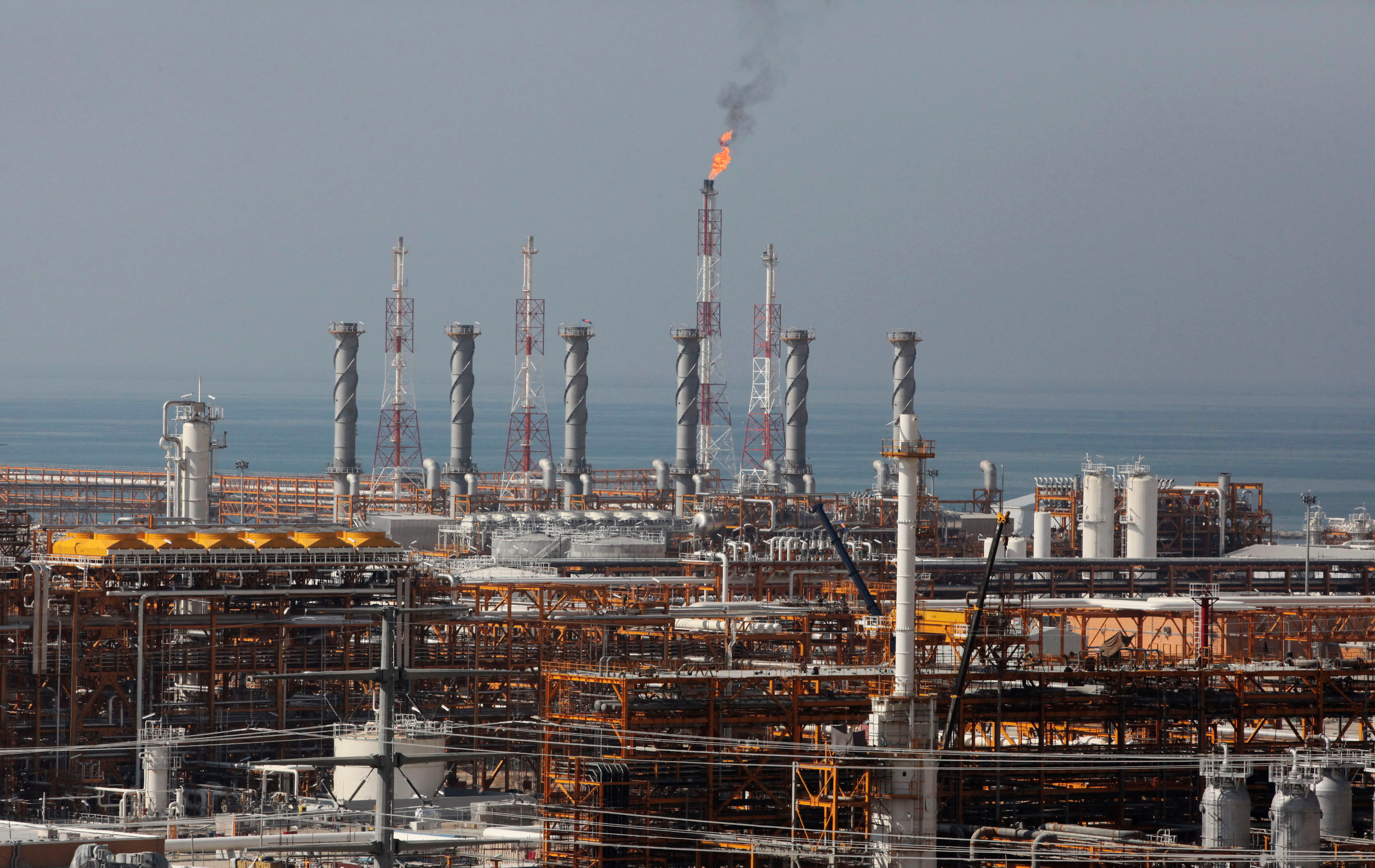
The gas field attack was aimed at eliminating a major source of revenue for Iran, Israel said on Monday.
The field is critical to Iran's electricity production, but the strike appeared to be separate from Trump's threats to target power plants and bridges if Tehran doesn't reopen the Strait of Hormuz to all shipping traffic.
READ MORE: When is 'Power Plant Day'? Clock ticks down on Trump's deadline to strike Iranian infrastructure
Iran's grip on the strait has caused oil prices to surge and shaken the world economy.
Israeli Defence Minister Israel Katz on Monday described "a powerful strike on the largest petrochemical facility in Iran". The gas field shared with Qatar is the world's largest and sits under the Persian Gulf.
Iran's semiofficial Fars news agency and the judiciary's Mizan news agency reported the attack and blamed the US and Israel.
The White House did not immediately comment, though Trump was set to speak to journalists at the White House later in the day (early Tuesday AEST).
After Israel's attack on the field in March, Trump said Israel would not attack it again but warned that if Iran continued striking Qatar's energy infrastructure, the United States would "massively blow up" the field.
Trump's deadline for Tehran to reopen the Strait of Hormuz is set for Monday night Washington time.
READ MORE: Study reveals impact of childcare on kids
Israel threatens Iranian officials as mediators try to buy time
Egyptian, Pakistani and Turkish mediators have sent Iranian Foreign Minister Abbas Araghchi and US Middle East envoy Steve Witkoff a proposal calling for a 45-day ceasefire and the reopening of the strait, two Middle East officials told The Associated Press. The officials spoke on condition of anonymity to discuss the private negotiations.
Iran's foreign ministry spokesman Esmail Baghaei told journalists in Tehran that messages are being exchanged with mediators but "negotiations are entirely incompatible with ultimatums, crimes, and threats of war crimes."
Iranian officials have blasted Trump's weekend threats against infrastructure as incitement to war crimes.
In Islamabad, two senior officials said Pakistan's efforts for a ceasefire are at an advanced stage but "several spoilers and detractors" are trying to sow confusion through disinformation. The officials spoke on condition of anonymity because they were not authorised to speak publicly about the talks.
READ MORE: 'Disgusting': 14-year-olds arrested after 'cowardly' alleged attack on teen
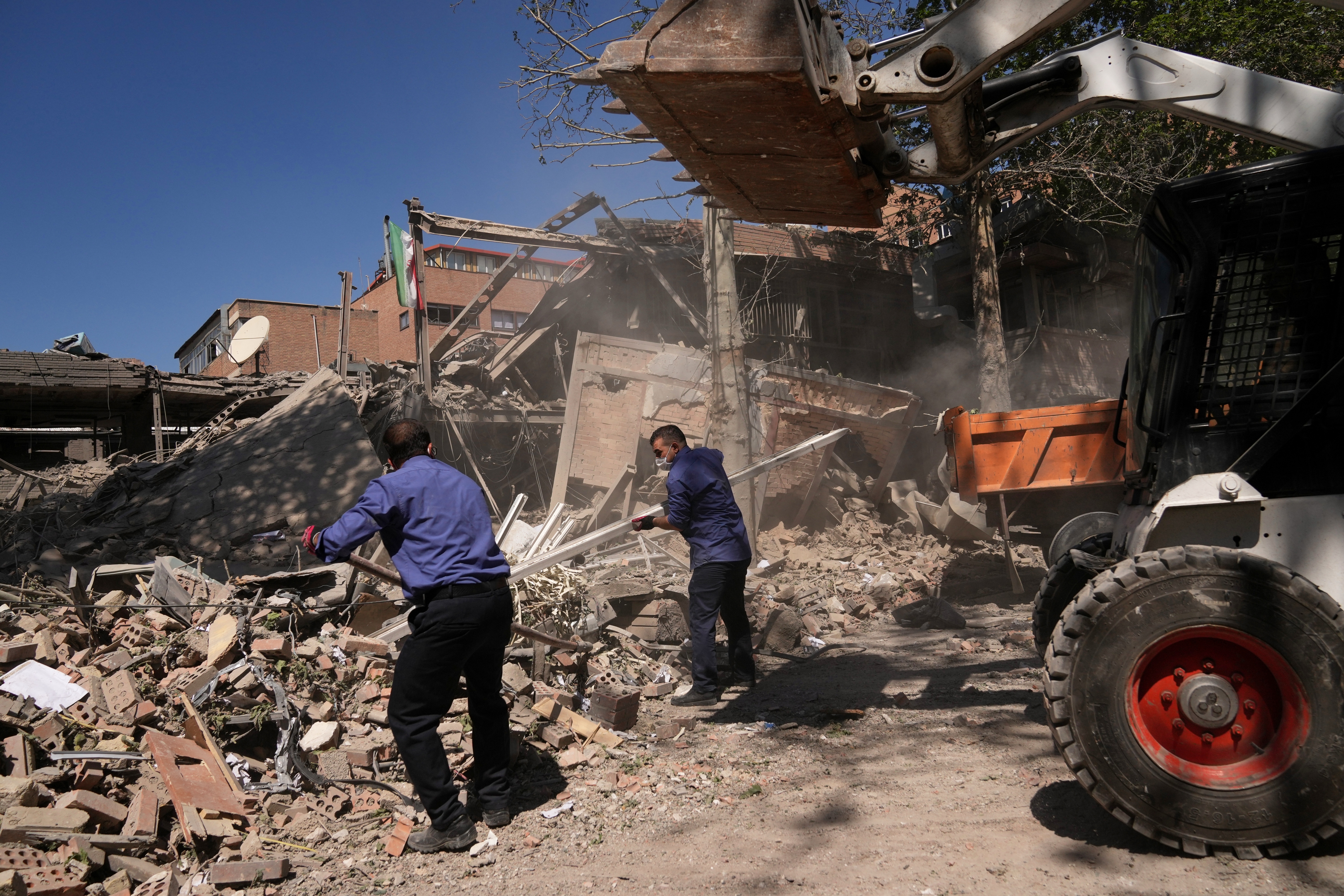
Meanwhile, explosions boomed in Tehran and low-flying jets could be heard for hours.
Among those killed was the head of intelligence for Iran's paramilitary Revolutionary Guard, Major General Majid Khademi, according to Iranian state media and Israel's defence minister.
Israel's military said it also killed the leader of the Revolutionary Guard's undercover unit in its expeditionary Quds Force, Asghar Bakeri.
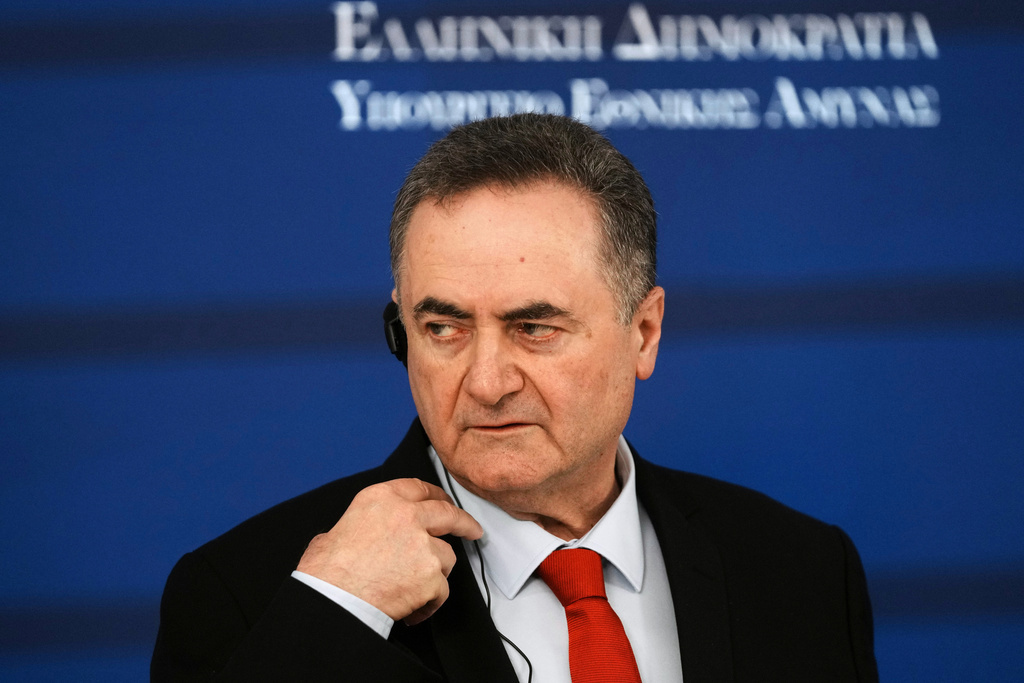
Katz vowed to keep targeting top-ranking officials.
"Iran's leaders live with a sense of being targeted," he said.
"We will continue to hunt them down one by one."
Kuwait, the United Arab Emirates and Saudi Arabia activated air defences to intercept Iranian missiles and drones as Tehran kept up pressure on Gulf neighbours, which has included strikes against infrastructure like oil fields.
In Israel, Iranian missiles hit the northern city of Haifa, where four people from one family were found dead in the rubble of a residential building.
Oil prices rise as pressure grows
Iran's attacks on regional energy infrastructure and its hold on the Strait of Hormuz, through which a fifth of the world's oil is shipped in peacetime, have sent global energy prices soaring.
Brent crude oil, the international standard, rose to $US109 ($157) in Monday spot trading, about 50 per cent higher than when the war started.
Under pressure at home as consumers worry, Trump has warned Iran that if no deal is reached to reopen the strait, the US would hit power plants and other infrastructure and set the country "back to the stone ages."
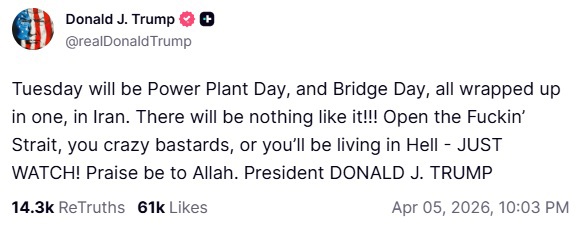
"Tuesday will be Power Plant Day, and Bridge Day, all wrapped up in one," he threatened on Sunday.
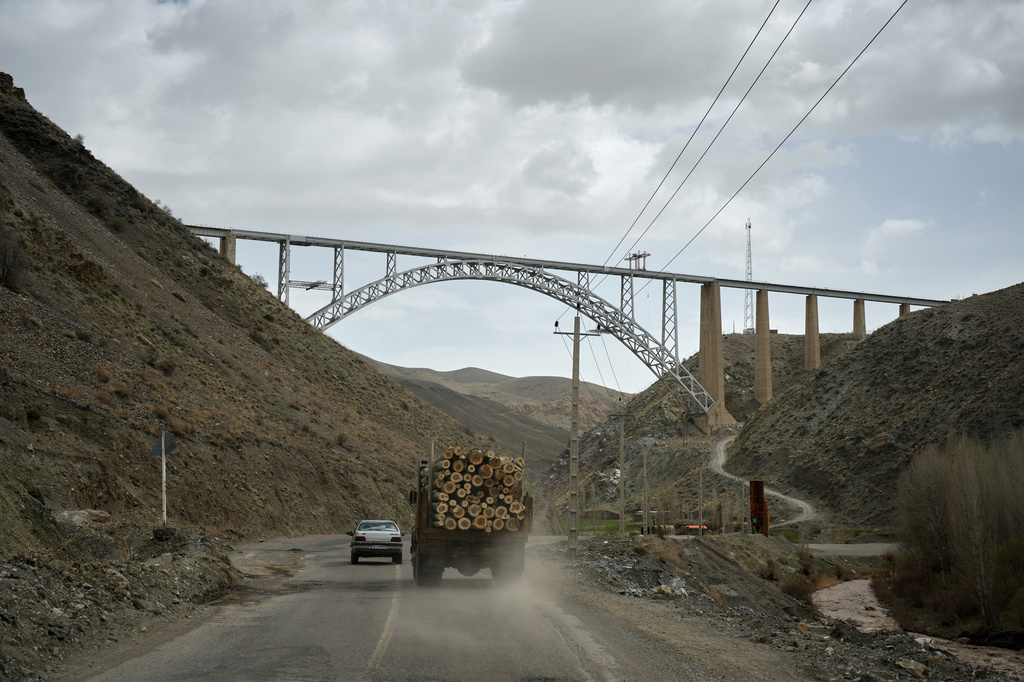
Trump has given multiple deadlines to Iran, and has posted: "Tuesday, 8pm Eastern Time!" (10am AEST) though it was not clear whether he had extended his deadline.
Former Iranian foreign minister Ali Akbar Velayatir urged Arab countries to discourage Trump from striking power plants, warning on social media that the entire region would go "dark" if that happens.
Following Trump's expletive-laced post Sunday, Iran's parliamentary Speaker Mohammad Bagher Qalibaf called threats of targeting Iran's infrastructure "reckless."
Iran has let some vessels through the strait since the war began with US and Israeli attacks on February 28, but none belong to those countries or ones perceived as helping them. Some have paid Iran for passage but the flow of traffic is down more than 90 per cent over the same period last year.
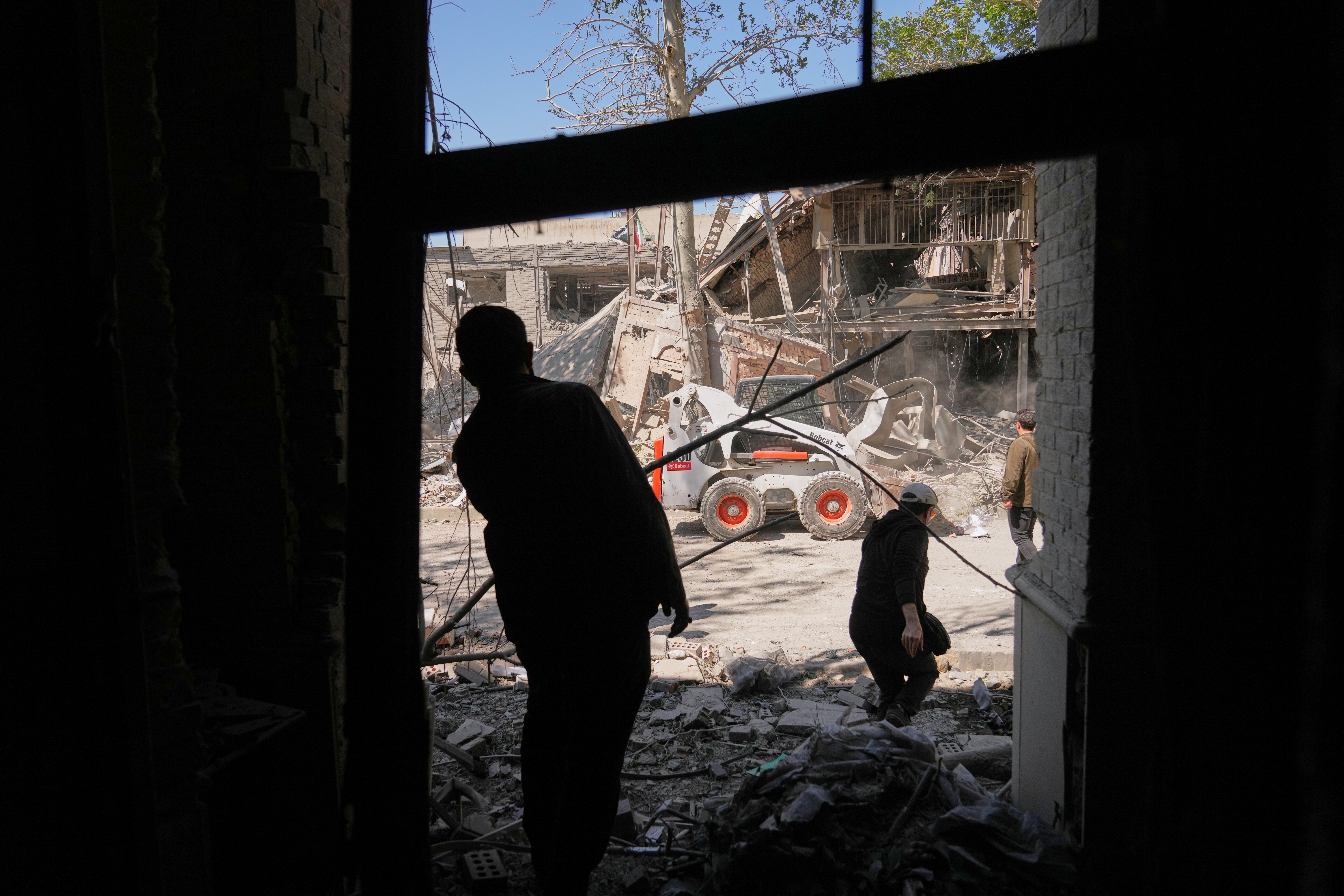
Airstrikes kill more than 25 across Iran
Thick smoke rose near Tehran's Azadi Square after an airstrike hit the grounds of the Sharif University of Technology. Multiple countries have sanctioned the university for its work with the military, particularly on Iran's ballistic missile program.
Araghchi called university "the MIT of Iran", posting on social media that "Aggressors will see our might".
Iranian media reported damage to buildings and a natural gas distribution site next to campus. The university is empty as the war has forced all schools into online classes.
A strike near Eslamshar, southwest of Tehran, killed at least 15 people, authorities said. Five were killed in a residential area in Qom, and six more were killed in strikes on other cities, the state-run IRAN daily newspaper reported. Three people were killed at a home in Tehran, state television reported.
In Lebanon, where Israel has launched air attacks and a ground invasion that it says target the Iran-linked Hezbollah militia, an airstrike hit an apartment in Ain Saadeh town east of Beirut. It killed an official in the Lebanese Forces, a Christian political party strongly opposed to Hezbollah, his wife and another woman.
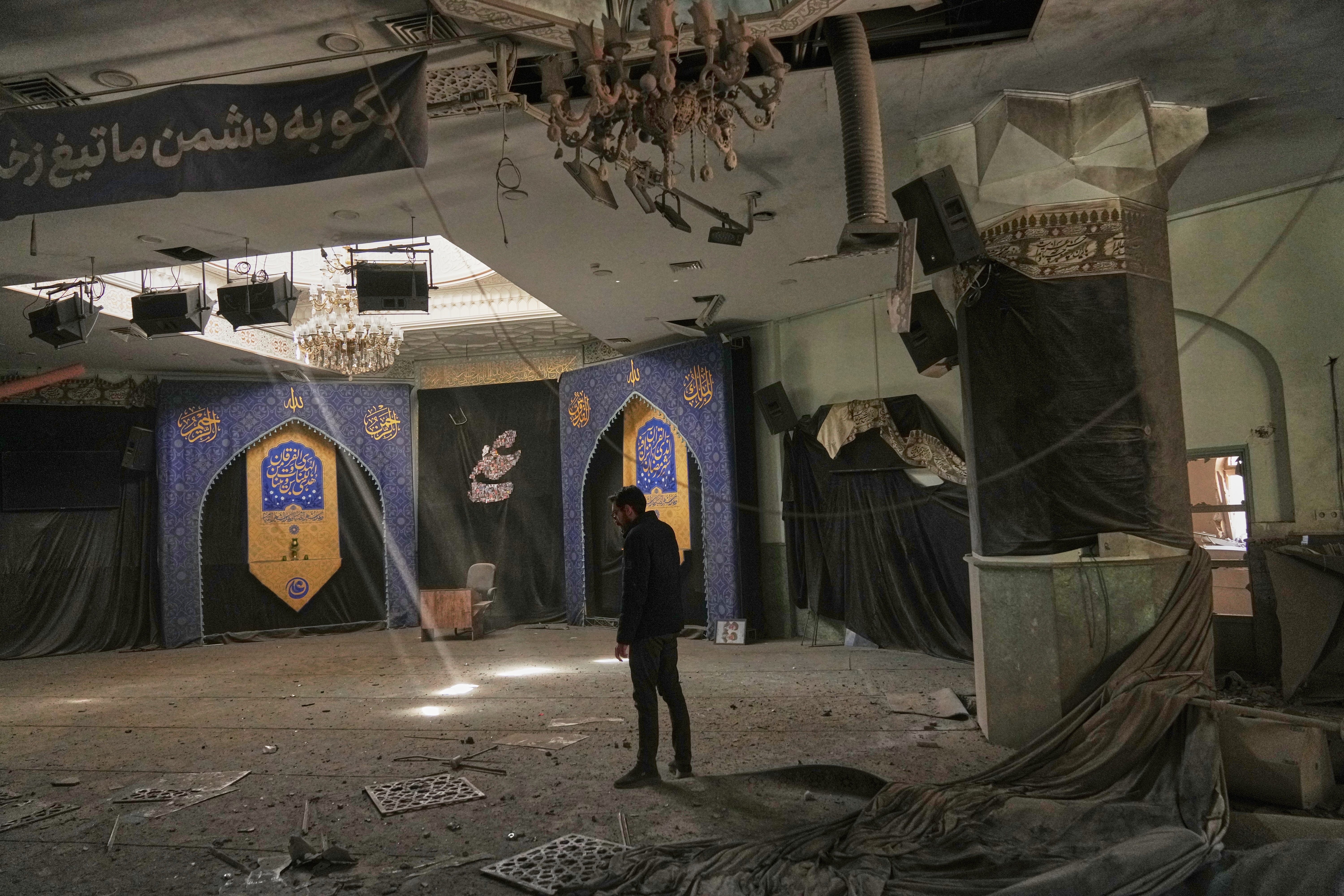
War's death toll in the thousands
More than 1900 people have been killed in Iran since the war began, but the government has not updated the toll for days.
More than 1400 people have been killed in Lebanon and more than 1 million people have been displaced. Eleven Israeli soldiers have died there.
In Gulf Arab states and the occupied West Bank, more than two dozen people have died, while 23 have been reported dead in Israel and 13 US service members have been killed.
NEVER MISS A STORY: Get your breaking news and exclusive stories first by following us across all platforms.
- Download the 9NEWS App here via Apple and Google Play
- Make 9News your preferred source on Google by ticking this box here
- Sign up to our breaking newsletter here
