
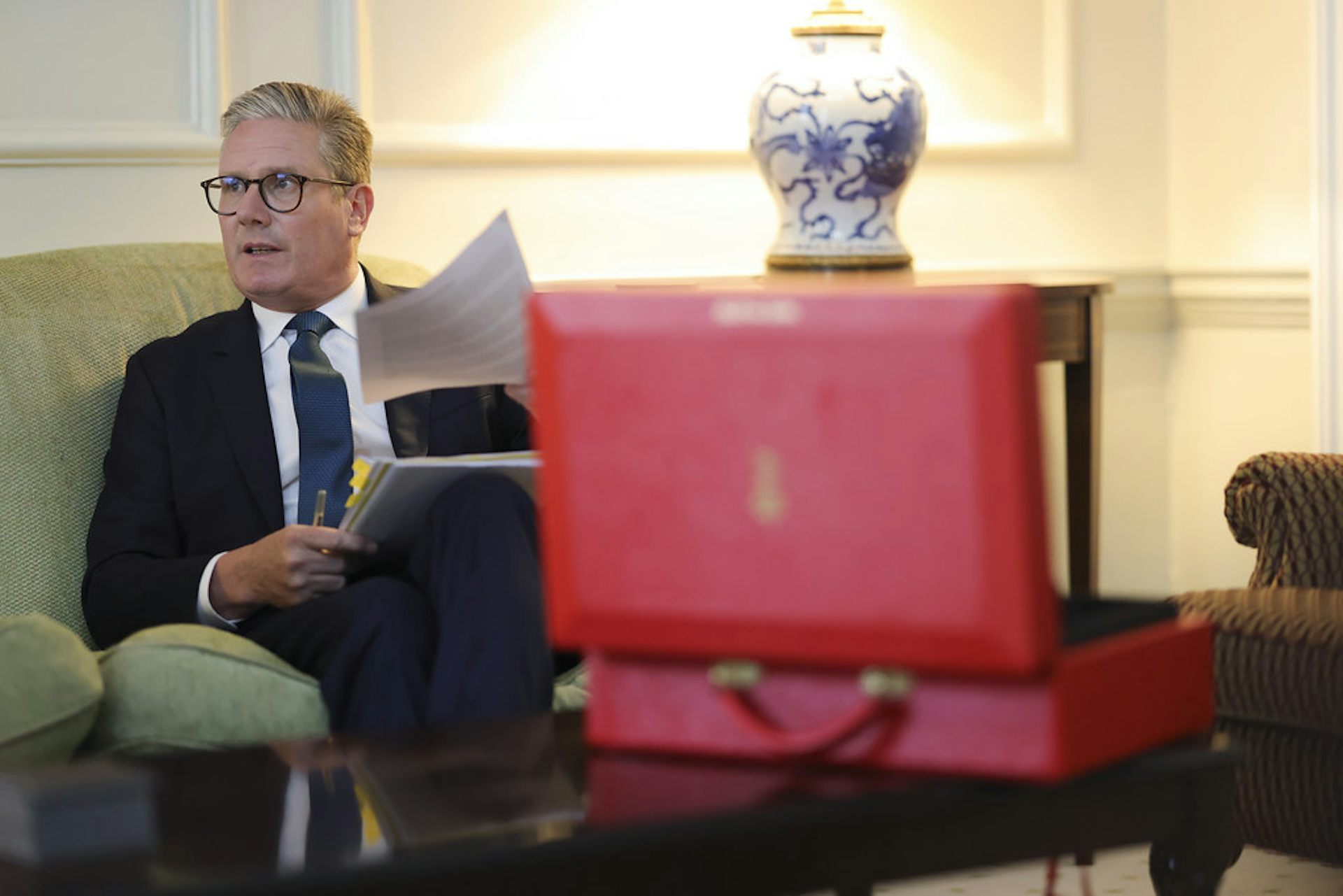

LONDON — British Defense Secretary John Healey resigned from Keir Starmer’s beleaguered government Thursday as a long-running battle over funding for the country’s armed forces came to a head.
In a scathing letter to Starmer, Healey said he was quitting with “great regret and reluctance” — and accused the PM of being “unable, and the Treasury has been unwilling, to commit the resources that the nation needs to defend the country at this time of rising threats.”
The resignation of one of Starmer’s most senior ministers over the repeatedly-delayed Defence Investment Plan comes just days before a crucial by-election in which a Labour challenger to Starmer, already politically weakened, could make his way back into parliament.
In his exit letter, Healey said the proposed settlement Starmer is offering up as part of the DIP — which is supposed to make good on a long-promised uplift of British defense spending — “falls well short of what is required for defence and the country at this dangerous time.”
“You know what defence needs,” Healey wrote. “You made the argument for this powerfully in your speech at the Munich Security Conference back in February.
“Without a DIP that meets the moment in this way, I am being forced to make decisions that would reduce the readiness of our Forces and increase the risk to personnel on operations, and could make the country less safe.”
He added: “After explaining to you that I would not be able to accept a DIP settlement that does not give our Forces the resources they need, I am now left with no other option than to submit my resignation as your Defence Secretary.”
Allies of Healey were quick to heap praise on the outgoing defense secretary.
One ally, granted anonymity like others in this article to speak freely, argued that Heale had “been one of the most loyal Labour men for over 30 years. He’s only ever wanted a successful Labour government.” A British defense industry representative said Healey understood Britain was in a “dangerous moment” and would “only have done this if he thought it was his only option.”
Luke Charters, a backbench Labour MP who campaigns on defense finance, said: “This cannot have been an easy decision, but it speaks volumes about his character that he has chosen principle over position… Politics needs more boldness, not less.”
Healey’s letter makes clear the deep divisions between Britain’s Ministry of Defence and its purse-string holders in the powerful Treasury.
Starmer has pledged to increase British defense spending to 3.5 percent of GDP in line with NATO’s own spending target. But Britain spent just 2.4 percent of GDP on defense last year, and the outgoing defense chief argued that the plan on offer from Starmer and the Treasury amounted to just a 0.08 percent uplift on the current trajectory.
“The extra support is backloaded when the pressure of operations and imperative to speed up readiness to fight is in the first two years and it rises to just 2.68% of GDP in 2030, when we will reach 2.6% next year with the investment we are already making,” Healey wrote.
A second Healey ally accused the Treasury of “playing games to the last moment.”
The departure of Healey raises fresh questions about when the DIP will see the light of day. It had been promised before a NATO summit in July, and headline figures had been expected as soon as this Friday. “This indicates that the news on the DIP is not looking good,” said a British government official.
This is a developing story.
