

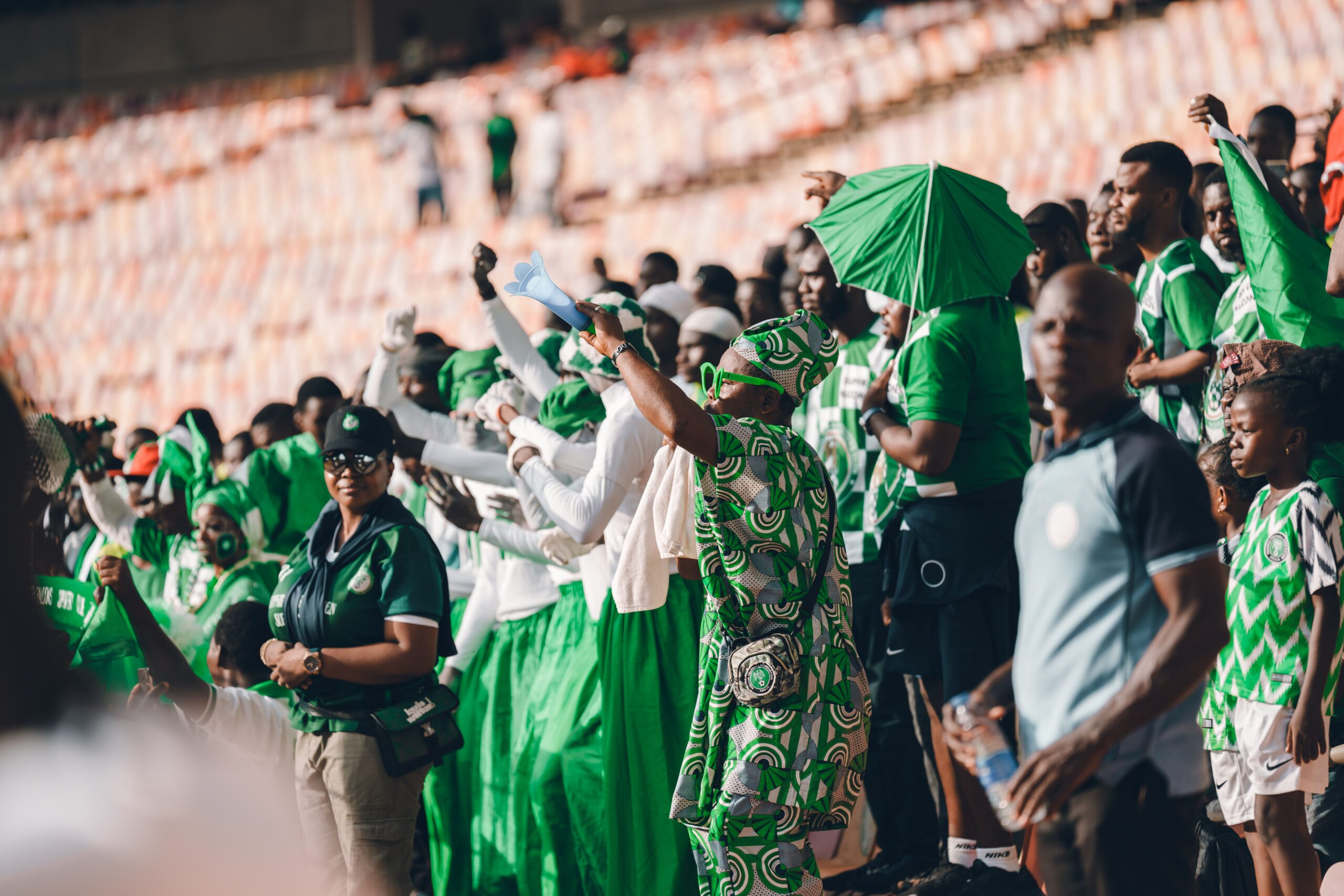
Energetic crowd of Nigerian sports fans wearing green, cheering during a stadium event. Photo Credit: Jonathan Shembere/Pexels
Every individual has a shadow, a part of themselves that contains fears, prejudices, insecurities and uncomfortable truths they would rather ignore. Nations have shadows too. Meanwhile, for a country like Nigeria, its shadow is not defined by a single event or institution. It is reflected in the habits and attitudes that undermine progress: corruption that is excused as a way of life, silence in the face of injustice, discrimination that divides communities, and a reluctance to hold self and leaders accountable.
Nigerians often celebrate their resilience, hospitality and entrepreneurial spirit. These are qualities they should be proud of. But patriotism is not only about celebrating self-strengths; it is also about having the courage to confront our weaknesses. No country can build lasting prosperity while refusing to examine the behaviours that underwhelm its development.
When public resources are diverted for personal gain, it means fewer medicines in health facilities, overcrowded classrooms, poor roads, and fewer opportunities for young people seeking employment. Corruption is not an abstract concept; it affects the daily lives of ordinary Nigerians. Likewise, when citizens witness wrongdoing but choose silence because “nothing will change,” that silence becomes part of the problem. Change begins when integrity becomes everyone’s responsibility, not just that of public officials.
Personal shadows also appear in homes and communities. Domestic violence, child neglect, discrimination, and harmful cultural practices often remain hidden because families fear shame or public embarrassment. Yet problems that are concealed rarely disappear. They usually grow.
Facing shadows collectively means recognising that genuine development requires honesty rather than dwelling on failures. When a nation acknowledges its shortcomings, it is better positioned to correct them than one that pretends they do not exist.
Nigeria has enormous potential. A youthful population, abundant natural resources, talented professionals and resilient communities who build and stand for themselves without government resources. These strengths provide a solid foundation for national transformation. However, potential alone is not enough. Progress depends on the values that guide our decisions every day.
Integrity, accountability, compassion and respect for the rule of law are not merely ideals for speeches and policy documents. They are habits that must be practised in public offices, businesses, schools, places of worship and within our families.
The future Nigerians desire cannot be built solely through government programs or economic investments. It must also be built through character. Every citizen contributes to the moral fabric of the nation by the choices they make, whether anyone is watching or not. This means collectively demanding better from the government, checking ourselves as citizens on how to be better, cautioning one another when and where needed. Don’t urinate in public. Don’t destroy public amenities. Pay your taxes. Vote.
If Nigeria is to realise its full potential, Nigerians must be willing to look honestly at who they are today while working together to become the nation they aspire to be tomorrow. True patriotism is not found in denying our imperfections. It is found in having the courage to face them and the determination to change.
The post Laetitia Mugerwa: What Is Nigeria’s Greatest Challenge and How Can It Be Solved? appeared first on BellaNaija – Showcasing Africa to the world. Read today!.
