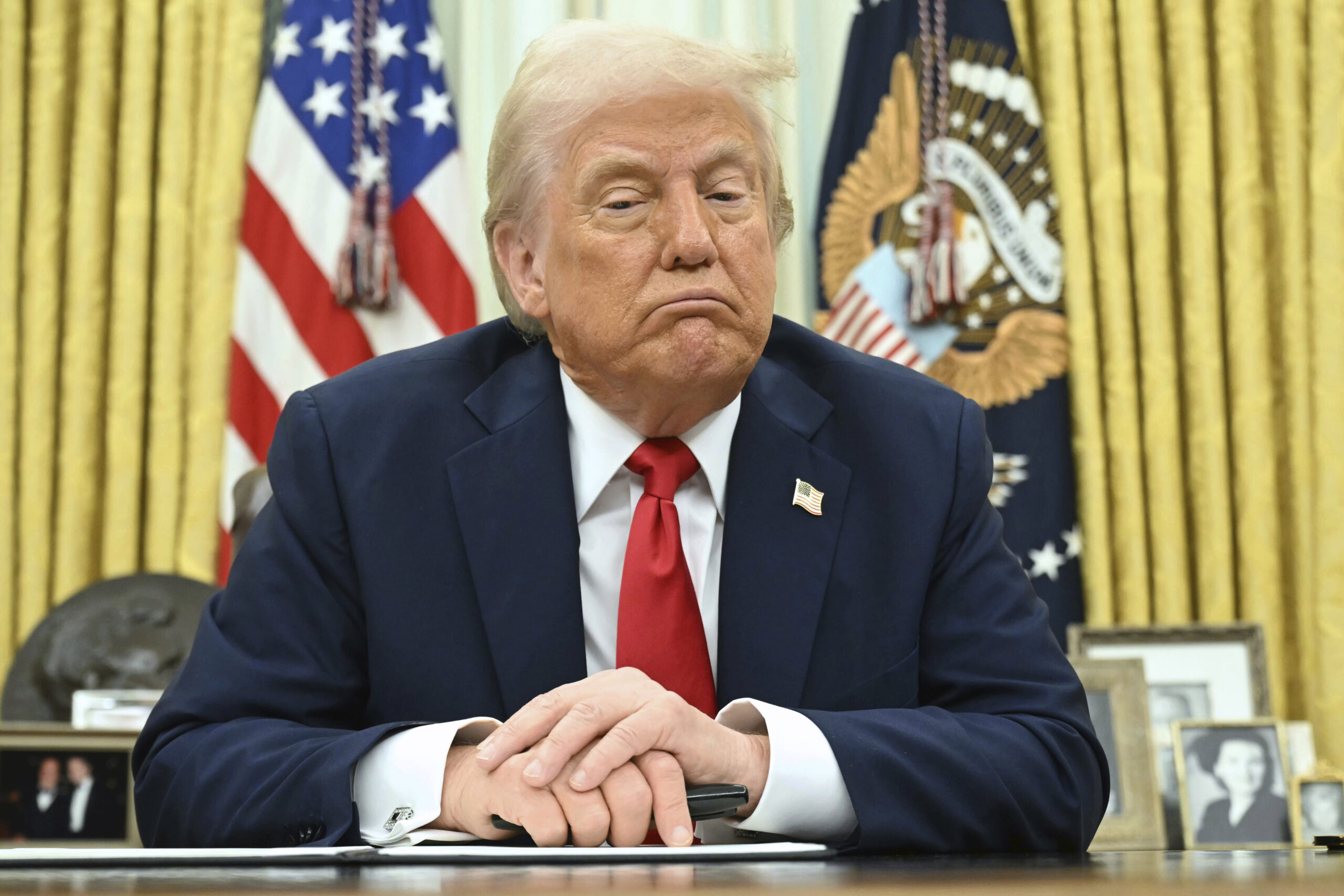

The Trump administration’s snub of South Korea has America’s allies in Asia rethinking how much they can depend on the U.S. for defense — and looking to each other to reduce their reliance on Washington.
President Donald Trump said this week he is cutting back joint military exercises with South Korea, and announced Wednesday that he will meet with North Korean leader Kim Jong Un later this year. That is pushing countries in the region to accelerate their defense spending and forge alternate partnerships, according to Asian diplomats and others familiar with discussions among regional governments.
“Expect a refocus on self-reliance,” said one Asian diplomat. The diplomat, and others, were granted anonymity due to the sensitivity of their comments.
“U.S. defense tech is still the best, and it’s not economical or logical for countries already locked in on it to pivot or diversify due to interoperability and maintenance issues,” the diplomat said. “But I reckon there’ll be more investment by those that can in self-defense to reduce reliance on the U.S. umbrella in the long term.”
That’s especially true because the move against South Korea was a pressure tactic related to a completely different conflict: the Iran war.
Trump’s move “resonates not just in Korea but across the entire Indo-Pacific because everyone’s wondering whether or not their relationship with the United States is as unstable as the Koreans’,” said Ian Brzezinski, who served as deputy assistant secretary of Defense for European and NATO Policy under President George W. Bush. Brzezinski is still in regular contact with Asian officials.
As recently as December, Secretary of Defense Pete Hegseth declared South Korea a “model ally” worthy of a “special favor.” The apparent reevaluation of that relationship is the latest sign that Trump can quickly flip on longtime partners in the region. In May, Trump delayed a $14 billion arms sale to Taiwan as a “bargaining chip” with Chinese leader Xi Jinping.
The U.S. has long worked to buttress alliances in Asia as a counterweight to Beijing’s growing military dominance. Over recent months, however, the Trump administration has appeared to see that as less essential, and Asian countries have already been investing in their own capacities.
The South Korea decision could speed that transition. South Korea is making it clear that it sees the Trump administration’s action and its approach as an insult.
South Korean Foreign Minister Cho Hyun told lawmakers in Seoul on Wednesday that the government was “not notified in advance” of Trump’s decision to cut the duration of the exercises by a week. President Lee Jae Myung — who presented Trump with a gold crown in October — is trying to get U.S. military ties back on track through joint discussions with administration officials, Cho added.
And the talks “are getting messy,” said a person familiar with those discussions. “The War Department and U.S. Forces Korea are just surprised and don’t have any specific plans right now.”
Lee is already seeking other partnerships. “He’s talking to African countries, to the Gulf and Japan” to expand those links, said Jung Pak, a former U.S. senior official who worked on North Korea and the region in the Biden administration. “This dispute is just going to reinforce that the Republic of Korea has to continue to do that.”
Trump’s push to renew high-profile conversations with the North Korean leader, whom he met three times in his first term, comes as the nuclear-armed authoritarian state accelerates its tempo of ballistic missile tests and threats against neighboring Japan.
The departure of the only Asia-based U.S. aircraft carrier to the Middle East this week also has allies questioning how committed the U.S. is to preventing such acts of aggression.
“Recent signals look more like U.S. disengagement, even though cooperation is clearly still ongoing,” said a second Asian diplomat. “The key issue is increasingly not U.S. intent, but U.S. capacity to sustain the level of presence it has promised.”
The Department of Defense declined to comment.
Asian countries do have some options to insulate their defense capabilities — including military hardware supplies — from the risk of becoming bargaining chips in future policy disputes with Washington.
That could include investments in air and missile defense systems, the hardening of military facilities to protect them from attack and greater cooperation with Australian and European forces, said a third Asian diplomat.
China and North Korea’s growing arsenal of conventional long-range ballistic and hypersonic missiles has increased the vulnerability of Asian nations’ military infrastructure previously considered safe from attack — making such investments high on many countries’ priority lists. Taiwan is building a network of hardened fighter aircraft shelters designed to withstand a Chinese missile barrage.
Longer term, South Korea and Japan could develop their own nuclear arsenals for fear that they may not be able to rely on the U.S. as a deterrent.
Indo-Pacific countries are already forging alternate defense partnerships. Japan and the Philippines sealed an agreement in June that creates a secure supply chain for joint military training exercises, while India and Vietnam launched a weapons co-production initiative in May.
“Tokyo keeps repeating that the U.S.-Japan alliance is a cornerstone of its defense policy, but that’s dwindled down to lip service at this point,” said Yuki Tatsumi, former special assistant for political affairs at the Japanese Embassy in Washington, who is in regular contact with both Japanese diplomats and government officials in Tokyo. “Japan increasingly sees itself as leading a coalition of U.S. allies with deep anxiety about U.S. long-term commitment in the region.”
Asian governments feel a growing sense of urgency to take such measures due to the strains that the ongoing war in Iran has placed on the U.S. military and the depletion of key munitions essential in any possible future conflict with China, the third diplomat said.
“U.S. commitments look more contingent, transactional and vulnerable to being overtaken by events elsewhere, and that raises doubts about whether the U.S. can sustain its stated Indo-Pacific priority in a multi-theater crisis,” the person added.
The rise of those new defense groupings could boost Beijing’s longtime efforts to pry Asian countries away from established U.S.-dominated alliances. Chinese Foreign Minister Wang Yi could make the case for a South Korean defense strategy less dependent on the U.S. during his two-day visit to Seoul, which began today.
“The Chinese leadership has long sought an opening to divide the U.S. from its two most important allies in the region: South Korea and Japan,” said Nicholas Burns, former U.S. ambassador to China in the Biden administration. “The timing of the president’s criticism of the South Korean leadership will give Wang Yi an opening to drive the wedge further between Washington and Seoul.”
The Chinese embassy declined to respond to a request for comment.