

Wall Street is sending the public a dire warning: President Donald Trump has become a threat to the very foundation of American freedom — your frequent flier miles.
Okay, America’s big banks haven’t been using rhetoric quite that grandiose. But they are accusing Trump of imperiling Americans’ credit card rewards.
The feud between Wall Street and the White House centers on the Credit Card Competition Act (CCCA). Long stalled in Congress, that legislation aims to drive down the “swipe fees” that merchants pay to banks when customers use credit cards. In theory, if those fees fall, retailers might pass on some of the savings to consumers, in the form of lower prices.
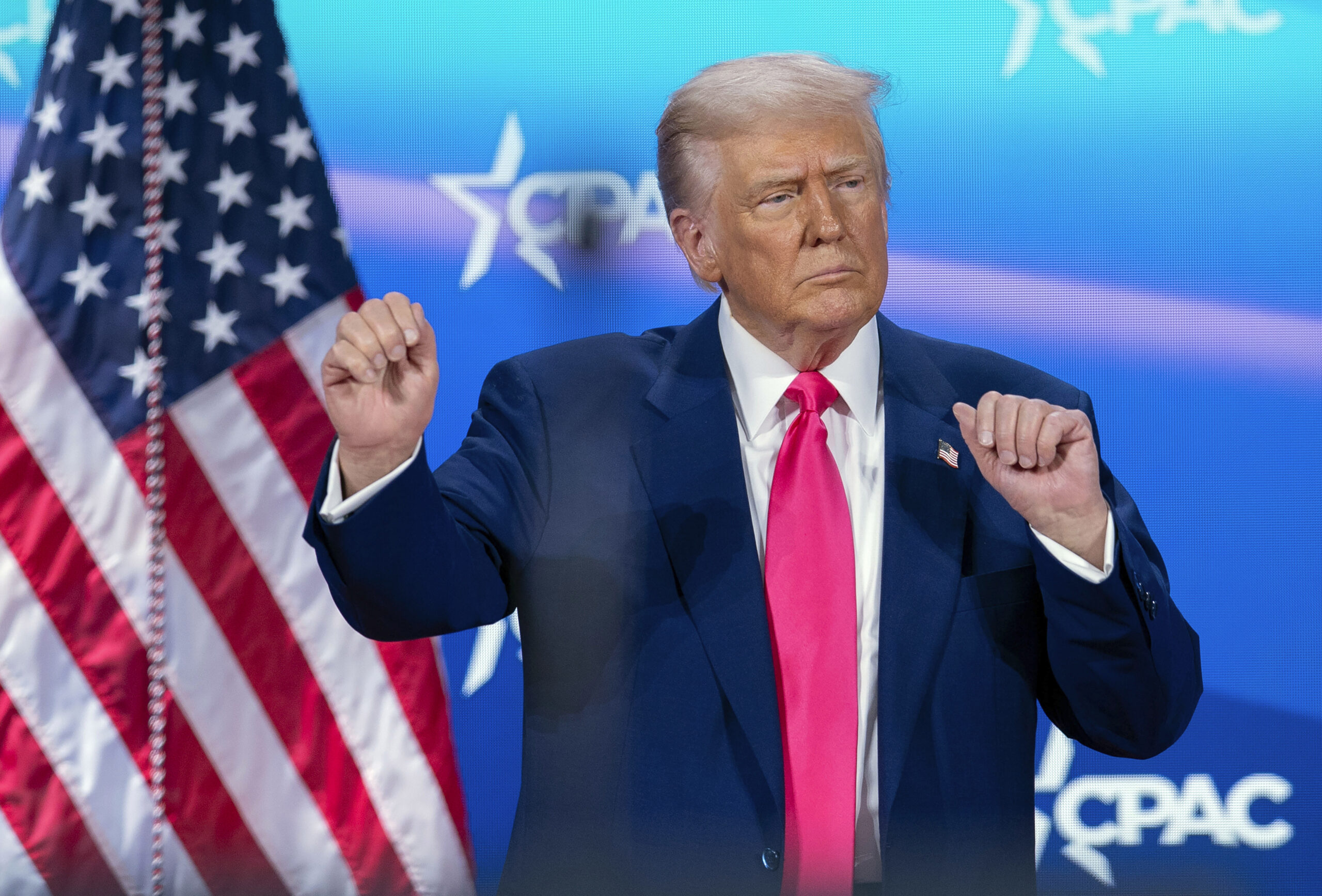
Trump first endorsed the bill in January. But he’s ramped up his advocacy for it recently, amid a broader (belated) push to address voters’ affordability concerns ahead of November’s midterms. Last week, the White House urged Congress to “put Main Street over Wall Street” by enacting the law. On Monday, Trump praised Kansas Sen. Roger Marshall for “working tirelessly to pass the Credit Card Competition Act, in order to stop the out of control Swipe Fee ripoff!”
The financial industry is used to taking fire from Trump right before Election Day, then receiving favorable treatment from him thereafter. But in this case, Trump’s threat is not entirely idle. Large retailers are lobbying hard to get the Credit Card Competition Act passed during December’s lame-duck congressional session. Banks have responded by issuing a “code red,” in the words of the Wall Street Journal. In recent days, their lobbyists have warned policymakers that, if swipe fees fall, credit cardholders’ cash rewards and travel points will go down with them.
In truth, the consequences of the Credit Card Competition Act are uncertain. But if the banks’ big-picture story is right — and the law cuts both swipe fees and credit card rewards — that would probably benefit the average American.
Poor people pay for your travel points
To see why, we need to first examine how the credit card system currently works — and whom it does and doesn’t benefit.
Whenever you use a credit card to purchase a banana from Aldi, or volleyball from Dick’s, or an adult-sized Grape Fanta Can Halloween costume from Party City, the retailer must pay a fee to the bank that issued your card. The bank then uses that revenue to fund your rewards.
Critically, merchants don’t just eat the costs of swipe fees. Rather, they pass on part of the expense to consumers, in the form of higher prices. Some businesses concentrate these price hikes on card users (for example, barbershops often charge less if you pay with cash). But most retailers charge every customer the same price, regardless of their payment method.
For this reason, shoppers who pay with cash or debit effectively subsidize those who pay with cards: The former face higher prices than they would in a world without credit cards, yet they receive no “cash back” or travel points in recompense.
This arrangement seems unfair on its face. But it is especially troubling when one considers class disparities in the use of credit cards and receipt of rewards.
As a general rule, the higher a person’s income, the more they use credit cards. In 2024, US households who earned less than $25,000 a year put just 17 percent of their payments on credit cards; among households earning more than $150,000, that figure was 51 percent, according to Federal Reserve data.
What’s more, the rich are also more likely to qualify for premium cards that charge merchants exceptionally high fees, in order to fund extraordinarily lavish benefits.
As a result of all this, swipe fees effectively redistribute money from poor and working-class people to affluent and wealthy ones. According to a 2026 working paper from the National Bureau of Economic Research, the credit card system takes, on average, $88 a year from households with annual incomes below $150,000, while delivering an average yearly benefit of $390 to households with incomes above that threshold.
American swipe fees are too damn high
To be sure, this does not mean that lower-income Americans would be better off in a world where credit cards didn’t exist. Such cards serve a variety of valuable economic purposes, from helping households weather unexpected expenses and irregular incomes to facilitating online commerce. And maintaining a credit card system costs money: Banks need to finance the loans they extend, while payment networks must maintain vast computer systems to process transactions and detect fraud.
Yet America’s credit card system is needlessly expensive. Our nation’s merchants — and thus, consumers — pay far higher swipe fees than their counterparts in other rich countries.
To take one illustrative example: When an American buys $100 worth of groceries using a standard Visa card, the supermarket must pay the issuing bank a minimum of $1.23. Some disfavored stores must pay as much as $1.57 on such a purchase. If a customer uses a premium “Visa Infinite” card, meanwhile, the grocer’s fee can run as high as $2.07.
By contrast, in Canada, a grocery purchase worth $100 US dollars would incur a fee worth 95 cents if the customer used a standard Visa card.
In Australia and the European Union, meanwhile, government regulations would cap that fee at 30 cents (or .3 percent), no matter what kind of card was used.
Suffice to say, Australia and the EU manage to sustain functional credit card systems, despite charging merchants a tiny fraction of the swipe fees absorbed by US businesses. And although retailers have pocketed some of these savings, research suggests that fee caps have also lowered consumer prices.
This affordability gain does come at a cost; American cardholders do tend to reap higher rewards than Australian or European ones. But this is not a good trade from the standpoint of economic justice; few think it is fair to take money from the poor to give to the rich.
The Credit Card Competition Act might not work
All this said, whether the Credit Card Competition Act would actually yield those outcomes is uncertain. The bill does not directly regulate swipe fees. Instead, as the name suggests, it aims to give credit card companies greater competition.
Today, each time you buy an adult-size Grape Fanta Can Halloween costume with a Visa, Party City is required to process your purchase using Visa’s network. Which means it needs to pay whatever swipe fee Visa decrees. The store can protest an exorbitant rate by refusing to accept Visa cards. But this would send a large number of customers into the hands of Spirit Halloween. So its leverage is limited.
Under the CCCA, however, Party City would be able to accept Visa on a transaction — without necessarily using Visa to process the payment. Instead, the bank that issued the customer’s Visa would need to provide Party City with at least one alternative payment processor — a different network that has no relationship with Visa and which might offer lower fees.
The law’s authors hope — and the banking industry fears — that this mandatory competition will force down swipe fees. But it’s not clear how much of a difference the CCCA would actually make.
After all, under the law, banks would still get to choose the alternative payment network available to retailers when their customers pay with Visa (or Mastercard, or American Express, etc.). Party City would no longer need to pony up whatever Visa asks when a shopper pays with a Visa-Bank of America card. But if the store did decline to use Visa’s network, it would then need to partner with Bank of America’s hand-selected alternative. And since banks benefit from high swipe fees, BofA would have an incentive to pick an expensive backup option.
Nevertheless, the banks and retailers both seem to believe that the CCCA will sharply reduce swipe fees. If they’re right, then Congress shouldn’t vote down the bill, merely to protect affluent Americans’ travel points.
It doubtlessly feels nice to receive a free flight or hotel stay, as a reward for spending a lot of money on yourself. But the poor probably should not have to pay higher prices, just so the affluent can enjoy such satisfactions.