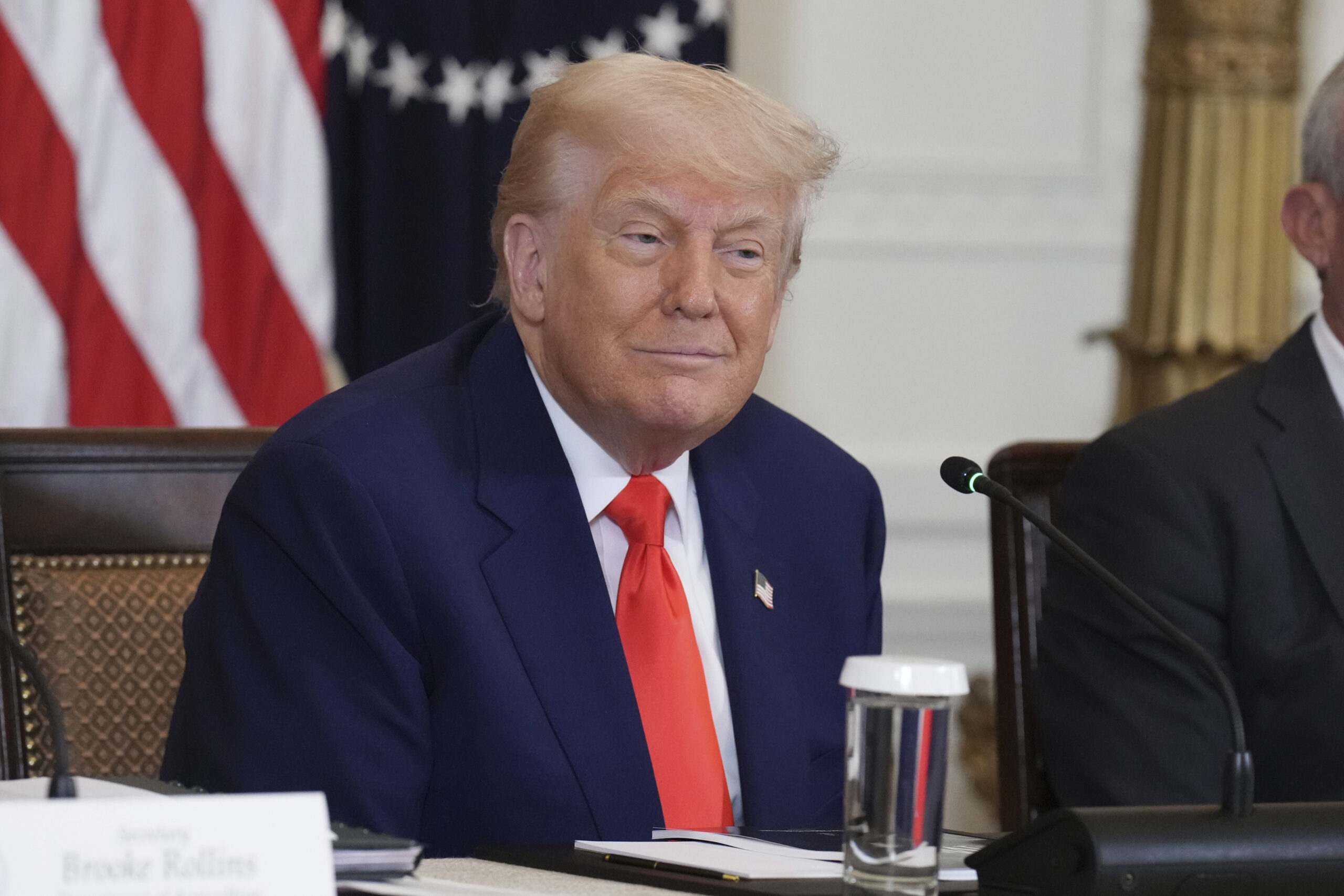
Britian’s ambassador to the Peter Mandelson, delivering remarks on a trade deal between U.S. and U.K. in the Oval Office. Peter Mandelson has been confronted…
<img src="https://api.follow.it/track-rss-story-loaded/v1/QmuZ7Zb8Vvxq5Bdi14Fb4Hn9ye8UNv30" border=0 width="1" height="1" alt="Court takes up New York man’s bid for compassionate release" title="Court takes up New York man’s bid for compassionate release"> <p>The Supreme Court on Tuesday agreed to weigh in on the bid for compassionate release by a New York man convicted of murder for hire a quarter-century ago. The justices’ decision to grant review in <em><a href="https://www.scotusblog.com/cases/case-files/fernandez-v-united-states/">Fernandez v. United States</a></em> was announced on a scheduled <a href="https://www.supremecourt.gov/orders/courtorders/052725zor_p8k0.pdf">list of orders</a> released after the holiday weekend from their private conference on Thursday, May 22. </p> <span id="more-528794"></span> <p>The justices also denied review in two cases that they had repeatedly considered at their conferences over the past few months – one involving the challenge by Native Americans to the transfer to a mining company of federal land that they regard as sacred, the other involving a middle-schooler who was barred from wearing a t-shirt proclaiming that “There Are Only Two Genders.” Both denials spurred dissents from the denial of review by some of the court’s conservative justices.</p> <p>The Supreme Court took up the case of Joe Fernandez, who was sentenced to life in prison for his role in a 2000 murder for hire in retaliation for the victim’s failure to pay a drug debt. In 2021, Fernandez filed a motion for compassionate release. He pointed to the possibility that he was innocent, because the key witness against him was also the alleged main shooter in the conspiracy and had admitted that he had lied as a cooperating witness in another case. Moreover, Fernandez contended, other participants in the conspiracy, who had pleaded guilty while he went to trial, received much lower sentences. </p> <p>A federal district judge in New York granted Fernandez’s motion, reduced his sentence to the time that he had served, and ordered his release. </p> <p>The government appealed to the U.S. Court of Appeals for the 2nd Circuit, which reversed the district court’s decision. The court of appeals interpreted Fernandez’s argument that he is potentially innocent as a challenge to the validity of his conviction. And such a challenge, the court of appeals concluded, cannot qualify as the kind of “extraordinary and compelling reasons” justifying a reduction in sentence, but must instead be brought through a motion for post-conviction relief. </p> <p>Fernandez came to the Supreme Court last fall, asking the justices to weigh in. He contends that although Congress has specifically prohibited district courts from considering a defendant’s rehabilitation when deciding whether to reduce a sentence, federal law otherwise gives district courts broad discretion to reduce sentences when they find “extraordinary and compelling reasons” to do so. In holding that the district court could not consider Fernandez’s potential-innocence claim, he argues, the court of appeals imposed limits that are not found in the statute. </p> <p>The federal government urged the justices to deny review. It insists that Fernandez’s potential innocence and the lighter sentences given to the other participants in the conspiracy are neither “extraordinary” nor “compelling” reasons to reduce his sentence. </p> <p>On Tuesday the court granted review. It reframed the question presented in the case, agreeing to decide whether the kind of “extraordinary and compelling reasons” that may justify a lower sentence can include reasons that can also be cited as reasons to vacate a sentence in a motion for post-conviction relief. </p> <p>Fernandez’s case will likely be argued in the fall, with a decision to follow sometime next year. </p> <p>The justices also asked the federal government to file a brief expressing its views in <em><a href="https://www.supremecourt.gov/search.aspx?filename=/docket/docketfiles/html/public/24-856.html">Cisco v. Doe</a></em>, a case brought by a group of Chinese nationals and a U.S. citizen who are members of the religious group Falun Gong against the company and its executives, alleging that the company helped the Chinese government to set up surveillance technology that it then used to repress the group. </p> <p>Cisco came to the Supreme Court in January, asking the justices to weigh in on the applicability of the Alien Tort Statute, an 18th-century law that allows foreigners to bring lawsuits in U.S. courts alleging serious violations of international human-rights laws, as well as the Torture Victim Protection Act, a 1991 law that allows lawsuits in U.S. courts against foreign officials for torture and murder. </p> <p>There is no deadline for the U.S. solicitor general, D. John Sauer, to file the government’s brief. </p> <p>Over a 17-page dissent by Justice Neil Gorsuch, joined by Justice Clarence Thomas, the court declined to decide <a href="https://www.scotusblog.com/cases/case-files/apache-stronghold-v-united-states/">whether the transfer of federal land in Arizona to a mining company</a> violates the rights of some Native Americans, who regard an area within that land as a sacred site that is essential to their religious practices. A divided federal appeals court rejected a request to block the transfer. Although it acknowledged that the copper mining project planned for the land would at the very least “interfere significantly” with the challengers’ ability to practice their religion, it concluded that the transfer did not force the challengers to violate their religious beliefs. </p> <p>The land at the center of the case, known as Oak Flat, is located on federally owned land in the Tonto National Forest, northeast of Phoenix. Members of the Western Apache people believe that Oak Flat is central to their religious worship because it provides them with a “direct corridor” to speak with their creator. </p> <p>Roughly a mile below Oak Flat is an ore deposit that, if mined, could yield as much as 40 billion pounds of copper. In 2014, Congress enacted a law that authorized the federal government to transfer 2,422 acres, including Oak Flat, to Resolution Copper in exchange for a separate parcel of land, more than twice as large, owned by the company. When the land is eventually transferred and mining begins, it will ultimately create a large crater – approximately 1.8 miles in diameter and somewhere between 800 and 1,115 feet deep – on the land’s surface. </p> <p>Apache Stronghold, an advocacy group created by members of the San Carlos Apache Tribe, went to federal court in Arizona, seeking to block the transfer. The district court rejected that request and a deeply divided U.S. Court of Appeals for the 9th Circuit upheld that ruling. </p> <p>After considering the case at 16 consecutive conferences, the court on Tuesday denied the group’s petition for review. Gorsuch called that decision “a grave mistake.” He suggested that the lower court’s ruling “is highly doubtful as a matter of law,” conflicts with the decisions of other federal courts of appeals, and “is vitally important.” “Before allowing the government to destroy the Apaches’ sacred site,” he concluded, “this Court should have at least troubled itself to hear their case.”</p> <p>Thomas also joined a dissent from the denial of review (along with his own brief dissent) filed by Justice Samuel Alito in <a href="https://www.scotusblog.com/case-files/cases/l-m-v-town-of-middleborough-massachusetts/">the case of a middle schooler</a> who was barred from wearing a t-shirt reading “There Are Only Two Genders.” </p> <p>The student at the center of the case, known here only as L.M. because he is under 18, came to school in 2023 wearing the shirt. When an assistant principal told him that he would need to remove the shirt to remain at school, L.M.’s father picked him up and took him home. The school superintendent later explained in an email to L.M.’s father that the school had been enforcing its dress code, which (among other things) prohibits clothing with “hate speech or imagery” targeting groups based on their sexual identity and gender orientation. </p> <p>The school district’s defense of the dress code and the decision to bar L.M. from wearing the shirt sparked media coverage, protesters and counter-protesters near the school property, and a variety of “hateful” and “threatening” messages to the school or its staff. </p> <p>About six weeks after he originally wore the shirt to school, L.M. came to school again wearing the shirt – this time with the words “Only Two” covered in a piece of tape with the word “Censored” on it. When the school told him that he was not allowed to wear the shirt, L.M. opted to remove it and return to class. </p> <p>L.M. then went to federal court, alleging that by prohibiting him from wearing the t-shirt (both with and without the tape on it) the school district violated his First Amendment right to free speech. </p> <p>A federal appeals court in Boston ruled that the school did not violate L.M.’s First Amendment rights. In 1969, it explained, the Supreme Court upheld the right of public-school students to wear black armbands to protest the Vietnam War. But at the same time, the court made clear that it was sensitive to the “special characteristics of the school environment,” and it indicated that school officials can restrict student speech that “materially and substantially” interferes with discipline in the school. </p> <p>In L.M.’s case, the U.S. Court of Appeals for the 1st Circuit concluded that the school district acted reasonably in concluding that his t-shirt would be interpreted as demeaning to transgender and non-binary students at the middle school, and that it would therefore have a “materially disruptive” effect on the learning environment at the school. </p> <p>Alito indicated that he would have granted L.M.’s petition for review. First, he wrote, the justices “should affirm the bedrock principle that a school may not engage in viewpoint discrimination when it regulates student speech.” He accused the court of appeals of “cherry-picking which First Amendment principles it thought worthy of allowing through the schoolhouse gates.” </p> <p>Second, Alito continued, the justices should have taken up L.M.’s case to “determine whether the First Circuit properly understood” the court’s longstanding rule “regarding the suppression of student speech on the ground that it presents a risk of material disruption.” Although the standard is supposed to be “demanding,” Alito stressed, “the First Circuit fashioned a rule that is anything but.” </p> <p>The justices will meet again for another private conference on Thursday, May 29. Orders from that conference are expected on Monday, June 2, at 9:30 am. </p>
<p>The post <a href="https://www.scotusblog.com/2025/05/court-takes-up-new-york-mans-bid-for-compassionate-release/">Court takes up New York man’s bid for compassionate release</a> appeared first on <a href="https://www.scotusblog.com">SCOTUSblog</a>.</p>
<img src="https://api.follow.it/track-rss-story-loaded/v1/PnSYKtvpAogabU-Nov2oH3n9ye8UNv30" border=0 width="1" height="1" alt="An unexpected shift to the right: the conservative justices’ recent embrace of law review articles" title="An unexpected shift to the right: the conservative justices’ recent embrace of law review articles"> <p><em>Brent Newton is a Practitioner in Residence at Penn State Dickinson Law. </em></p> <p>Law review articles have long been criticized for being out of touch with actual legal practice and having little influence on judicial decision making. Perhaps most notably, in 2011, Chief Justice John Roberts expressed such criticism in comments to the U.S. Court of Appeals for the 4th Circuit’s judicial conference: “Pick up a copy of any law review that you see … you know, the influence of Immanuel Kant on evidentiary approaches in 18th-century Bulgaria, or something.” That, he said, “isn’t of much help to the bar.“</p> <span id="more-528787"></span> <p>Around this time, I, too, was quite skeptical of the practical utility of most law review articles as being too detached from the real world of law practice. In 2012, to see if my suspicion was warranted, I conducted a relatively simple but telling <a href="https://www.scotusblog.com/2012/04/scholars-highlight-law-review-articles-in-the-eyes-of-the-justices/">empirical study</a> of Supreme Court justices’ citations of law review articles (including student notes and comments) in their opinions issued from Jan. 1, 2001, through Dec. 31, 2011. By analyzing 1,961 opinions, my study found that, on average, the justices cited only 0.52 articles per opinion. What’s more, this citation rate was significantly lower than that of justices in the last quarter of the 20th century.</p> <p>Perhaps just as interestingly, my 2012 study found that liberal justices cited law review articles far more frequently than conservative justices. (A justice is labeled “conservative” or “liberal” based on their score on the Martin-Quinn scale — a well-respected empirical measure of justices’ ideological disposition.) Indeed, the three justices who cited law review articles most frequently were all liberals (Justices Stephen Breyer, John Paul Stevens, and Ruth Bader Ginsburg), while the three justices who cited law reviews least frequently were all conservatives (Justice Clarence Thomas, Chief Justice William Rehnquist, and Roberts). </p> <p>Over a decade later, given the larger conservative majority on the court, I decided to update my study to see if the justices were (as I would expect) citing law review articles even less frequently than before. Together with one of my students, May Hennessy, and using essentially the same methodology as the one used in my 2012 study, I conducted an <a href="https://papers.ssrn.com/sol3/papers.cfm?abstract_id=5195073">updated study</a> of the justices’ opinions issued from 2013 to 2024. Contrary to our expectations — given the low regard with which the conservative justices had previously treated law review articles — what we found was quite surprising: a substantial increase in the overall citation rate among all types of opinions. And, to make things even more surprising, this was explained by a dramatic shift in the differing rates of citations to law review articles by conservative justices compared with their liberal colleagues. </p> <p>Specifically, we analyzed the 653 Supreme Court cases decided with opinions after briefing and oral argument following the granting of certiorari by the Supreme Court from October 2013 through June 2024 (11 full Supreme Court terms). Our updated study shows that one or more justices cited at least one law review article in 490 (34.0%) of the 1,441 total opinions issued during that time period. Of the 653 total majority and plurality opinions issued during that decade, 180 (or 27.6%) majority and plurality opinions included citations to one or more law review articles. Those rates were significantly higher than what I found in my 2012 study (which found the justices cited at least one law review article in only 20.2% of all types of opinions, and in 21.3% of majority opinions).</p> <p>As I’ve noted, my 2012 study showed that, on average, the justices cited 0.52 articles per opinion among all 1,961 opinions then analyzed. Conversely, among the total 1,441 total opinions in the current study period, the justices coincidentally cited law review articles 1,441 separate times — meaning, on average, justices cited one law review article per opinion. In other words, there has been a <em>nearly a two-fold increase</em> in the average number of law review articles cited per opinion across all types of opinions.</p> <p>And, as noted earlier, the dramatic increase in citation rates is primarily attributable to the dramatic increase in the rate that conservative justices, specifically, have cited law review articles during the past 11 years. Indeed, unlike in the prior study period, during the current study period, conservative justices cited law review articles at a dramatically higher rate than liberal justices <em>in all types of opinions</em>. </p> <p>To break this down: </p> <p> <strong><u>For All Types of Opinions</u></strong></p> <ul class="wp-block-list">
<li>490 of 1,441 opinions (34.0%) cited at least one law review article — with 1,441 total articles cited, or 1.0 articles cited per opinion on average </li> <li>Conservative justices were responsible for 1,045 of all 1,441 citations (72.5%)</li> <li>Liberal justices were responsible for 396 of all 1,441 citations (27.5%)</li>
</ul> <p> <strong><u>Majority/Plurality Opinions</u></strong></p> <ul class="wp-block-list">
<li>180 of 653 opinions (27.6%) cited at least one law review article — with 369 total articles cited, or 0.57 articles cited per majority/plurality opinion on average</li> <li>Conservative justices were responsible for 270 of the total 369 citations (73.2%)</li> <li>Liberal justices were responsible for 99 of the total 369 citations (26.8%)</li>
</ul> <p> <strong><u>Concurring Opinions</u></strong></p> <ul class="wp-block-list">
<li>77 of 237 opinions (32.5%) cited at least one law review article — with 338 total articles cited, or 1.43 articles cited per concurring opinion on average</li> <li>Conservative justices were responsible for 299 of the total 338 articles cited (88.5%)</li> <li>Liberal justices were responsible for 39 of the total 338 articles cited (11.5%)</li>
</ul> <p> <strong><span style="text-decoration: underline;">Concurring-in-Judgment Opinions</span></strong></p> <ul class="wp-block-list">
<li>47 of 116 opinions (40.5%) cited at least one law review article — with 125 total articles cited, or 1.14 articles cited per concurring-in-judgment opinion on average</li> <li>Conservative justices were responsible for 117 of the total 125 articles cited (93.6%)</li> <li>Liberal justices were responsible for 8 of the total 125 articles cited (6.4%)</li>
</ul> <p> <strong><span><u>Dissent</u></span></strong><span style="text-decoration: underline;"><strong>ing Opinions (in Full or in Part)</strong></span></p> <ul class="wp-block-list">
<li>186 of 435 opinions (42.8%) cited at least one law review article — with 609 total articles cited, or 1.39 articles cited per dissenting opinion on average</li> <li>Conservative justices were responsible for 359 of the 609 total law review articles cited (59.0%)</li> <li>Liberal justices were responsible for 250 of the 609 total law review articles cited (41.0%)</li>
</ul> <p>One easy explanation for this may simply be that, during the past 11 years, conservative justices have outnumbered liberal justices. At the beginning of that period, there were five conservatives and four liberals, and by 2024, there was a full six-justice conservative majority on the court. Conversely, during the 11-year period examined by the prior study, conservatives barely outnumbered liberals on the court. Part of the explanation for the increase in conservative justices’ citations to law review articles is thus likely this imbalance.</p> <p>But, as it turns out, this explanation alone is incomplete. Even accounting for the increased percentage of conservative justices’ opinions since late 2020, there still has been a dramatic increase in the overall rate of conservative justices’ citations to law review articles during the past 11 years. </p> <p>One can see this by looking at the increased rates in the opinions of Thomas and Justice Alito. Thomas was once among the least likely to cite law review articles — from 2001-2011, only 13.3% of his opinions cited at least one law review article, with an average of 0.32 law review articles cited per opinion. In the 2013-2024 period, this changed dramatically: A whopping 43.9% of Thomas’s opinions cited at least one law review article, with an average of 1.28 law review articles cited per opinion. This made Thomas more likely to cite law review articles than any other justice — a complete turnaround from the previous period studied. </p> <p>This holds similarly for Alito. In the 2001-2011 period, 20.2% of his opinions cited at least one law review article, with an average of 0.51 law review articles cited per opinion. In the 2013-2024 period, on the other hand, 28.90% of Alito’s opinions cited at least one law review article, with an average of 1.02 law review articles cited per opinion.</p> <p>The natural question is why the conservative justices, once among the primary critics of law reviews, have thus changed their tune over the past decade. Although the updated study has not attempted to answer this question, I can offer at least two possibilities. First, perhaps the conservative justices have been influenced by a new crop of conservative scholars — including their former law clerks who have more frequently begun to take jobs in legal academia, and whose articles may increasingly be published in law reviews. Another possibility is that conservative justices’ more recent willingness to overrule precedent (or willingness to publicly advocate that precedent should be overruled) has increasingly relied on law review articles to make that case. </p> <p>In any event, for now, it is sufficient to say that our findings indicate that the utility of law review articles — at least when measured by Supreme Court justices’ citation rates — has notably increased, and that it is conservatives who are heartily embracing that legal scholarship. </p>
<p>The post <a href="https://www.scotusblog.com/2025/05/an-unexpected-shift-to-the-right-the-conservative-justices-recent-embrace-of-law-review-articles/">An unexpected shift to the right: the conservative justices’ recent embrace of law review articles</a> appeared first on <a href="https://www.scotusblog.com">SCOTUSblog</a>.</p>
<img src="https://api.follow.it/track-rss-story-loaded/v1/VEyN_OtLc1IyOB_7XoZZG3n9ye8UNv30" border=0 width="1" height="1" alt="The morning read for Tuesday, May 27" title="The morning read for Tuesday, May 27"> <p>I hope you had a meaningful Memorial Day weekend. </p> <p>Each weekday, we select a short list of news articles and commentary related to the Supreme Court. Here’s the Tuesday morning read:</p> <ul class="wp-block-list">
<li><a href="https://www.reuters.com/world/us/fbi-announces-new-probes-into-dobbs-supreme-court-leak-white-house-cocaine-2025-05-26/">FBI announces new probes into Dobbs Supreme Court leak, White House cocaine incident </a>(Raphael Satter, Reuters) </li> <li><a href="https://www.newsweek.com/majority-americans-believe-president-must-obey-court-rulings-new-poll-2077102">Majority of Americans Believe President Must Obey Court Rulings: New Poll</a> (Adeola Adeosun, Newsweek) </li> <li><a href="https://www.nbcnews.com/news/latino/venezuelans-tps-fear-deported-supreme-court-ruling-rcna208716">These Venezuelans are in the U.S. legally, but a Supreme Court order on TPS is upending their lives</a> (Nicole Acevedo, NBC News) </li> <li><a href="https://www.nytimes.com/2025/05/25/opinion/supreme-court-trump-power.html">Why Is This Supreme Court Handing Trump More and More Power?</a> (Kate Shaw, The New York Times)</li> <li><a href="https://davidlat.substack.com/p/supreme-court-scotus-clerk-hiring-october-term-2025-ot-2026">SCOTUS Clerk Hiring Watch: OT 2025 And Beyond</a> (David Lat, Original Jurisdiction) </li>
</ul> <p></p>
<p>The post <a href="https://www.scotusblog.com/2025/05/the-morning-read-for-tuesday-may-27/">The morning read for Tuesday, May 27</a> appeared first on <a href="https://www.scotusblog.com">SCOTUSblog</a>.</p>
<p>Former Benue Governor Gabriel Suswam has blamed the PDP’s crisis on its party leaders who lack capacity, are insincere with members</p>
<p>The post <a href="https://www.arise.tv/gabriel-suswam-pdp-suffering-from-its-leaderships-lack-of-capacity-insincerity-with-members/">Gabriel Suswam: PDP Suffering From Its Leadership’s Lack Of Capacity, Insincerity With Members</a> appeared first on <a href="https://www.arise.tv">Arise News</a>.</p>
PARIS — French Prime Minister François Bayrou on Tuesday delivered a scathing critique of his predecessor and centrist ally Gabriel Attal’s proposal to ban Muslim…
President Donald Trump speaks during the 157th National Memorial Day Observance at Arlington National Cemetery, Monday, May 26, 2025, in Arlington, Va. A renowned historian…
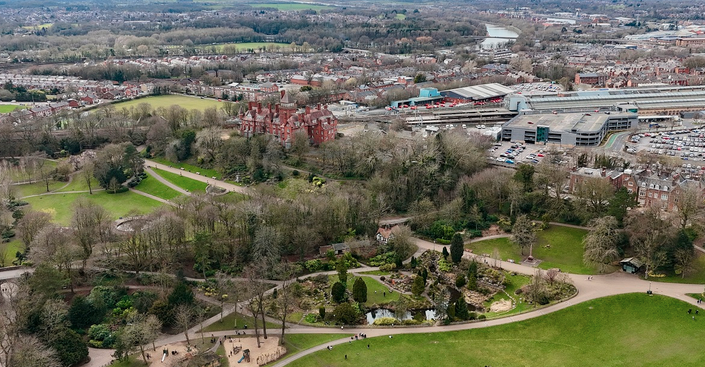
Lancashire is not currently involved in an initiative by the North of England’s mayors to boost investment and jobs – in spite of one the aims of the project being […]