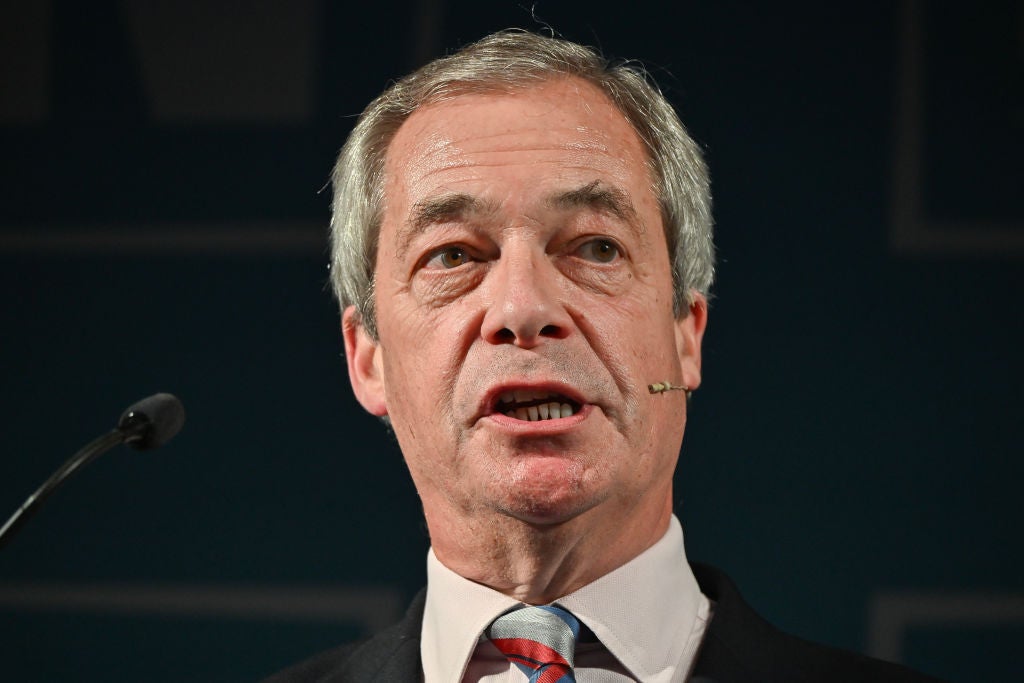
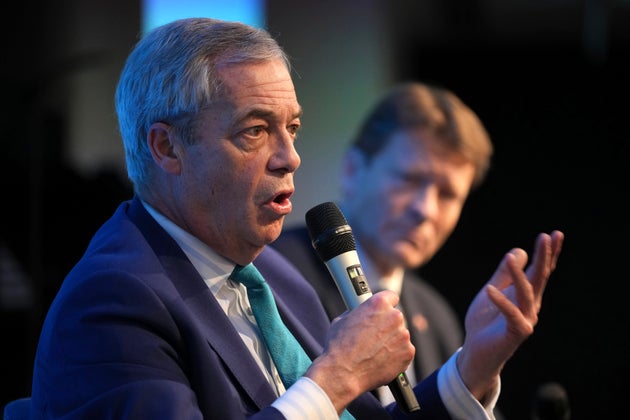
Tice was challenged on his claim during an interview on GB News.
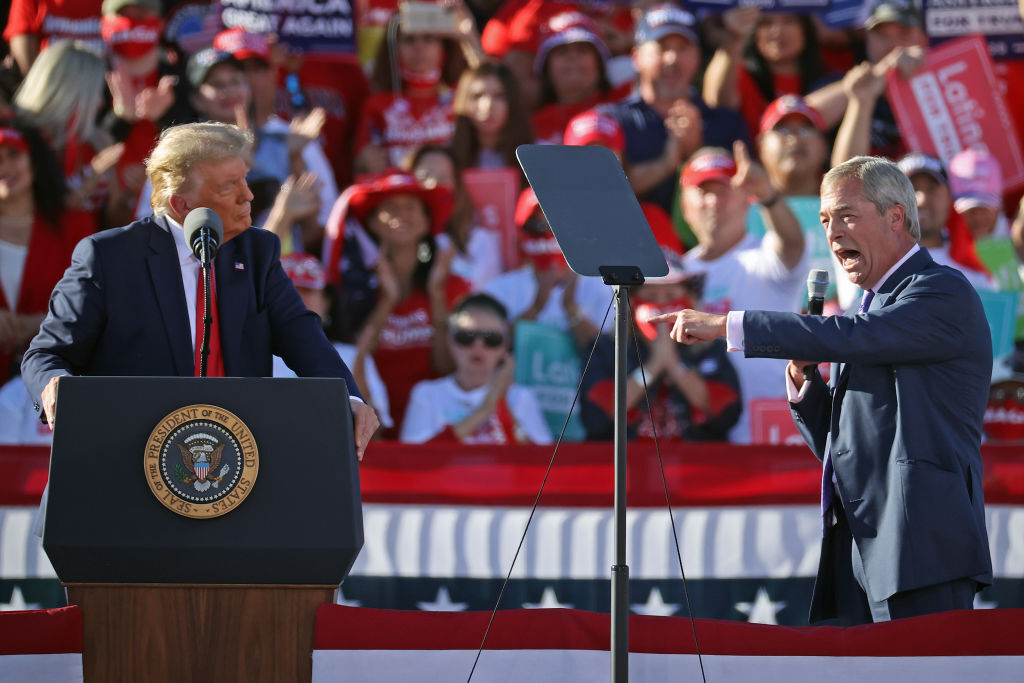
Farage has been accused of “fawning over Putin” over his views on the ongoing war between Russia and Ukraine.
During last year’s election campaign, he was criticised for saying the West had “provoked” Russia into invading its neighbour through the eastward expansion of Nato and the European Union.
Tice was challenged by GB News presenter Camilla Tominey after he defended his party’s record on Ukraine.
He said: “We have stood rock solid with Ukraine.”
Tominey hit back: “He hasn’t been. Nigel Farage has been rock solid behind Ukraine? Why are you saying that? He hasn’t been.”
Tice said: “Nigel has said, quite rightly, as have I, the ultimate objective has to be a lasting peace with strong, robust security guarantees.”
The presenter replied: “But he hasn’t been rock solid behind Ukraine.”
Tominey then asked him: “You’re saying that Nigel Farage has been rock solid behind Ukraine? What, when he was praising Putin as a great leader? When he was talking about the Russian bear being poked by the expansion of the European Union and Nato?”
Tice said: “That’s patently, patently not the case. Nigel and I has been rock solid that Putin is the aggressor, he is an evil dictator and Ukraine has been illegally invaded.”
But just a week ago, on an LBC phone-in, Farage said: “I’m not a huge fan of Ukraine, it’s a very, very corrupt country.”
Camilla Tominey: Nigel Farage has been rock solid behind Ukraine… why are you saying that, he hasn't been?
Richard Tice(Reform MP): I'm sorry, that's completely wrong
CT: When he was praising Putin… when he was talking about the Russian bear being poked..? pic.twitter.com/w2TZjNY0Az
Polling last week showed that Farage’s popularity with the British public has fallen since the escalation of the Ukraine crisis in the past two weeks.
According to YouGov, the number of voters with a favourable view of Farage has fallen from 30% to 26% since mid-February, while the number with an unfavourable view has risen from 60% to 65%. That gives him an overable rating of minus 39.
At the same time, Keir Starmer’s approval ratings have gone up.
Two suspected bank robbers jumped to their deaths Thursday during a Lebanese army raid on their apartment, state media reported, amid a surge in crime…
After missing its original targets, Alberta’s UCP government is revising a $1.2-million sole-source contract to roll out an app that will track data on addiction…
<img src="https://api.follow.it/track-rss-story-loaded/v1/3vpRenQNoiN6jRKUT5Ge8Xn9ye8UNv30" border=0 width="1" height="1" alt="Trump asks Supreme Court to allow ban on transgender service members from the military" title="Trump asks Supreme Court to allow ban on transgender service members from the military"> <p>The Trump administration came to the Supreme Court on Thursday morning, asking the justices to allow it to enforce a 2025 Department of Defense policy prohibiting individuals who are transgender from serving in the U.S. military. On March 27, U.S. District Judge Benjamin Settle prohibited the government from enforcing its policy anywhere in the United States. </p> <p>Shortly after U.S. Solicitor General D. John Sauer <a href="https://www.supremecourt.gov/DocketPDF/24/24A1030/356382/20250424102154372_Emily_Shilling_et_al_application.pdf">filed his request</a> with the court, the justices instructed lawyers representing the challengers to file their response by Thursday, May 1, at 5 p.m.</p> <span id="more-505383"></span> <p>On Jan. 20, President Donald Trump issued an executive order that revoked an order by then-President Joe Biden that had allowed transgender members of the armed forces to serve openly. Soon after that, Trump issued <a href="https://www.presidency.ucsb.edu/documents/executive-order-14183-prioritizing-military-excellence-and-readiness">another order</a> that required Secretary of Defense Pete Hegseth to implement a ban on “individuals with gender dysphoria” – that is, psychological distress caused by a conflict between the sex someone is assigned at birth and that person’s gender identity. </p> <p>In February, the Department of Defense issued a policy that, subject to narrow exceptions, disqualifies anyone who has gender dysphoria or has undergone medical interventions to treat gender dysphoria from serving in the military. </p> <p>The individual plaintiffs are seven current members of the armed forces, all of whom are transgender, and a transgender person who would like to join the military. The lead plaintiff, Commander Emily Shilling, has been a naval aviator for 19 years, during which she has flown more than 60 combat missions and was a Navy test pilot. She contends that the Navy has spent $20 million on her training. She transitioned beginning in the fall of 2021. </p> <p>The plaintiffs went to federal court to challenge that policy, arguing that it violated (among other things) the Constitution’s guarantee of equal protection. </p> <p>Settle agreed with them, calling the policy a “de facto blanket prohibition on transgender service.” </p> <p>The U.S. Court of Appeals for the 9th Circuit declined to put the district court’s order on hold while the government appealed. </p> <p>Contending that Settle’s order had appropriated the executive branch’s “authority to determine who may serve in the Nation’s armed forces,” Sauer on Thursday asked the justices to put Settle’s order on hold while the litigation continues in the court of appeals and (if necessary) the Supreme Court. </p> <p>Sauer emphasized that during the first Trump administration, an expert panel had concluded that allowing individuals with gender dysphoria to serve in the armed forces would be “contrary to ‘military effectiveness and lethality.’” And although the Supreme Court has made clear that “professional military judgments about the composition of the armed forces should be given ‘great deference,’” Sauer stressed, Settle nonetheless barred the government from implementing the 2025 policy anywhere in the United States. </p> <p>The policy, Sauer explained, simply draws distinctions based on a medical condition, gender dysphoria, and treatments related to that condition, rather than gender identity. It is therefore subject to the least stringent constitutional test, known as rational-basis review. And it can easily meet that standard: The government, Sauer wrote, “has undisputedly important interests in maintaining military readiness, cohesion, good order, and discipline, as well as in managing the military’s costs” – and the policy is rationally related to achieving those interests. </p> <p>Moreover, Sauer continued, in 2019, the Supreme Court had allowed the first Trump administration to enforce a policy “materially indistinguishable from the one at issue here.” </p> <p>Sauer continued the Trump administration’s campaign against so-called “universal” or nationwide injunctions, arguing (among other things) that they exceed the power of federal courts by effectively authorizing those courts to supervise the acts of another branch of government. More broadly, Sauer added, they “cause significant harm to the government” – by, for example, encouraging forum-shopping and requiring the government to immediately appeal each decision against it. “At minimum,” Sauer concluded, the Supreme Court should narrow the scope of Settle’s order so that it “blocks the implementation of the 2025 policy only as to the eight individual respondents in this case.” </p>
<p>The post <a href="https://www.scotusblog.com/2025/04/trump-asks-supreme-court-to-allow-ban-on-transgender-service-members-from-the-military/">Trump asks Supreme Court to allow ban on transgender service members from the military</a> appeared first on <a href="https://www.scotusblog.com">SCOTUSblog</a>.</p>