
We are in the midst of a youth mental health crisis.
Addressing it will require sustained investment from Government, funders and wider society in the relationships and community infrastructure that support young people early, prevent harm and promote wellbeing for future generations.
UK Youth is calling for renewed focus on how national and local systems can unlock the life-changing and even life-saving impact of youth work.
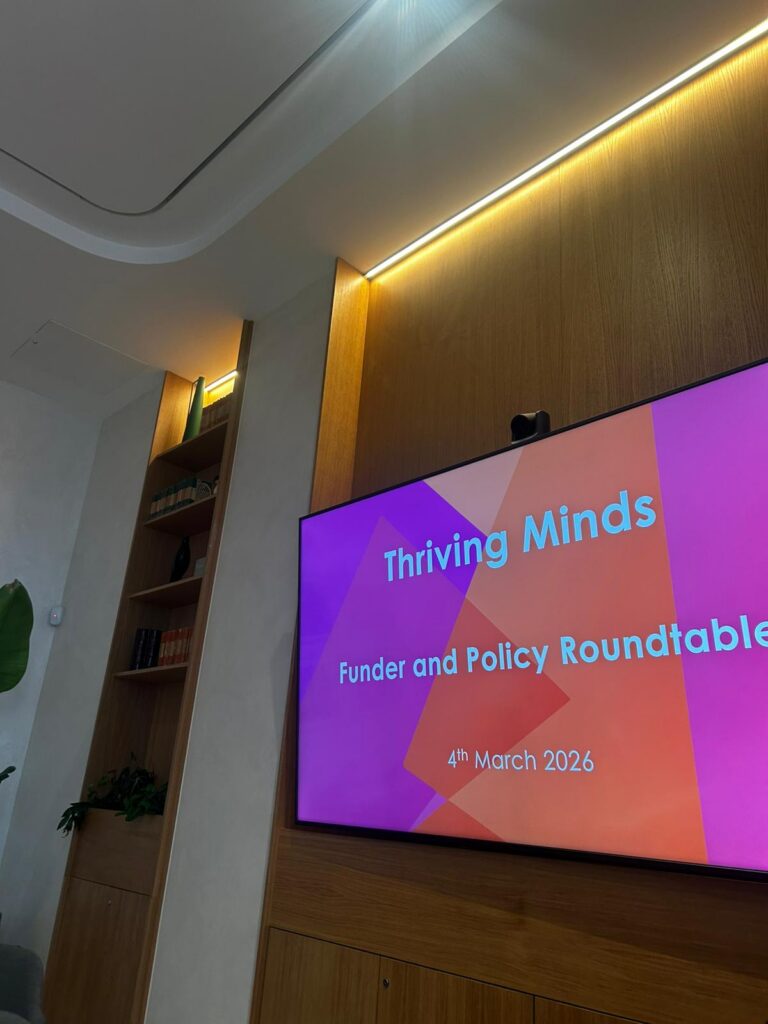
On Wednesday 4 March 2026, UK Youth hosted a roundtable to share rich learning from The UK Youth Fund: Thriving Minds. We also launched our accompanying policy report: ‘Another way is possible: Building hope, belonging and better mental health through youth work.’
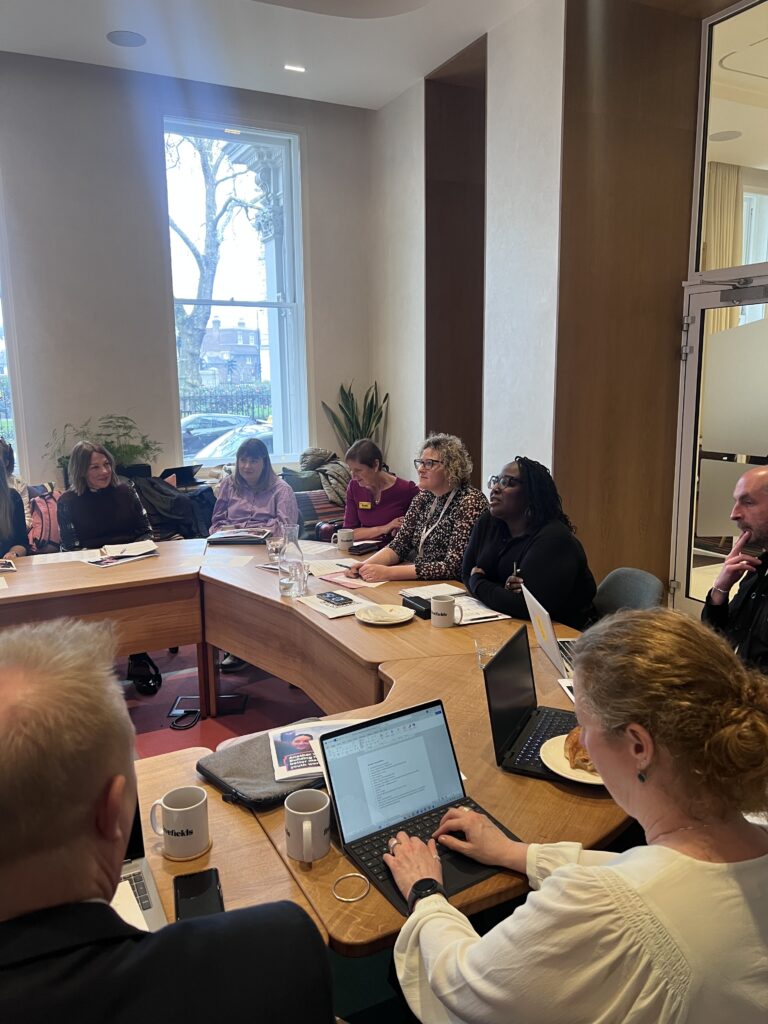
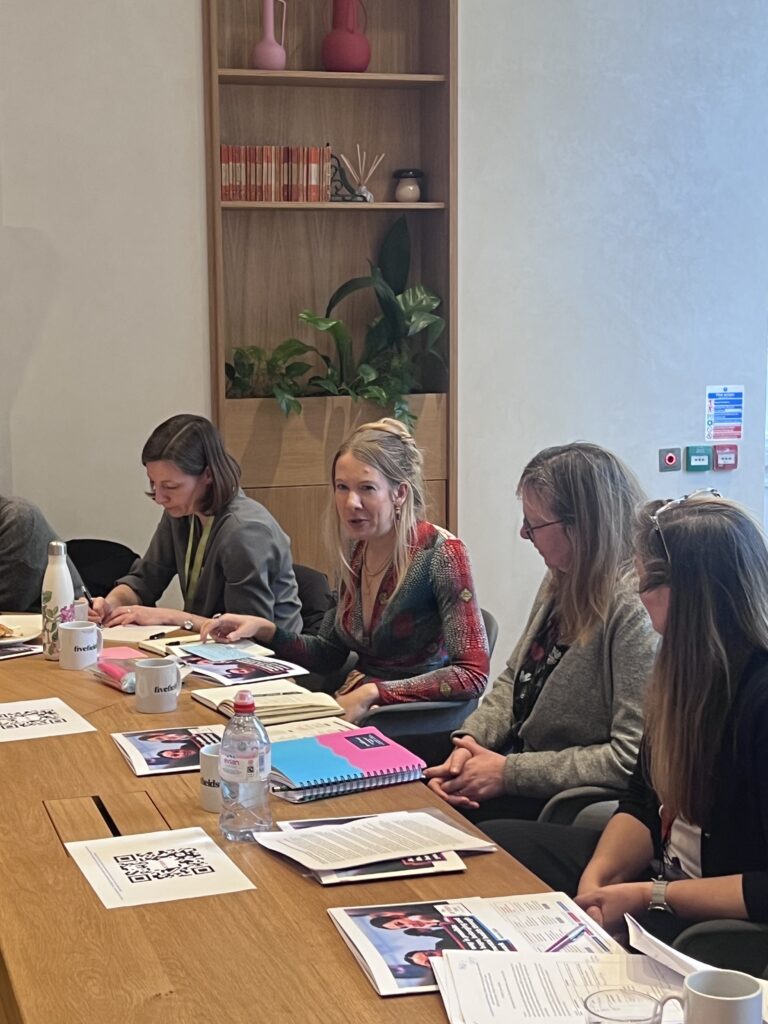
We were joined by senior policymakers, funders and organisations we’ve funded from across the youth work and mental health sectors for a discussion focused on the unique role youth work plays in supporting young people’s mental health and wellbeing. We explored how evidence and insight from Thriving Minds can shape future policy and funding approaches that better enable community-focused, long-term support for young people.
Our CEO Rosie Ferguson OBE hosted the roundtable and reflected on the power of Thriving Minds. The Fund was possible thanks to a £10m investment from the Julia Rausing Trust and an additional £1m from the Westminster Foundation. 99 youth organisations across the UK were awarded multi-year unrestricted funding and provided with a wide range of wraparound support
UK Youth Mental Health and Wellbeing Policy Report launch
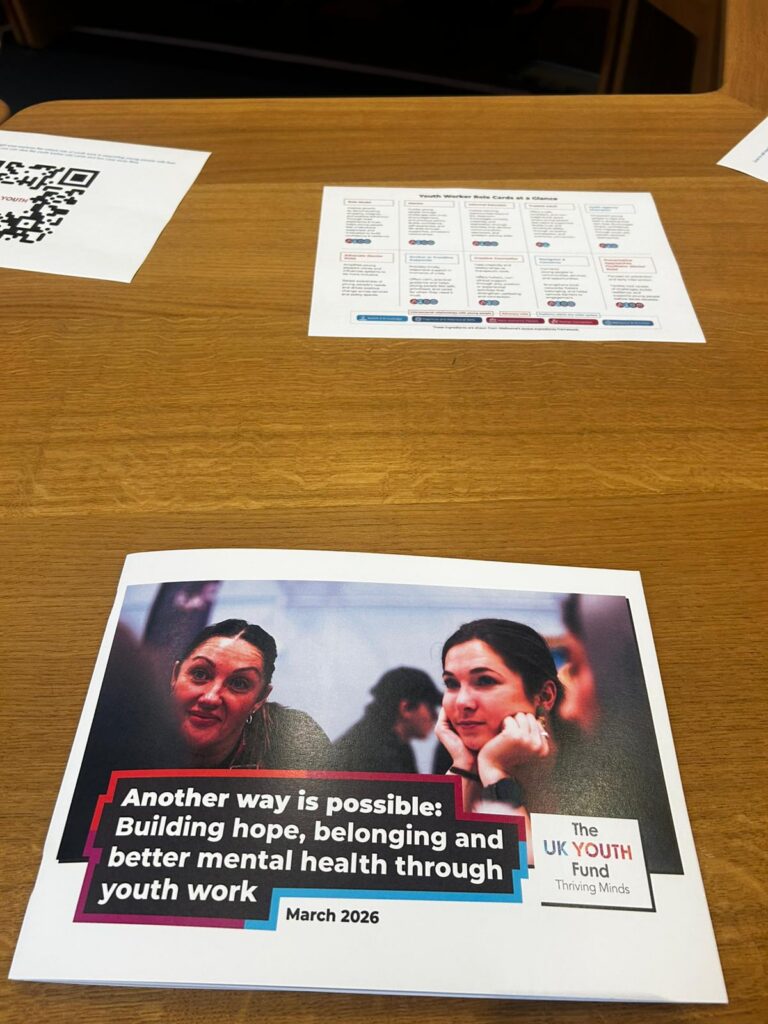
UK Youth’s accompanying policy report launched at the event, ‘Another way is possible: Building hope, belonging and better mental health through youth work’.
The report outlines six strategic recommendations to achieve systemic change, introduced by Laura Cunliffe-Hall, UK Youth Head of Policy and Public Affairs:
- Fund meaningful youth voice across Government.
- Align school, community and health provision around shared wellbeing outcomes.
- Establish a long-term, cross-government funding settlement for youth work as preventative mental health support.
- Design Young Futures Hubs around existing youth work ecosystems.
- Invest in the mental health literacy and wellbeing of youth workers.
- Embed youth workers within health system planning and delivery.
By embedding youth workers in the system, investing in them as people and professionals and aligning education, health and community provision around shared wellbeing outcomes, Government and funders can create a transformative mental health and wellbeing offer that reaches young people earlier, works for those least likely to access statutory services and is fit for the future.
Youth Worker Role Cards: The Many Hats Youth Workers Wear
UK Youth led an activity focusing on our recently-published Youth Worker Role Cards. Developed through interviews, observations and grantees’ reports, these role cards powerfully articulate ten specific but interconnected roles youth workers play in proactively supporting young people’s mental health.
Attendees reflected that most youth workers hold multiple overlapping roles, considered which of these roles resonated most closely with their personal and professional experiences and considered how the Cards can be used to build understanding and support for the profession in their own organisations and networks.
Theory of Change: Ways to invest in youth workers’ own mental health literacy and wellbeing
UK Youth shared a new animation that shines a light on the need to invest in the youth workers who support young people day in, day out. Where we support youth workers’ own wellbeing and mental health literacy, they are better equipped to deliver the targeted support that young people need.
Reflections from organisations funded through Thriving Minds
We were joined by the CEOs of two Thriving Minds grantee organisations: Rob Deeks from Together as One based in Slough and Sharon Hendrie from Y Not Aspire in Accrington. Rob and Sharon shared their experiences of being supported by Thriving Minds, the impact this has had on their organisations and, ultimately the young people they work with
Firstly, Rob outlined the challenges young people face while waiting for clinical support (e.g. CAMHS) and how youth workers provide early, relational and flexible support, often preventing escalation. Rob appreciated the shared language offered by our Role Cards, acting as a helpful resource for articulating the diverse roles youth workers play in shaping young people’s lives and their communities. Youth work can fill a critical gap in overstretched systems and is often the most cost-effective and impactful intervention on offer to young people.
Sharon discussed the transformative impact of the Thriving Minds funding and the difference it made having a fund that focused on supporting youth workers’ own mental health literacy and wellbeing. She talked about how her organisation has been able to invest in wellbeing days, training and 1:1 support for staff. The Thriving Minds residentials and regional meet-ups provided a space for senior leaders to connect and strengthen their collective resilience. These developments have embedded mental health into the fabric of Y Not Aspire’s operations as a youth organisation, where mental health is no longer seen as an individual responsibility but as something nurtured through structures, relationships, and shared learning. This has led to increased staff confidence, enhanced team cohesion, and higher quality support for young people.
Key themes from the Roundtable discussion
- Youth voice must be at the heart of shaping policy: as National Youth Strategy Youth Collaborator Sophia Badhan highlights in the report’s foreword, “young people are clear about what works: early support, culturally competent provision, trusted relationships and spaces that build belonging.” Attendees highlighted that youth voice is integral to systematic change and ensuring young people are treated as active partners in services where they are the end users.
- Youth workers’ distinct identity and the challenges and opportunities of ‘professional rub’ with other professions: It is important that there is a delineation between youth work and therapeutic work, whilst youth workers play a key role in supporting young people with their mental health. Youth work is ultimately fun – its relational foundation is key to engaging young people and a specific strength of the profession. The vantage point of youth workers and practitioners is essential to connect key themes and bridge the gap between lived experience and how this translates into policy.
- Funding mechanisms: Attendees discussed the balance between unrestricted core funding and project-specific grants. Organisations can be supported to use unrestricted funding strategically to unlock further local funding. By accounting for both, funders can support youth organisations and provide stable support but they need further support from Government to enact policy changes to create a stronger enabling environment.
- How to apply learnings from cross-sector and place-based models: Attendees advocated for investment in “connective tissue” to bridge the gap between strong local provision with ‘pockets’ across the UK and wider national health policy. Success depends on embedding youth workers directly within health and education ecosystems and on applying learnings from best practice within these sectors. Examples included youth workers and GPs connecting and sharing expertise and experience.
- Strengthening workforce resilience and integrating this into Young Futures Hubs guidance: Youth workers’ mental health literacy and wellbeing should be further integrated into the planning and guidance relating to the rollout of Young Futures Hubs. The sector must recruit young people with lived experience, with attendees connecting this to the ongoing Milburn Review’s aims to support young people classified as ‘NEET’ into work.
- Interconnection between support systems for young people: It is essential to focus on the interconnection between different support systems for young people and the role youth workers can play to bring them together. Families can sometimes be part of the challenge (e.g. for LGBTQ+ young people) but can also be powerful allies when supported by youth workers. Youth workers frequently act as bridges between young people, parents or carers, schools, health services, and community organisations.
- The role of youth work in supporting social cohesion: Programmes, whether run by funders or policymakers, focusing on supporting young people’s mental health and wellbeing must account for young people’s individual cultural contexts and community needs, taking into account factors such as rural isolation, neurodiversity, race, sexuality, gender, disability and religion.
Next steps
Attendees committed to advocating for a funding and policy landscape that celebrates the distinct strengths and benefits of youth work, while providing the committed investment and support for youth workers to enable young people to thrive.
To find out more, read our policy report on our website here.
For more practical resources and insights on this topic, visit the Thriving Minds learning hub.
The post Another way is possible: Building hope, belonging and better mental health through youth work appeared first on UK Youth.