Welcome to what is expected to be the final argument day of the 2025-26 term. Today is also expected to be an opinion day, and we’ll be live blogging beginning at 9:30 a.m. EDT in anticipation of opinions. We will then continue blogging during the first argument of the morning, on the Trump administration’s effort to significantly scale back the Temporary Protected Status program.
At the Court
On Tuesday, the justices heard argument in Cisco Systems, Inc. v. Doe I, on whether two federal laws that allow lawsuits in U.S. courts for torture and serious violations of international law permit private lawsuits for aiding and abetting such conduct.
As noted above, we will be live blogging this morning as the Supreme Court possibly announces opinions and then hears argument in Mullin v. Doe, on the Trump administration’s effort to end Syrian and Haitian nationals’ participation in the Temporary Protected Status program.
After Mullin, the justices will hear argument in Hikma Pharmaceuticals USA Inc. v. Amarin Pharma, Inc., a dispute between a manufacturer of medication and its generic substitute.
Morning Reads
Trump pursues new import taxes to replace the tariffs the Supreme Court rejected
Paul Wiseman, Associated Press
After the Supreme Court struck down President Donald Trump’s signature tariffs in February, the Trump administration invoked Section 122 of the Trade Act of 1974, which “allows the president to impose global tariffs as high as 15% for up to 150 days.” “But those stopgap levies expire in less than three months,” and the administration is now “scrambling to put more durable tariffs in place,” according to the Associated Press. “Starting this week, the Office of the U.S. Trade Representative will begin hearings in two investigations that are expected to lead to a new round of U.S. tariffs.” The hearings are required “under Section 301 of the Trade Act of 1974, which authorizes tariffs and other sanctions against countries found to engage in ‘unjustifiable,’ ‘unreasonable’ or ‘discriminatory’ trade practices.” Section 301 tariffs “expire after four years but can be extended.”
A Supreme Court justice’s personal ties to Haiti highlight stakes in asylum case
Julian Mark, The Washington Post (paywalled)
Today, as noted above, the justices will consider the Trump administration’s effort to revoke temporary immigration protections from Haitian and Syrian nationals living in the U.S. One of the questions raised by the case is whether the administration has properly assessed conditions on the ground in Haiti and Syria. In one of its stories previewing the argument, The Washington Post highlighted Justice Amy Coney Barrett’s personal connection to and knowledge of Haiti: She and her husband have adopted two children from there, including a son after the “devastating 2010 earthquake” that led the U.S. government to designate Haiti under the Temporary Protected Status program. “Barrett’s adoption of children from Haiti could play into how she approaches the case, according to academics who have studied Supreme Court justice behavior.”
King Charles defends shared US-UK values in rare Congress speech: Updates
USA Today
On Tuesday, King Charles III delivered “a rare address to a joint session of Congress.” In its live blog for the speech, USA Today noted that retired Justice Stephen Breyer was in attendance. “None of the current members of the high court was there. Breyer is married to Joanna Freda Hare, a psychologist and member of the British aristocracy. [Breyer] was seated next to Gen. Dan Caine, the chairman of the Joint Chiefs of Staff.”
Ohio Supreme Court narrows parental rights in same‑sex custody case
Laura A. Bischoff, The Columbus Dispatch
On Tuesday, “[i]n a unanimous ruling, the Ohio Supreme Court said that the landmark decision that legalized same sex marriage nationwide can’t be applied retroactively in a custody fight,” according to The Columbus Dispatch. Writing for the court, “Justice Pat DeWine said whether a couple would’ve been married had same-sex marriage been legal earlier is not applicable and courts cannot rewrite state laws to apply to non-married couples.” The case centered on two Ohio women, Carmen Edmonds and Priya Shahani, who “were in a relationship from 2003 to 2015 but did not marry.” During that period, they “co-parented three children, each born by Shahani via artificial insemination.” After they broke up, Edmonds asserted that she had “parentage rights” under an Ohio law that grants such rights to “husbands who consent to their wives conceiving through artificial insemination.” The Ohio Supreme Court held that “the plain meaning” of that “law applies only to married couples” and that Edmonds cannot use the timing of the Obergefell ruling to claim its protections.
By Week’s End, Trump’s War Will Be Plainly Illegal
Erwin Chemerinsky, The New York Times (paywalled)
In a column for The New York Times, SCOTUSblog contributor Erwin Chemerinsky contended that, if the war in Iran “continues through Friday without congressional approval, it will clearly be illegal, having passed the 60-day threshold and the 48-hour notice period that the president is given, under the War Powers Resolution of 1973, to conduct this kind of military operation.” In other words, he explained, “time will be up” on the excursion, “[a]nd it is the obligation of the federal courts to say so.” Whether the courts will actually meet that obligation is a different question, according to Chemerinsky. While the Supreme Court in the past has “emphasized the importance of Congress’s involvement in any type of war,” “recent efforts to enforce the” War Powers Act “have been dismissed by [lower] courts as involving political questions that they cannot decide.”
On Site
Argument Analysis
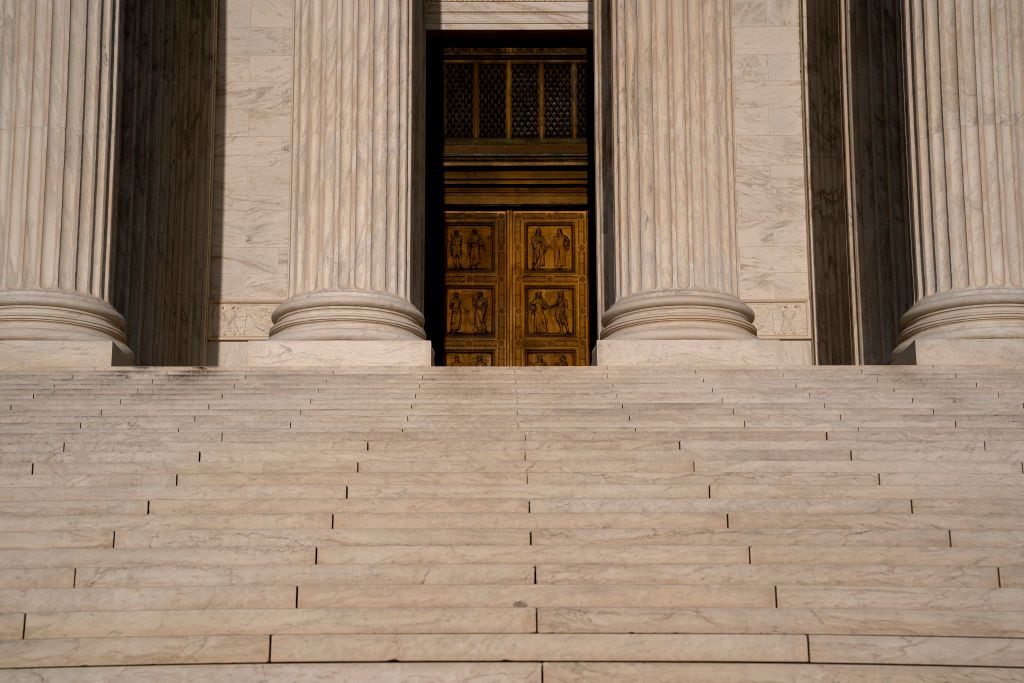
Court seems likely to narrow ability of plaintiffs to bring claims for violations of international law
The Supreme Court on Tuesday appeared poised to further narrow the extent to which U.S. courts can be used as a forum to consider alleged violations of international law. After roughly two hours of oral argument in Cisco Systems v. Doe, a majority of the justices seemed to side with the California-based technology company, Cisco Systems, and two of its top executives, who argued that they could not be sued for their role in allegedly aiding and abetting the creation by the Chinese government and the Chinese Communist Party of a powerful surveillance system used to target, detain, and torture the plaintiffs, who are practitioners of the Falun Gong religion.
Argument Analysis
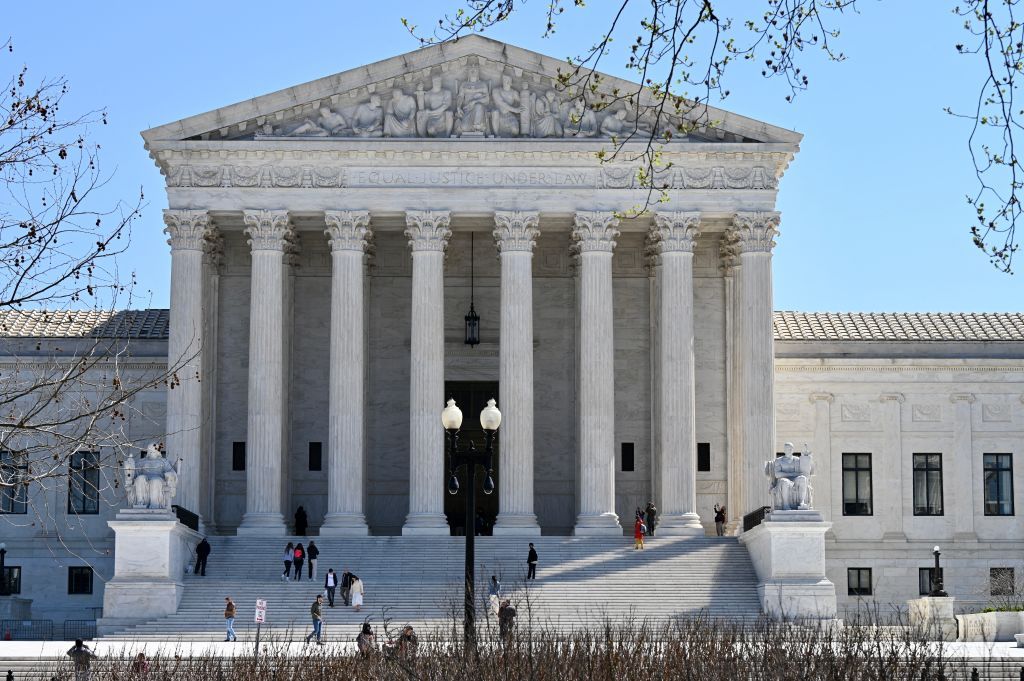
Justices debate who gets to decide that pesticide labels need a cancer warning
The Supreme Court on Monday heard oral argument in Monsanto Company v. Durnell, a case on whether a company can be held liable under state law for failing to include a cancer warning on its product labels when the Environmental Protection Agency did not require such a warning and has concluded that the products in question are not carcinogenic.
Contributor Corner
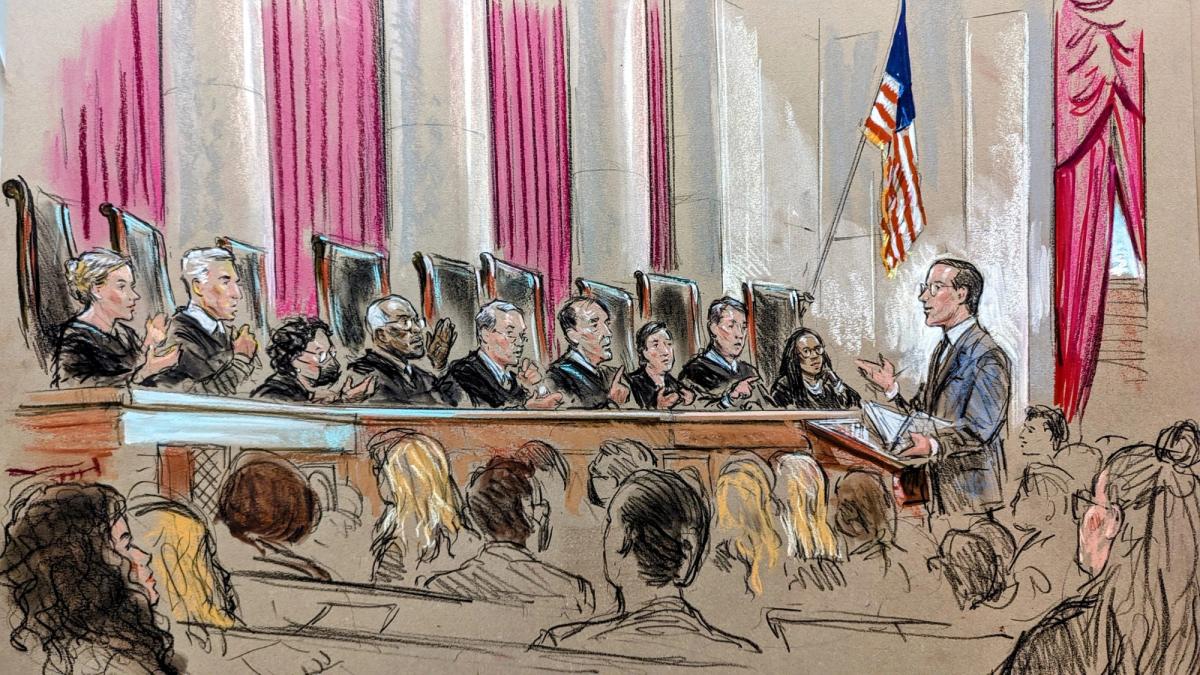
So you want to argue before the Supreme Court?
In his Empirical SCOTUS column, Adam Feldman used “data on top ranked attorneys from Chambers & Partners in its appellate practices, along with argument counts compiled from Oyez.org, … to sketch a fairly detailed picture” of which lawyers reach the top of the Supreme Court bar and how they get there.
Podcasts
Advisory Opinions
Arguing In Front of SCOTUS | Interview: Lisa Blatt
The inimitable Lisa Blatt joins Sarah Isgur and David French to discuss two business docket cases, a message to the judges and justices who like concurrences, and advice for aspiring lawyers.
A Closer Look
U.S. Conference of Catholic Bishops v. O’Connell
At their private conference on Friday, the justices will consider an opportunity to revisit the church autonomy doctrine, a legal principle that addresses religious institutions’ First Amendment right “to conduct their internal affairs and govern themselves,” as Justice Clarence Thomas put it in a concurring opinion last term. The doctrine prevents courts from hearing certain kinds of religious disputes – specifically, those that would require courts to interfere with “matters of faith, doctrine, and internal management.”
The petition for review in front of the court this week stems from a dispute over an annual offering in the Catholic Church called the Peter’s Pence Collection, which supports the pope’s charitable works. In 2020, David O’Connell filed a class action complaint against the U.S. Conference of Catholic Bishops over this offering, “asserting claims of fraud, unjust enrichment, and breach of fiduciary duty” based on his belief that, in its promotional materials, the USCCB had misrepresented how Peter’s Pence donations would be used. The lawsuit followed a major investigation into Peter’s Pence by The Wall Street Journal, which found that “most of that collection, worth more than [$55 million] annually, goes toward plugging the hole in the Vatican’s own administrative budget, while as little as 10% is spent on charitable works.”
Before the federal district court in Washington, D.C., the USCCB moved to dismiss O’Connell’s lawsuit, contending that the court could not weigh in without violating the church autonomy doctrine. The court denied this motion, holding, as the U.S. Court of Appeals for the District of Columbia Circuit later summarized, that the battle over how the USCCB had advertised Peter’s Pence was “a purely secular dispute.” The decision cleared the way for the lawsuit to move forward, meaning the USCCB would need to begin producing the documents O’Connell requested, including “lists of donors and amounts received.”
The USCCB appealed to the D.C. Circuit, asserting that proceeding with discovery and trial would violate the church autonomy doctrine. The D.C. Circuit dismissed the appeal “for want of jurisdiction,” holding that, at this stage in the case, it cannot weigh in on whether the case is barred by that doctrine. While the church autonomy doctrine “may be raised as a defense in a civil suit,” the D.C. Circuit explained, “it does not immunize religious organizations from civil actions” and cannot serve as the basis of an appeal of a pleading-stage order from a district court.
The USCCB appealed to the Supreme Court in January, asking the justices to clarify the scope and application of the church autonomy doctrine. The petition for review highlighted disagreements between the federal courts of appeals over whether the doctrine provides immunity from suit altogether (and not just a defense); whether denials of church autonomy defenses in the early stage of a case can be reviewed by appellate courts; and whether it’s possible to adjudicate a claim like O’Connell’s without violating the doctrine. Addressing this latter issue, the USCCB contended that it clearly isn’t possible, because “O’Connell’s claims will thrust civil courts into church pulpits and pews, attempt to pit millions of parishioners against their church, and second-guess the meaning of an offering given to the head of a foreign religious sovereign for over 1,000 years.”
Initially, O’Connell waived his right to respond to the petition, but the court called for a response in February. In his brief in opposition, filed earlier this month, O’Connell urged the justices to focus on only one issue: “whether the D.C. Circuit had jurisdiction” to consider the USCCB’s immediate appeal. He asserted that it did not and that holding otherwise would multiply the work of federal courts of appeals, because “[e]ach discovery or evidentiary ruling issued over a religious-autonomy objection would be subject to automatic, non-discretionary appeal.” O’Connell added that even if the court felt that it needs to address this issue, this case would be a “poor vehicle” with which to do so, because “Justice Jackson would likely be recused given her involvement with [it] in the district court.”
U.S. Conference of Catholic Bishops v. O’Connell is scheduled to be considered by the justices for the first time at their private conference on Friday.
SCOTUS Quote
CHIEF JUSTICE ROBERTS: “I – I've been notified that there will be a fly-over of four planes at 11:22, and I just want to announce that so people aren't alarmed. We're told the noise might be – might be big. I don't know why they didn't check with me, but –”
(Laughter.)
CHIEF JUSTICE ROBERTS: “Justice Barrett?”
JUSTICE BARRETT: “Well, Mr. Gannon, I'll try to get my question out quickly before the ruckus comes.”
MR. GANNON: “More dialogue between the branches.”
— Cisco Systems v. Doe (2026)