
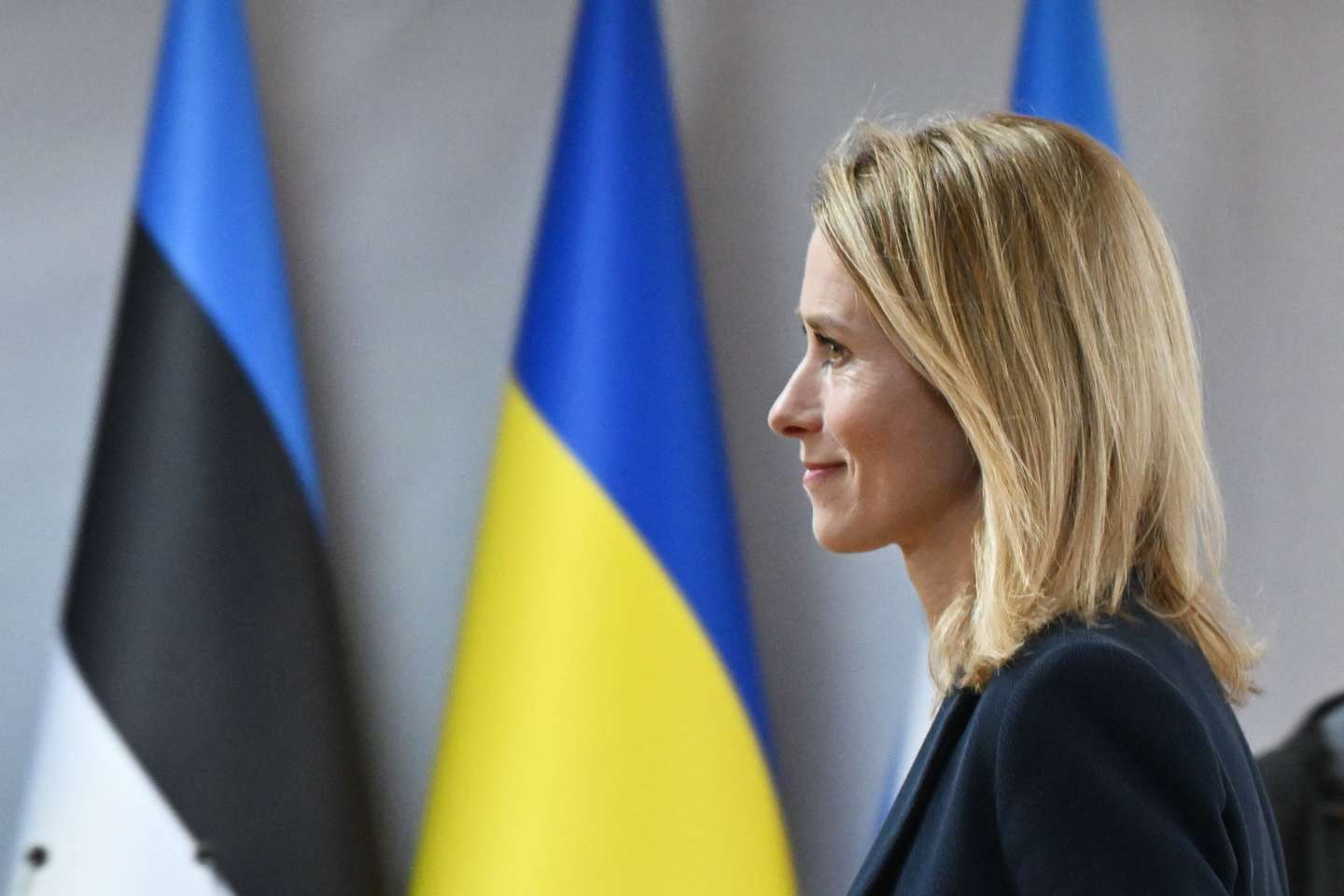

TALLINN — The Trump administration doesn’t like a unified European Union because the bloc is a geopolitical power that Washington has to contend with, EU foreign policy chief Kaja Kallas said on Sunday, urging EU member countries not to weaken the bloc by pursuing bilateral agreements with the U.S.
“They don’t like the European Union, that’s very clear,” Kallas said at the Lennart Meri Conference in Tallinn on Sunday. “But we need to understand why they don’t like the EU; why China doesn’t like the EU, why Russia doesn’t. It is because if we stick together, if we operate together, then we are equal powers, we are strong.”
Kallas said it was “of course easier” to deal with individual countries, which are much smaller, than with a bloc that can act as an equal power. She said rhetoric such as “my relations with you are great, but I don’t like the European Union” were part of a divide-and-conquer strategy.
“I’m very worried, because I sometimes also see countries going down that lane,” she said. “The dividing is actually working.”
Several EU countries have sought to preserve their own channels with Washington since U.S. President Donald Trump returned to the White House, with Italian Prime Minister Giorgia Meloni positioning herself as a potential bridge between Europe and the U.S. before the strategy failed with Trump’s criticism of Pope Leo XIV.
Kallas urged EU countries to defend the European Union and make agreements through the bloc, saying about the U.S., China and Russia: “Why these powers want to dismantle the European Union is because we are much stronger when we are together.”
The former Estonian prime minister also said Europe had “a very clear understanding of the diagnosis of the disease” when it came to China, but did not yet have an agreement on the cure.
She said there were two choices: either increasing the “morphine” — the subsidies EU countries are handing out to industry — or beginning “chemotherapy,” meaning using the tools the EU has at its disposal, such as foreign direct investment, public procurement, and diversifying its supply of critical raw materials.
“It will be painful to use the tools … because then there’s going to be retaliation,” she said. “We are not there yet and I’m worried that eventually also the rich countries will run out of taxpayers’ money to subsidize and we haven’t dealt with the underlying problem.”
