

Andy Burnham’s central vision is for a devolved system of local government that promotes economic growth and fosters local pride. The prime minister’s approach resonates with something known as the “municipal gospel” that swept through Victorian cities in the late 19th century. This history offers some useful insights into the current challenges.
By the middle of the 19th century, Britain’s rapidly industrialising northern cities began to recognise that they had to take direct action to improve infrastructure and ameliorate poverty and slums. This approach became known as the “municipal gospel”. By the early 20th century, gas, water, local transport and electricity were mostly run – profitably – by municipal authorities (what would be councils today). These had often bought out the companies that provided them previously.
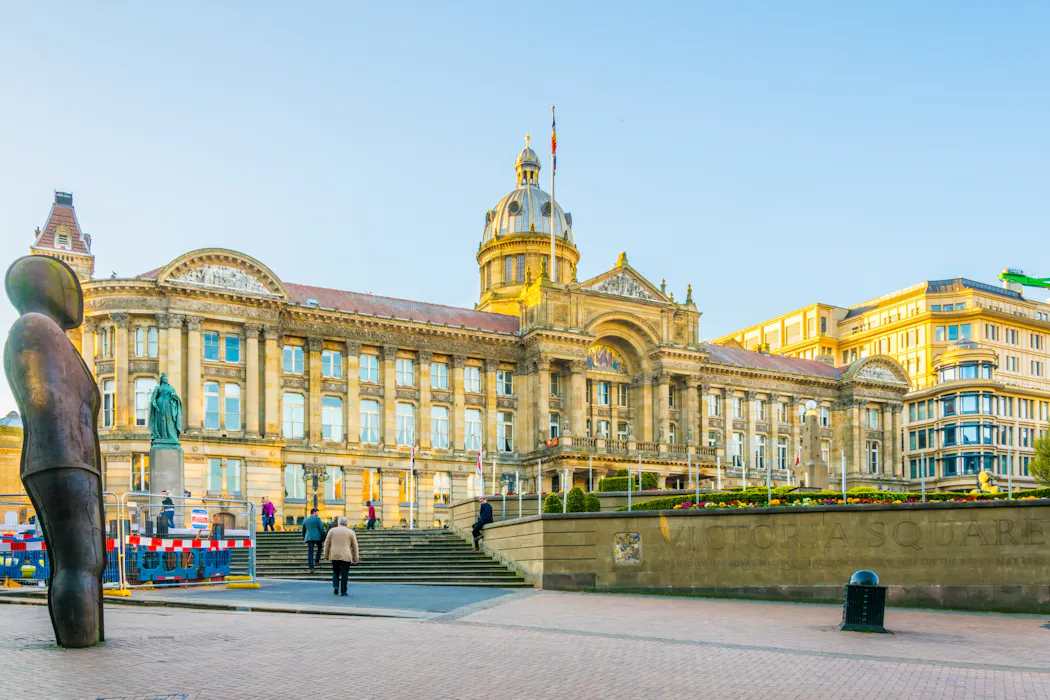
The legacy of the municipal gospel is all around – from parks to concert halls, art galleries, town halls, universities, libraries and hospitals. But it was not just physical infrastructure that characterised the new philosophy. The industrial cities also sought to stimulate science, innovation and education, as well as art, culture and leisure. The aim was to foster a sense of municipal pride as well as keep their industries at the forefront of invention.
Joseph Chamberlain, who became mayor of Birmingham in 1873, most clearly articulated the doctrine. He argued that only municipal authorities had the capacity to tackle the problems that blighted lives and damaged industry.
Chamberlain demonstrated that Birmingham could run basic services more efficiently after the city profitably took over the supply of gas from two inefficient private companies. Birmingham went on to take control of the water companies, building a (controversial) reservoir in Wales connected to the city by a 70-mile aqueduct.
Public transport was revolutionised with municipal trams in more than 100 areas across the country. And electricity also became a widespread municipal function.
Chamberlain also played a key role in working out how to fund it all. He issued municipal bonds to pay the costs of acquiring the private suppliers, with the interest payments met by the profits of the much more efficient city company.
These bonds, issued by cities across the country, became very popular. They offered higher interest rates than many other private investments and were often bought by better-off residents. By the end of the 19th century, half of all government bonds were issued by local authorities rather than central government.
The 20th century
While the Thatcher government in the 1980s dramatically cut funding to local government, the takeover of many municipal functions began much earlier.
The legacy of the first world war left central government with a huge debt burden. It was forced to offer high interest rates on its bonds, known as consols, to ensure people would buy them. This squeezed out the municipal bond market.
In addition, central government took control of or funded many key services previously run independently by councils. This continued under the 1945 Labour government, which nationalised many key industries – including gas, electricity and transport – as a way to achieve both efficiency and fairness. It did, however, continue to give local authorities a central role in a programme to build more council houses, which the Conservatives continued in the 1950s.
Margaret Thatcher’s policy in the 1980s of selling council homes at big discounts to tenants was popular, but undermined councils’ ability to house homeless people and those on waiting lists. Her government also introduced stringent controls on how much councils could spend, borrow and raise rates, which have broadly remained in effect.
Today, councils have only a few statutory duties they are obliged to provide, such as care for vulnerable adults and children and housing homeless people. It recently emerged that some councils in England are spending nearly 80% of their budget on social care for children and adults alone . Unsurprisingly, there is little room for non-statutory services such as libraries, parks, adult education, road repairs and sports facilities.

PintoArt/Shutterstock
Reversing a century of change to local government, as Burnham has pledged, is not an easy or short-term task.
The biggest challenge will be finding innovative ways of funding local government projects. One possibility might be allowing councils to borrow money on their own again. In principle, this could mean issuing bonds tied to specific projects that have their own revenue streams.
To speed up house-building, councils may need to fund infrastructure spending, which currently depends on payments from builders as part of planning agreements. And they may need more powers and resources to acquire land for development. Eventually, they may also need to receive a proportion of central government tax revenues that are raised in their area.
Another lesson from history for the prime minister is the need for closer local links with the business community and its resources. Its expertise and experience greatly contributed to the success of the municipal gospel. Burnham has already offered tax breaks for some businesses, but he could go further and allow councils to offer more tailored tax regimes. New mechanisms of collaboration with local business, including better use of the apprenticeship levy, are needed.
The third lesson is the importance of tapping into the innovation that was fostered by the creation of red-brick educational institutions with close ties to local industries. They could become centres for developing technologies and improving training. Both of these could boost local productivity and job growth. The prime minister should ensure these universities are funded as their incomes are squeezed by the reduction in overseas students. He could also improve the funding – and prestige – of technical education.
The most important achievement of the municipal gospel was creating a sense of pride in local achievements. There was optimism that the problems of rapid industrialism could be overcome. Now that the country is facing an era of de-industrialism, it needs a new path to prosperity. As Burnham has recognised, it also needs a sense of hope and possibility. Both could go a long way to turning around the current malaise.

Steve Schifferes does not work for, consult, own shares in or receive funding from any company or organisation that would benefit from this article, and has disclosed no relevant affiliations beyond their academic appointment.
