

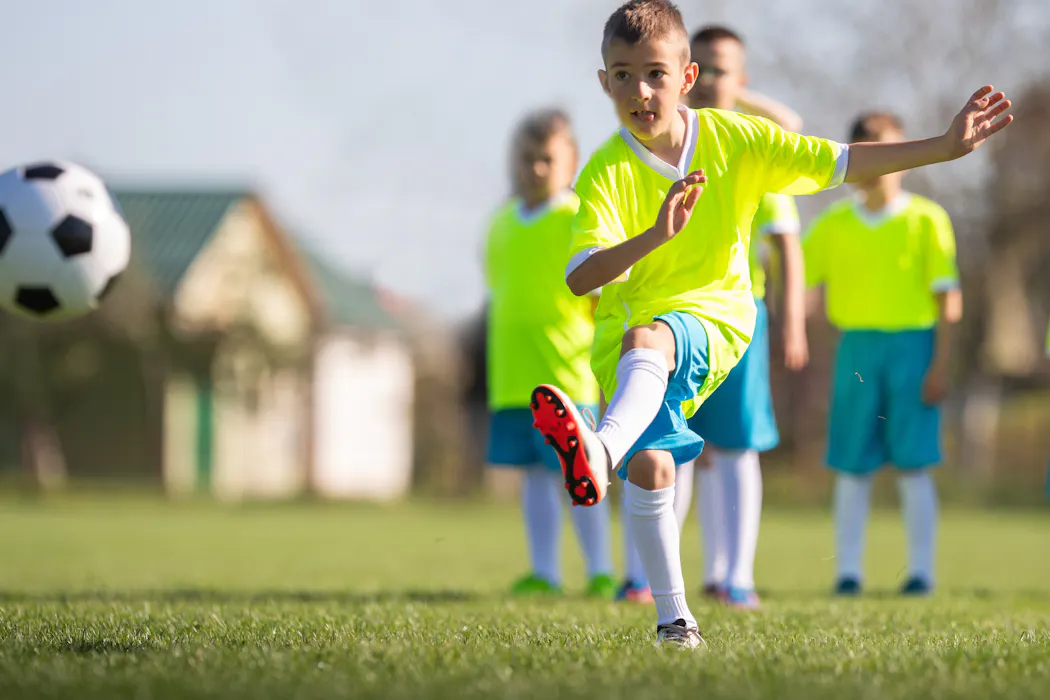
When families look into getting their children involved in sport and physical activities, there is often a lot to consider. For some, this means choosing between clubs and activities. For others, cost, transport or availability can make organised sport harder to access. But there is another question we might rarely ask. What will my child actually experience and learn when they get there?
Picture a familiar sports session. Children arrive, warm up, and then the coach sets up a drill. They form a line. One child goes. They perform the skill, perhaps retrieve the ball, and go to the back of the queue. The next child goes.
There is nothing inherently wrong with practising skills this way. Repetition has a role in learning. But children’s sport has become remarkably good at the art of queuing. Children can be busy and apparently engaged, while having little to think about. The coach tells them where to stand, what to do and how to do it. If they make a mistake, the coach corrects them. Then they try again.
Match play rarely works like this. When children actually play, the situation is constantly changing. A teammate moves. An opponent closes down space. The ball goes somewhere unexpected. Players have to look, interpret, decide and adapt.
Knowing how to perform a pass is different from knowing when to pass, where to pass and why. That difference is about whether a skill is learned in isolation or in context, with the child treated as an active problem solver rather than a passive recipient of instructions.
This is the idea behind what coaches and researchers call game-based approaches to coaching. Rather than always giving children the answer, coaches create problems for them to solve within realistic games.
Take a simple example. Instead of running an isolated passing drill, a coach might shrink a game down to three attackers against one defender. They have to decide when there is a passing option and when there is not. Rather than dictating the answer, the coach might ask why an option worked, or what else the child could have tried, turning the moment into a conversation rather than a correction.
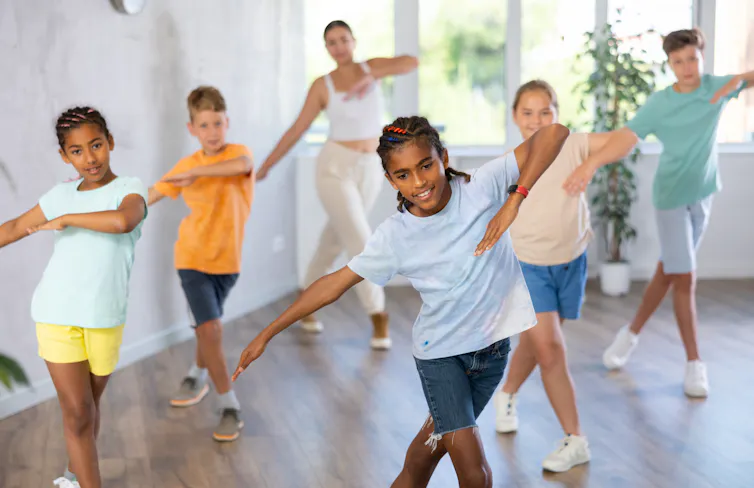
The same underlying idea applies in all sorts of sports. Gymnastics, for example, does not involve reading an opponent. But it can still be taught as pure repetition of a set routine, or as an invitation for children to make their own choices within a task, such as composing a sequence. The broader principle, that children learn to think when they are given real problems to solve, applies much more widely.
BearFotos/Shutterstock
This does not mean coaches play a smaller role, or that every session should become a free for all in which children work everything out alone. If anything, the coach’s role becomes more demanding. Asking a good question at the right moment takes as much skill and judgment as demonstrating the right technique.
The purpose of youth sport
This matters because the purpose of children’s sport is surely bigger than producing technically proficient athletes. We want children to become physically competent, but we also want them to become confident decision-makers, good communicators and effective collaborators. We might want them to learn how to deal with mistakes, take responsibility and work things out for themselves.
None of this is guaranteed simply because a child participates in sport. Research on youth sport suggests the quality of the coaching environment can shape children’s motivation and development.
This also changes what we might think makes a good coach. A coach who keeps 20 children moving continuously might look highly effective. But it is worth asking what those children are thinking about and what decisions they are making.
These are not easy questions to ask when completing a sign-up form. Cost, convenience and location will always matter, and children should have a say in what they enjoy. But, if possible, watch a session before committing. Look beyond whether the children are running around. Are they being challenged to think and given real decisions to make? Are they encouraged to try things and make mistakes? Do they seem to be enjoying themselves?
Ask what the coach believes their role is. Is it to provide children with all the answers, or to create experiences in which children gradually become capable of finding some of those answers themselves?
Getting children into sport is important. But getting them into the right kind of sporting environment may matter just as much. The question is not simply whether our children are doing sport. It is what the sport is doing for them.

Jose Castro does not work for, consult, own shares in or receive funding from any company or organisation that would benefit from this article, and has disclosed no relevant affiliations beyond their academic appointment.

