
For years, Africans have explored how Africans can seamlessly connect without hurdles. As several opportunities are being explored through AI, Africans are also exploring whether AI can be used to advance cross-country opportunities and equity. If it can, what would it look like? What are the initial challenges that can hinder it from happening? What can governments and organisations do to enhance it?
Artificial intelligence is changing how people learn, work, build businesses and access information. For young Africans, what opportunities does it present to solve problems, develop new skills and participate in an economy that is becoming increasingly digital? How can those opportunities be available to everyone in the same way?
A young person with reliable internet access, a laptop and access to AI training has an advantage over someone who lacks these resources. The gap widens further when we consider young people across countries with different levels of digital infrastructure and investment. If AI is to improve the lives of African youth, access to its benefits must extend beyond the countries and communities already positioned to take advantage of it. African countries need to work together, share resources and invest in solutions that respond to the needs of their people.
One area, and perhaps the most important area, where this cooperation matters is language. There are thousands of languages spoken in Africa. But much of the technology used to develop AI relies on data in widely spoken languages (in many cases in Africa, English and French), leaving many African languages underrepresented. This limits who can use these tools and how useful they can be. For a young person who speaks an African language but struggles with English or French, AI may not offer the same opportunities it offers someone who is fluent in these languages.
The Masakhane research community is working to address this problem by developing natural language processing technologies for African languages. The community consists of Africans representing different languages across Africa. It is an example of what can happen when African researchers collaborate to make technology more inclusive. Through initiatives such as the Masakhane AI Languages Hub, researchers can develop datasets across 40 African languages to support the creation of more useful AI tools.
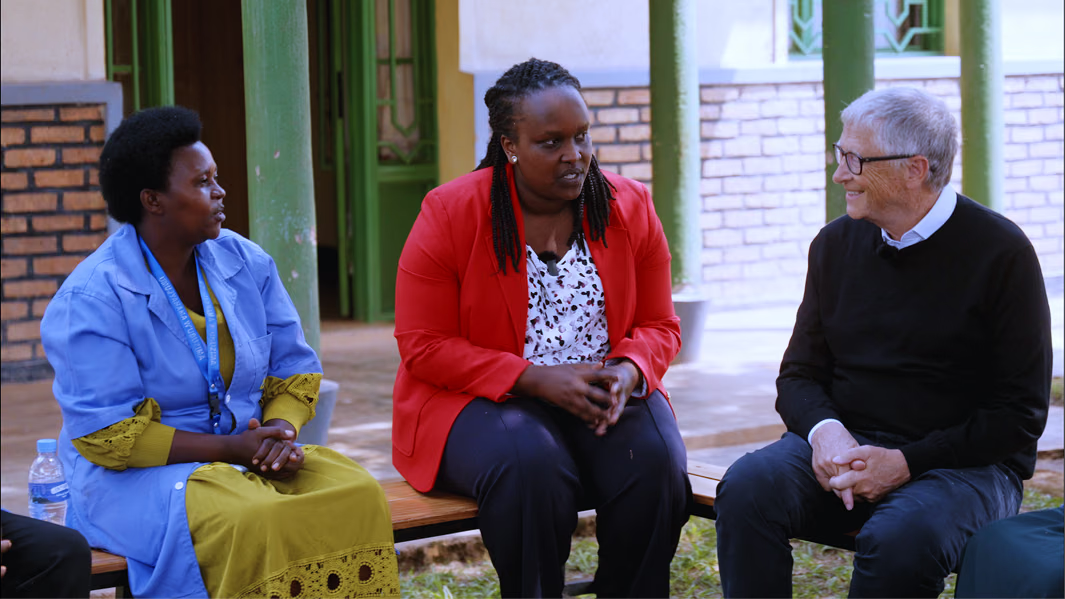
In the 2026 Goalkeepers Report, Bill Gates said AI must be able to work in every language spoken to create significant equality.
African countries can build on this work by investing in shared language resources, supporting local researchers and making datasets available for responsible use. Instead of each country working independently on similar challenges, regional partnerships could help researchers share knowledge and develop tools that serve communities across borders. This could make it easier for young Africans to access educational resources, health information and other services in languages they understand.
AI can also help make opportunities available to people outside major cities. In agriculture, for example, PlantVillage Nuru uses a smartphone camera and AI to help farmers identify crop diseases. The application can work offline, making it useful in areas where internet connectivity is limited. Although the tool does not remove every challenge farmers face, it demonstrates how AI can make certain kinds of technical knowledge more accessible.
Solutions like this could benefit young farmers and agricultural entrepreneurs across Africa. Countries facing similar agricultural problems could collaborate to test, adapt and improve existing tools instead of developing separate solutions from the beginning. Universities, research institutions and governments could support these efforts by sharing expertise and investing in technologies that respond to local conditions.
African countries can work together to create more opportunities for young people to learn AI skills, participate in research, access mentorship and build businesses. Regional programmes could connect students with employers and investors across borders, allowing talent to find opportunities beyond national job markets. They could also help young people learn from one another and develop solutions that can be adapted to different African communities.
These efforts must be supported by investments in electricity, affordable internet, devices and digital education. Without these basics, AI training and other opportunities may continue to reach those who already have the most access. Governments and technology companies must also protect users’ data, address bias and ensure that the development of AI does not exclude women, people with disabilities or young people in rural communities.
The African Union’s Continental Artificial Intelligence Strategy, endorsed in 2024, provides a basis for countries to pursue a more coordinated approach to AI development. The challenge now is to translate that ambition into practical opportunities for young people.
Africa does not have to approach every AI challenge as a separate national problem. By sharing knowledge, supporting local innovation and opening more pathways to education and employment, countries can make their investments go further. Success should not be measured only by the number of AI tools developed or the amount of money invested in the technology. It should also be measured by whether a young person, regardless of where they live, has a fair chance to use AI to improve their life.
This will be part of the conversation centred around this year’s Goalkeepers 2026. After hosting engaging and immersive events in the Nordics and New York, Goalkeepers is coming to Dakar on October 29 for the event, “Equitable AI and the Future of African Youth.”
The post How Can Africans Use AI to Advance Cross-Country Equity and Opportunities in Africa? appeared first on BellaNaija – Showcasing Africa to the world. Read today!.