
We’ve just seen American formally retire its Boeing 777 first class, and with that, no airline in the United States has a “true” international first class anymore. It’s the end of an era, because going back many decades, premium products were largely pioneered by US carriers. So I think this raises the question — why can US carriers not make first class work in a way that’s economically viable, especially as they keep talking about how premium they are?
Before we get into this, let me make sure we’re all on the same page when it comes to terms. This post isn’t about the premium cabin on domestic flights, which is often referred to as first class. Instead, it’s about international flights that have a cabin above business class, when it’s marketed as first class. So this would include airlines on my list of the world’s best first class products.
There’s demand for international first class in the US
Airline executives are divided on the merits of having an international first class cabin. Some insist that there’s no need for such a cabin, as business class has improved so much. Meanwhile others absolutely see merit to such a product.
I mean, just look at how carriers like Air France, Lufthansa, Singapore Airlines, and SWISS, are all investing in first class. I think Air France’s La Premiere first class is the perfect example of the upside such a product has for an airline:
- Air France’s first class pricing is in a league of its own, and management at the airline claims the product is more profitable than ever before; the idea is that the airline spends a ton on customers, but also charges them a ton
- Air France’s first class is all about creating a seamless experience, that’s as close to private aviation as possible
- Air France’s first class offers a massive halo effect for the airline, and no doubt is one of the things that gives it such premium positioning


What’s interesting is that for the airlines that succeed with first class, the single biggest market — and single biggest point of sale — is the United States. So how is it that carriers like Air France, Lufthansa, SWISS, etc., can make money offering first class to the United States (primarily targeting Americans), but US airlines seemingly can’t?
The US has way too many people with tens or hundreds of millions of dollars, or even billions of dollars. There are plenty of people who would pay to fly private, and would pay for Air France La Premiere first class, but would never consider paying the high price for first class on a US carrier, because it’s just not worth it.
When they fly first class, they want this…

…not this.

They want this…

…not this.
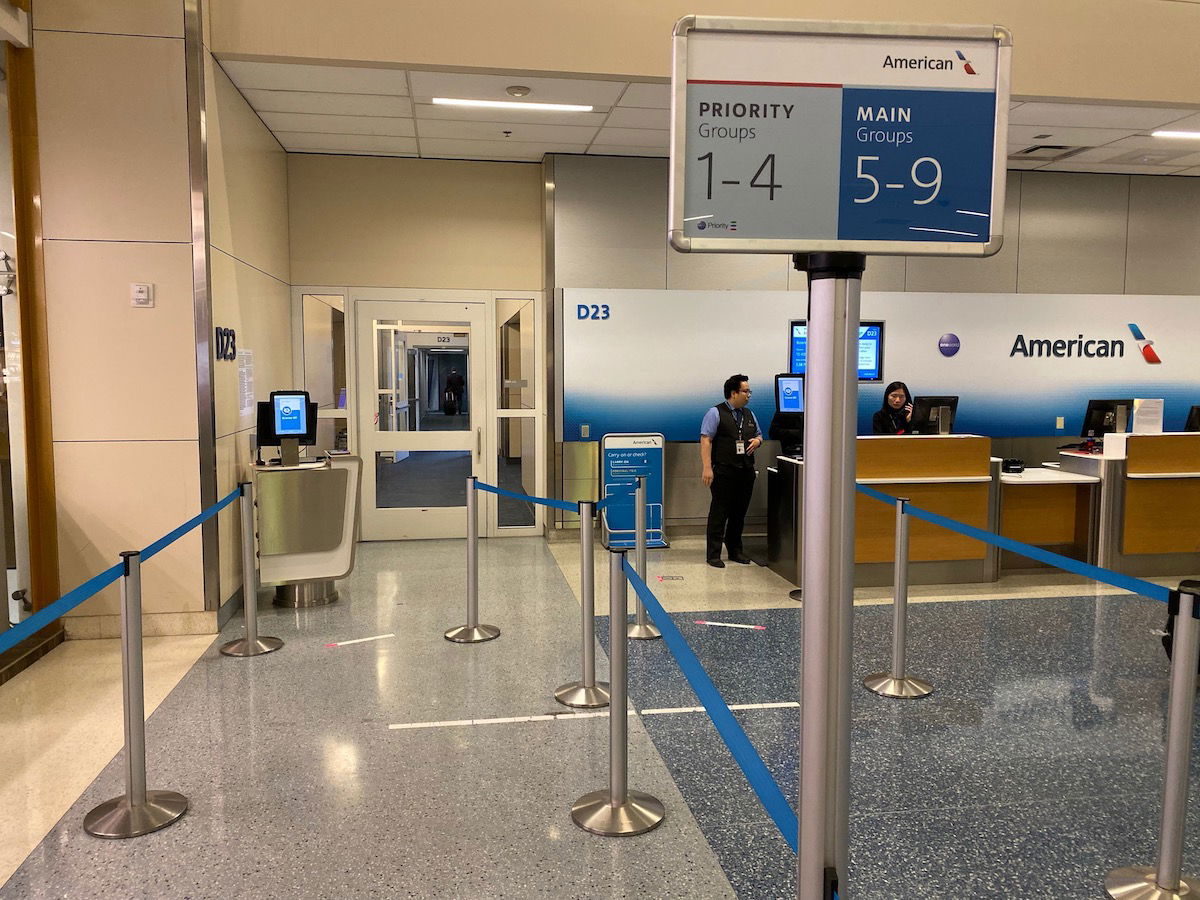
They want this…
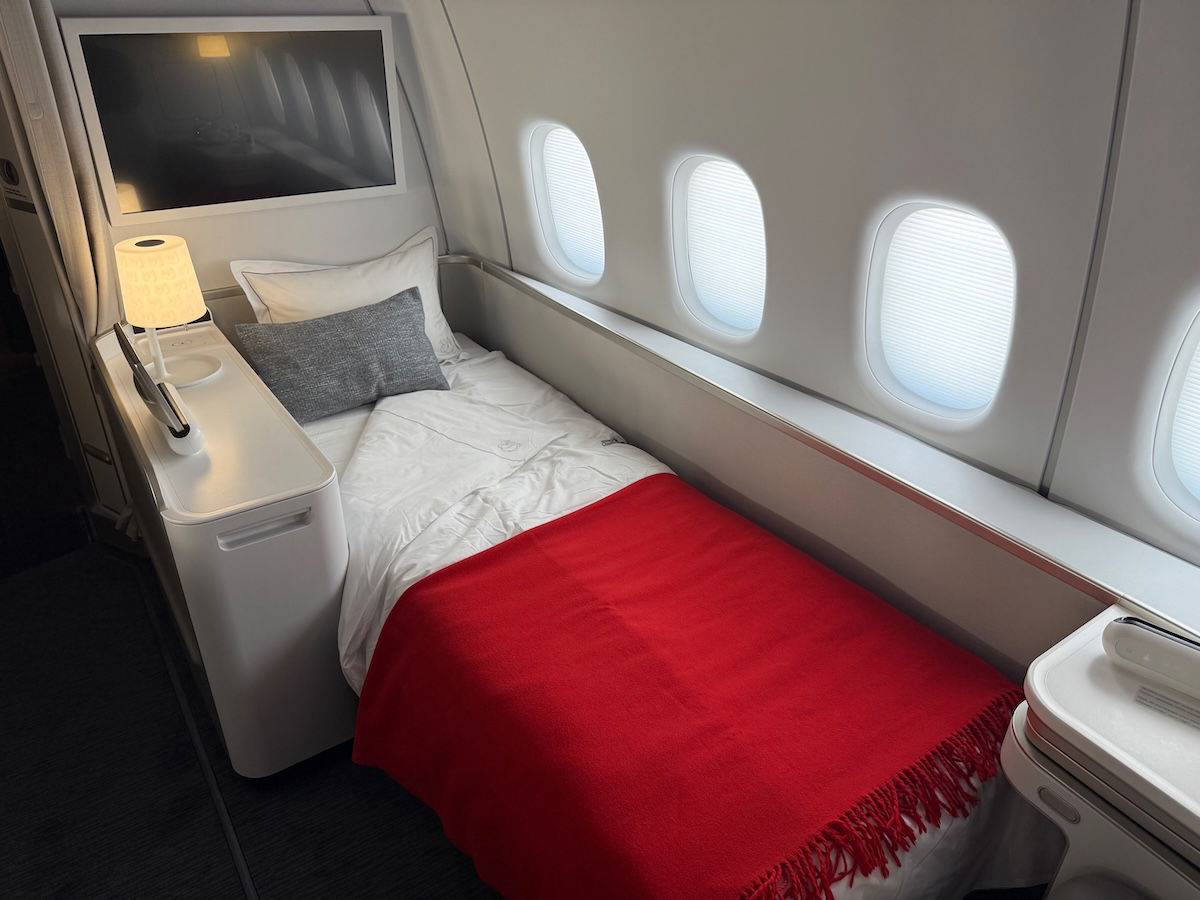
…not this.
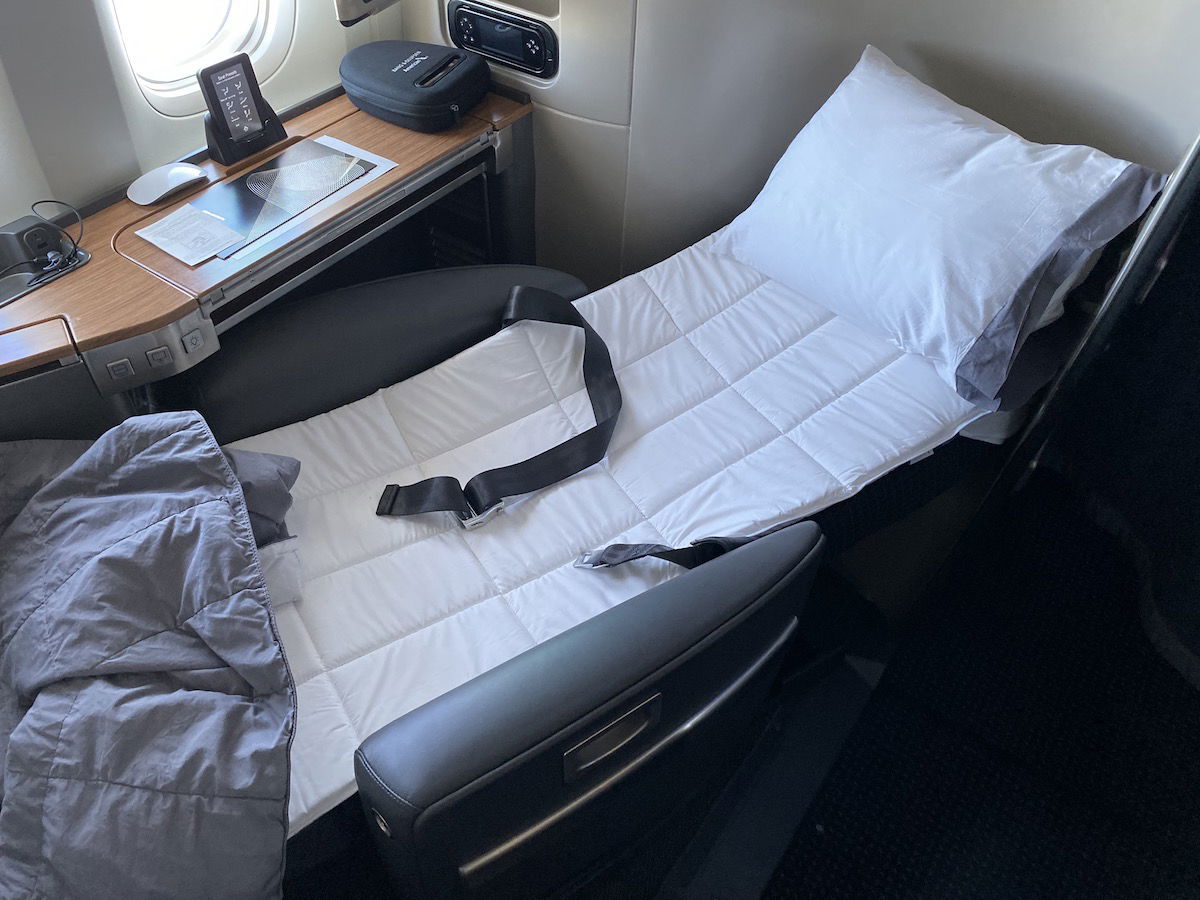
Why international first class has failed at US carriers
It’s no surprise that first class at US carriers has historically failed. In many ways, it reflects the failures of the industry from decades past. In other words, first class has long been thought of as “upgrade class,” rather than something actually worth paying for. US carriers have managed to change that narrative on domestic flights, but not so much on international flights.
What explains the failure of first class at US carriers? If you ask me, here are the main factors:
- First class cabins were simply too big, and on too many planes — American had eight first class seats on its 777-300ERs, and back in the day, had 16 first class seats on its 777-200ERs, and that’s just way too many planes with way too many first class seats
- First class was not a product worth paying for — in recent decades, first class at US carriers just hasn’t been sufficiently differentiated in terms of soft product, both in the air and on the ground
- First class couldn’t deliver consistently good service — this is related to the above point, but service at US airlines is consistently inconsistent, and it’s offensive to pay for something comparable to a Michelin three-star dining experience, and then get served by someone grumpy
- First class became employee class — I’m all for airline employees having their travel benefits, but when you just give away your first class product and never have empty seats, it definitely eliminates the sense of exclusivity, and it also minimizes the investment in the soft product (given how many people you’re giving it away to)
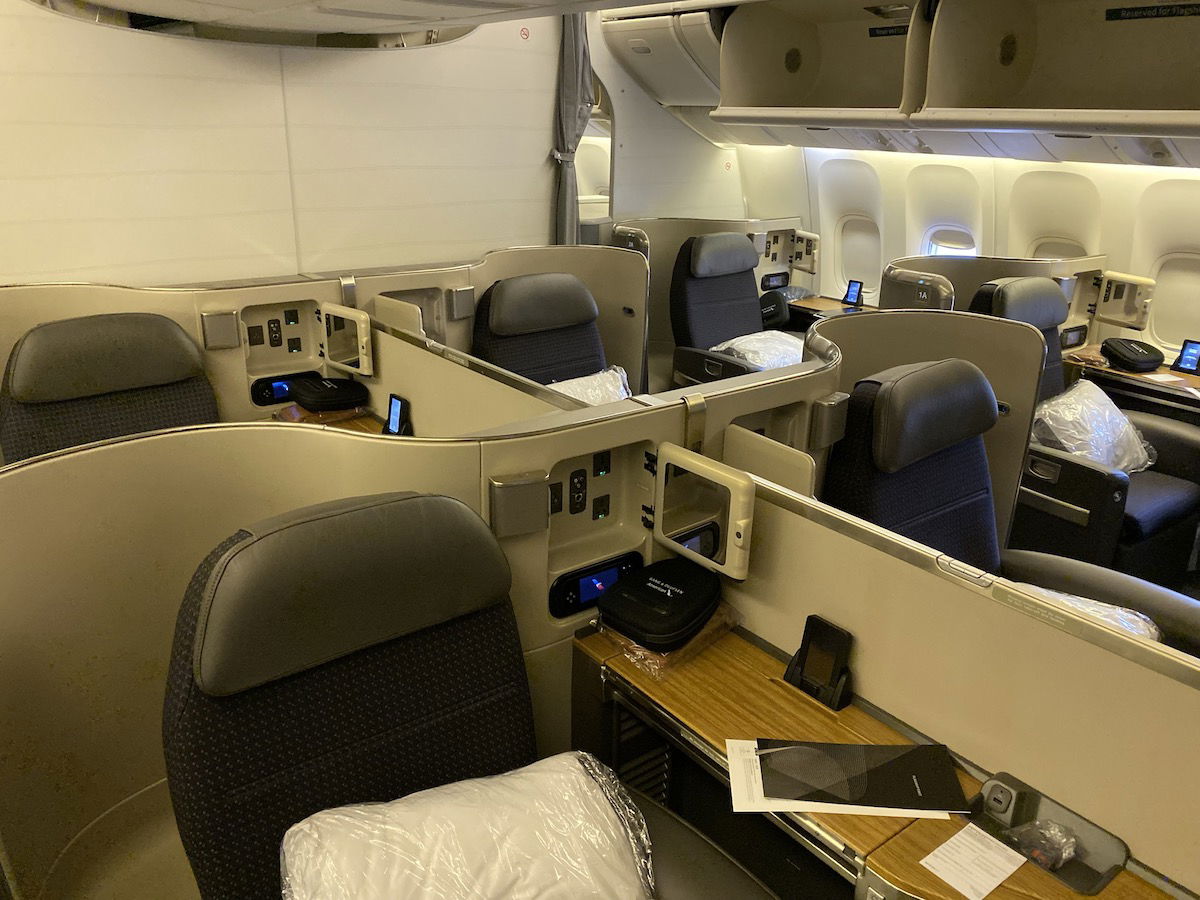
How first class could succeed at a US airline
Call it a hot take, but I think international first class absolutely could succeed at a US carrier, if done right, with a couple of caveats. Let me start with the two main hurdles that would need to be overcome, and I’ll acknowledge, this might just be the biggest issue:
- US carriers would have to find a way to staff first class with flight attendants who are actually professional and personable; you can’t have a top notch first class product, and then have surly people taking care of customers, so this would need to be some sort of butler levels of service (I know, the idea is probably dead on arrival)
- This cabin would be truly exclusive — no mileage upgrades, no reasonably priced award tickets, and no employees, so that the expectation is created that this is something that you actually pay for
If those hurdles could be overcome, here’s the play, as I see it (and yes, this is largely inspired by Air France La Premiere):
- You create a small first class cabin, with one row having a total of four seats
- You only introduce first class on a subset of the fleet, specifically flying in markets where strong point-to-point demand exists; we’re talking markets like Los Angeles and New York to London and Paris, and San Francisco to Hong Kong and Singapore, etc.
- You create a soft product that’s truly differentiated; we’re talking escorts every step of the way on the ground, private lounge spaces, use of PS facilities when available, and an onboard first class soft product that’s actually exceptional

I think the halo effect of something like this would be massive as well. Seriously, US airline executives love to talk about how premium they are, but they can’t even introduce a top-end product, despite having access to the most lucrative customer base in the world.
In terms of economics, let me also point out that the opportunity cost of a first class cabin isn’t actually that high. “Premium” is all the rage, so what you do here is eliminate some economy seats:
- The most premium planes at airlines fly to places like London year-round, and for several months of the year, economy load factors on transatlantic routes are dismal, as it’s all about premium demand
- The opportunity cost of a first class is whatever the cheapest economy fares would’ve been, assuming every single seat on the plane is empty
Bottom line
At this point, no airline from the United States offers first class on international flights anymore. For airlines that can’t stop talking about how unbelievably premium they are, I find that to be a pretty perplexing reality. I know that many people have just accepted “oh, a good business class is the future,” but I have a different take.
I think no US carrier actually being able to offer a globally competitive product is a failure in strategy and creativity. They have access to the world’s most lucrative customer base, and other airlines can seemingly make money serving US customers with a first class product. The issue is, US carriers have long not actually given people a reason to fly first class, all while offering too much capacity.
Personally I think there would be a lot of merit to an international first class product that’s boutique, and is operated in the right markets. That’s not to say that I think it’ll happen — I don’t — but I do think it could succeed. The only real hurdle to overcome would be how to ensure good service…
What’s your take on the possible merit of US carriers offering first class?