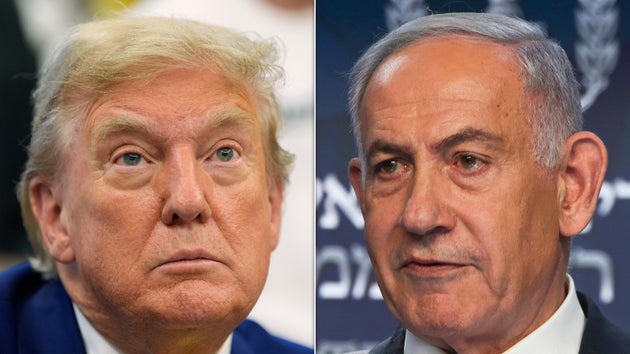
 Donald Trump and Benjamin Netanyahu
Donald Trump is currently considering whether to join Israel in bombing Iran – a seismic decision which could cause chaos across the Middle East and beyond.
The UK is particularly nervous to see what the mercurial president does next, knowing that there may well be pressure for Britain to assist America, as one of its closest allies.
So as much of the West and the Middle East nervously await news from the White House, here’s a look back at just how we ended up on this knife-edge…
Why has Israel been bombing Iran?
Israel claims it had no option but to attack Iran because Tehran was close to developing nuclear weapons.
The Fordo nuclear site is one of two facilities where Iran can enrich uranium. It’s build into a mountain for safety, 124 miles south of Tehran.
While the facility has been hit by Israel’s recent attacks, it’s thought the Israeli Defence Force (IDF) was actually trying to weaken Iran’s defence capabilities around the facility.
Only one conventional weapon could actually destroy the fortified site, and it belong to the US.
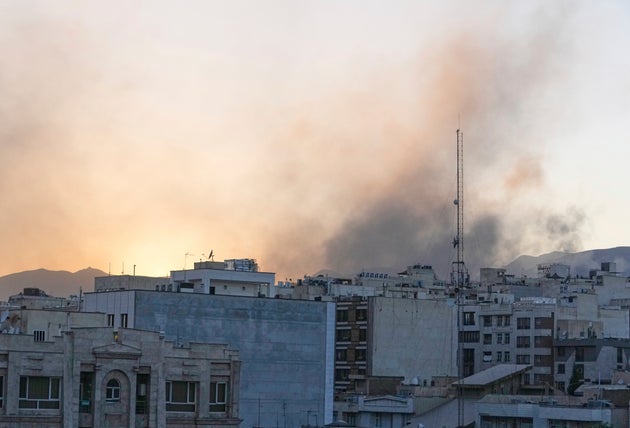 Smoke rises up after Israel’s attack, in Tehran, Iran, Wednesday, June 18, 2025.
 Is Iran on the cusp of developing a nuclear bomb?
It’s not clear.
To build such a bomb, a country would need to have uranium enriched to 90%, the ability to build a warhead and a way to direct that warhead to an end point.
While Iran is definitely working on some nuclear capabilities, it has always insisted that its nuclear programme is peaceful.
In March, Trump’s director of national intelligence Tulsi Gabbard told Congress that “while Iran had an unprecedented stockpile of weapons-grade uranium, it did not appear to be building a nuclear weapon”.
But Trump has dismissed this intelligence.
Israel has also claimed “over the past few months intelligence has shown that Iran is closer than ever to obtaining a nuclear weapon”.
Meanwhile, the UN’s nuclear watchdog, the International Atomic Energy Agency (IAEA) announced earlier this month that Iran had breached its non-proliferation obligations for the first time in almost two decades.
It concluded that Iran has amassed around 400kg of uranium enriched to 60% – that’s more than is required for civil nuclear use.
Is Israel a nuclear power?
Israel is believed to have up to 90 nuclear warheads, but the country has not confirmed or denied whether that is true.
Israel is also not part of the global nuclear non-proliferation treaty meant to prevent more countries – like Iran – from building their own weapons.
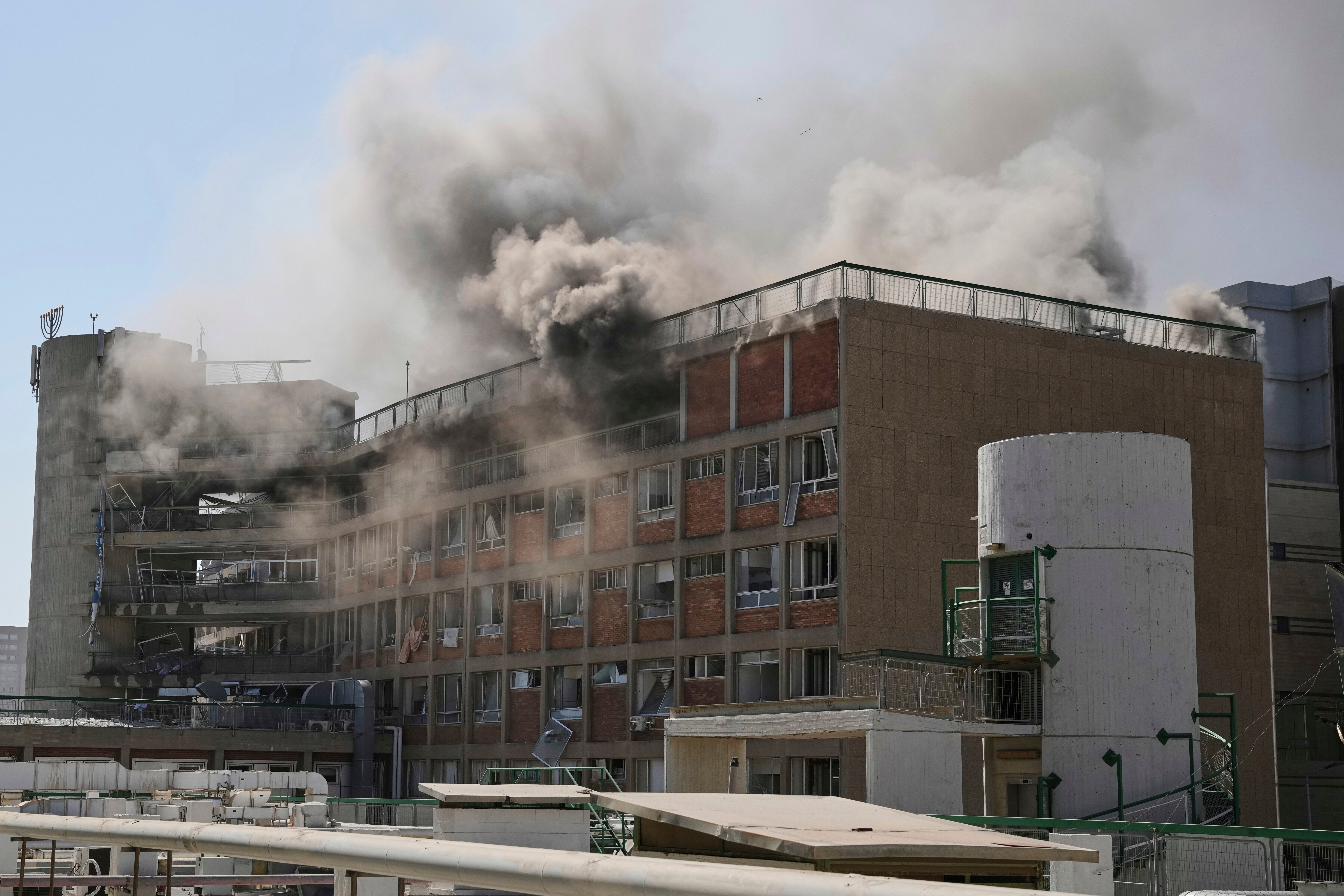
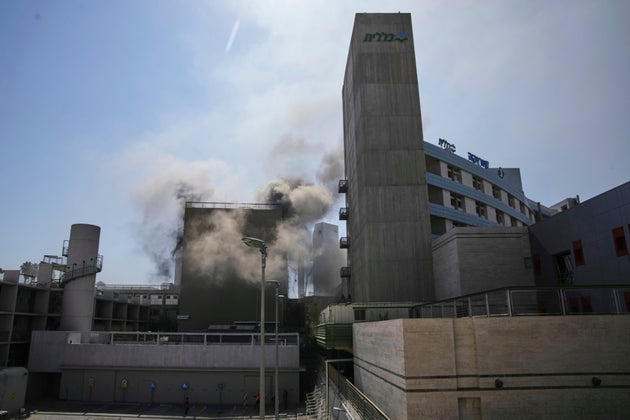 Smokes raises from a building of the Soroka hospital complex after it was hit by a missile fired from Iran in Beersheba, Israel, Thursday, June 19, 2025.
Why were there already tensions between Israel and Iran?
Tensions in the Middle East rose sharply in October 2023 when Iranian-backed militants Hamas crossed from Gaza into Israel and killed 1,200 people, taking a further 250 captive.
Israel declared war on Hamas, launched a ground offensive and imposed a blockade on aid heading into the Palestinian territory.
The Hamas-run health ministry say at least 54,000 people have been killed in Gaza since the war began.
After Israel declared war, other Iranian proxies – like Houthi rebels in Yemen and Hezbollah in Lebanon – began to fight Israel.
The US, Israel’s most powerful friend, has helped to subdue these attacks in recent months, while other allies like the UK, continue to send Israel weapons.
Iran is also weakened after the deposition of Syria’s leader Bashar al-Assad, although that was not a result of Israeli actions.
What was Iran’s nuclear deal – and why did it fall apart?
The Joint Comprehensive Plan of Action (JCPOA), also known as the Iran nuclear deal, was put in place in 2015.
Iran agreed with the US, UK, France, China, Russia and Germany to limit its sensitive nuclear activities and allow international inspectors in to monitor their work.
In exchange, world powers would lift the economic sanctions it placed on the country.
The deal was due to expire in 2031 but it began to fall apart in May 2018 when Trump pulled out.
He claimed the accord was “defective at its core” and reinstated all US sanctions on Iran.
Trump wanted to force Tehran into a tougher deal which would limit Iran’s involvement in regional conflicts.
Iran rejected that plan even as the sanctions triggered a recession and skyrocketing inflation.
In 2019, Tehran began to exceed the deal’s restrictions on its nuclear programme, blaming the US for its own “non-performance”.
Joe Biden tried to revive the JCPOA in 2021 when he was elected as president, but Iran said it was waiting for the US to lift sanctions first.
When he left office and Trump was re-elected, the US was expected to resume nuclear talks with Iran this month.
However, Israel’s recent strikes have set back any potential talks.
Why would the US (and possibly the UK) join the regional conflict?
Trump initially called for de-escalation, but he has also called for Iran’s “unconditional surrender” and threatened to attack its supreme leader whom he claims is an “easy target”.
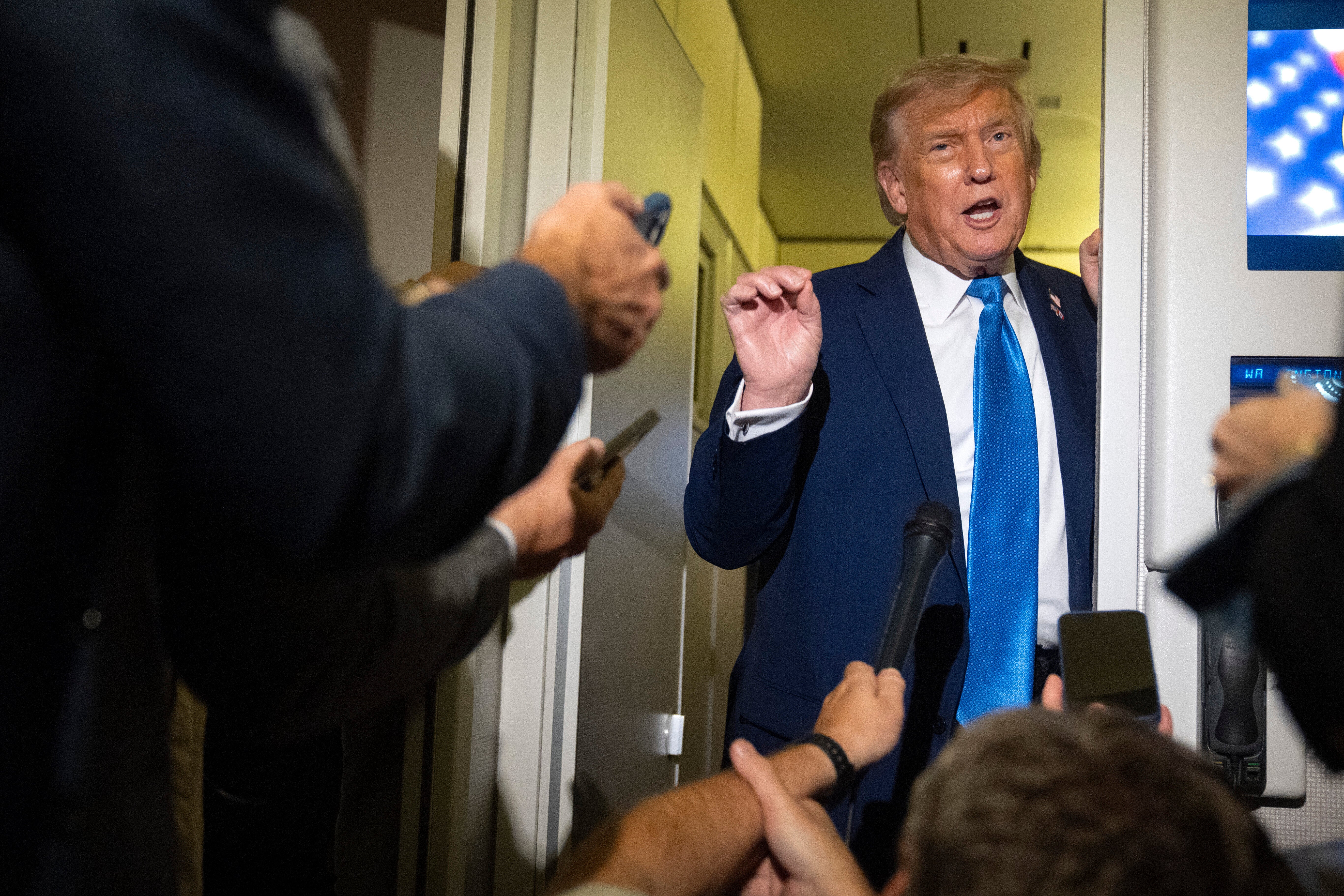
Asked if he would join in with the attacks, Trump said on Wednesday night: “I may do it, I may not do it. Nobody knows what I’m going to do.”
The US may seek the UK’s permission to use the British airbase in the Chagos Islands to launch its mission.
But Trump risks putting American lives at risk if he does target Iran.
There are about 40-50,000 US troops at around 19 locations across the Middle East who could be vulnerable to attack.
Related…