
The Pantone colour of the year for 2026 is white. It’s called Cloud Dancer, which is described as a “lofty white”. This choice reflects a growing trend away from colour in our visual world.
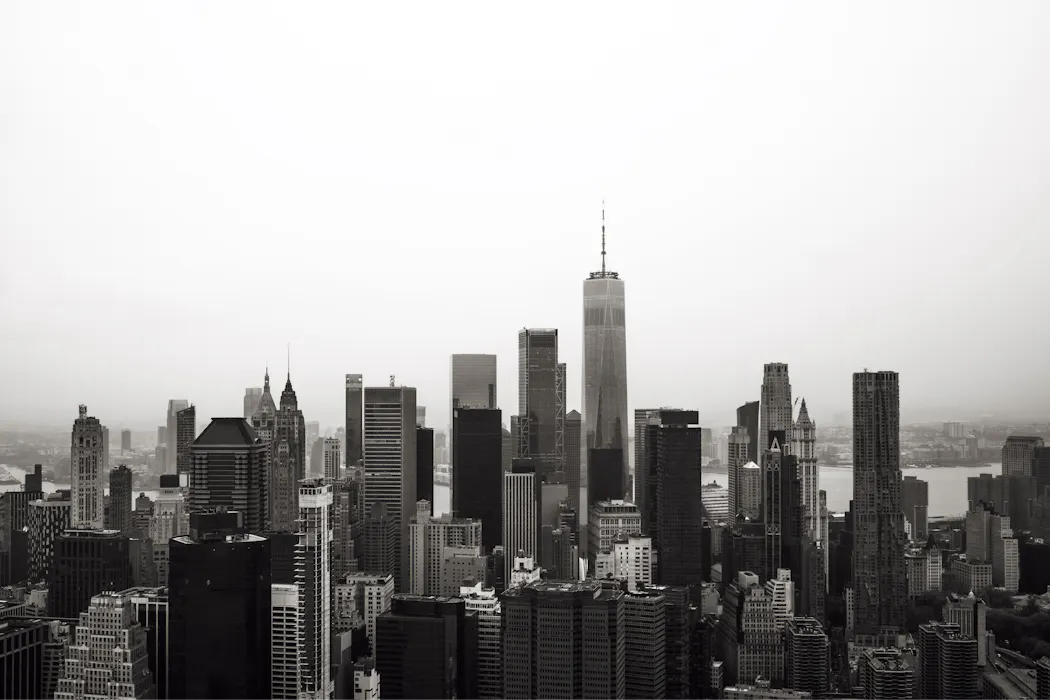
You might have noticed this yourself. Where an area once had a distinct sense of place we are seeing more cookie cutter developments popping up. Take the London borough of Elephant and Castle, which has seen billions of pounds of development in recent years. The area has gone from a Latin American enclave full of distinct and varied buildings to what Oli Mould, professor of social, cultural and historical geography, has warned is an “identikit homogeneous gentrified place”, which risks “destroying the very thing that makes a community thriving and beautiful in the first place”.“
There is a similar increasing sense of uniformity and sameness in urban design around the world. In 1993, architect Rem Koolhaas travelled 360,000km around the world, observing the rationalisation of urban design (the movement towards efficiency rather than creativity in the process) through what he termed the “generic city”. Functional, efficient, but colourless.
Algorithms of taste
This trajectory towards blandness is reinforced and sustained by the increasing tendency to allow algorithms to mediate the choices we make. This has the effect of
training perspectives to converge in “a strong pull toward sameness”.
Algorithms make predictions based upon our choices, from music to home furnishings. The algorithm takes that choice and suggests similar products based upon it, ultimately reinforcing and producing a monotonous and generic aesthetic taste. For instance, like a pop song by Sabrina Carpenter, you will then get served a lot of songs exactly like it until you find your Spotify Wrapped says that you are in the top listeners of something they’ve bafflingly called “Pink Pilates Princess Strut Pop”.
These sorts of algorithms in turn reinforce the production of products to meet those generic tastes, ultimately flattening the diversity of creative work, in everything from the songs we listen to to the urban surroundings in which we live.
Algorithmically driven taste results in a monoculture where art, pets and everything in between are chosen to match the generic palette of an algorithmic world.
New Africa/Shutterstock
This generic algorithmic taste is also having an impact at the design stage, particularly where metrics and investment desires overwhelm other considerations. Environments are increasingly considered by key decision makers like developers not in terms of their contribution to lived experience and cultural life, but as investment objects or financial assets, readily translated and transacted. The result is a flattening not only of our visual environment but also our engagement with that environment. And this loss is significant for our social wellbeing.
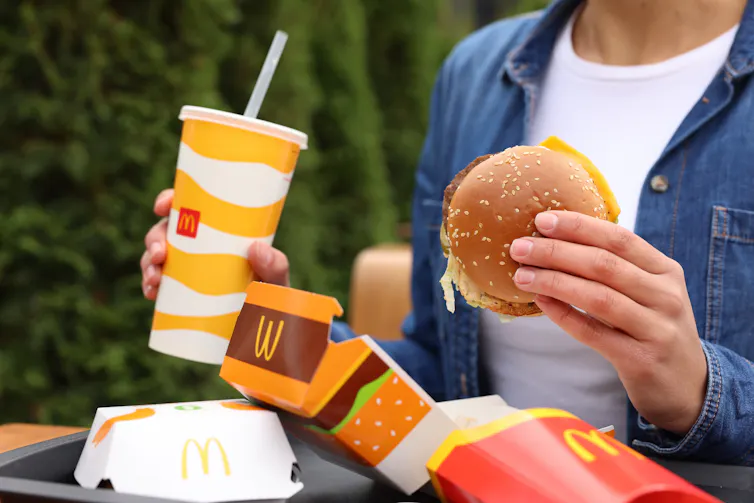
Back in 1983, the American sociologist George Ritzer introduced the concept of the “McDonaldization” of society to explain the business rationalisation of moving the design process towards faster, easier to manage, cheaper and more predictable outcomes. Like a McDonald’s burger, the production process becomes standardised. The burger is the same no matter where in the world you have one. Ritzer describes this happening in environments across a range of examples from restaurants to hospitals.
Ritzer acknowledged some of the advantages, like cost saving and customers knowing what to expect. However, the main problem he identified with this streamlining is there is no space for experimentation or personality because creativity and design are organised around efficiency. In this control of process we paradoxically lose control because we lose choice and creativity.
Living in colour
The issue goes beyond a loss of control of our spaces. The loss of colour is also a loss of expression. My work in law and aesthetics includes exploration of aesthetic welfare and the link between aesthetic experience and wellbeing. This includes how colour and expression in our built environment and surrounding spaces affects people.
Over 50 years ago, the American philosopher Monroe Beardsley introduced the concept of “aesthetic welfare” to explain the quality and availability of aesthetic experience through our environment, including colour and the impact it has on social and cultural wellbeing and resilience.
Attention to colour in our surroundings is linked to environmental enrichment as well as social and cultural participation through that environment. One study observed that students exposed to art under controlled experimental conditions expressed and engaged with colour differently from those without such experiences, consistent with the “pivotal role” of colour “in visual communication and emotional expression”.
Lack of opportunities to engage with colour and contrast in our environment risk making us less able to understand, appreciate, and use colour effectively. And this is particularly concerning if the primary way in which colour is otherwise delivered into our lives is through screens.
It is perhaps no coincidence that an idiom for malaise is to be “off-colour”. We need to move away from rational design and stop letting algorithms make our choices. We need to live in more colour.

Johanna Gibson does not work for, consult, own shares in or receive funding from any company or organisation that would benefit from this article, and has disclosed no relevant affiliations beyond their academic appointment.