

This might seem like a rather niche topic to cover in my first week at OMAAT, but after Ben mentioned this story in his intro article, I thought it made sense to follow up fast with an explainer.
As a flag carrier of the 3rd most populous nation in South America, I went into my flight with them at the start of the year expecting some pretty standard things: enjoying my SkyTeam benefits, lounge access, and, most importantly of all for someone living out of a suitcase, checked bag allowance.
However, I quickly discovered that the airline is basically an ultra-low-cost airline masquerading as a full-service carrier.
Why I booked Aerolíneas Argentinas in the first place
I needed to get from Buenos Aires to Mendoza for a friend’s 40th birthday celebrations. Options were pretty limited, with nonstop flights available with either JetSmart or, indeed, Aerolíneas Argentinas. I try to avoid low-cost airlines when possible, because, quite simply, I enjoy the flying experience, and low-cost airlines tend to suck every enjoyable element out of it.
Other pros to booking Aerolíneas Argentinas, personally:
- I’d never flown the airline before, and I love trying out new ones
- I’d enjoy the perks of said Flying Blue status (which at the time was Platinum)
- A checked bag would be included in my redemption ticket
After researching my options, I used Flying Blue Miles to book two single tickets from Buenos Aires Jorge Newbery Aeroparque Airport (AEP) to Mendoza’s El Plumerillo Airport (MDZ).
I booked using Flying Blue Miles, which was the only fairly simple part
I can’t remember how much the fares were when I was planning the trip, but each one-way flight cost a total of 7,500 miles and less than $10 in taxes and fees.
Looking now at example fares for January next year, round-trips for Aerolíneas’ lowest and most restrictive fare category (more on that to come) start at around $120.
Aerolíneas Argentinas’ scammy bag policy
I know it’s not a hard-and-fast rule, but I’ve come to expect that, most of the time, the baggage allowance listed on the booking confirmation is correct. This is often true with redemptions, such as British Airways, which notably offers and acknowledges a 23 kg baggage allowance when redeeming Avios, even for a short-haul flight in economy.
The confirmation email I received clearly noted 1x checked bag with a 23 kg limit.
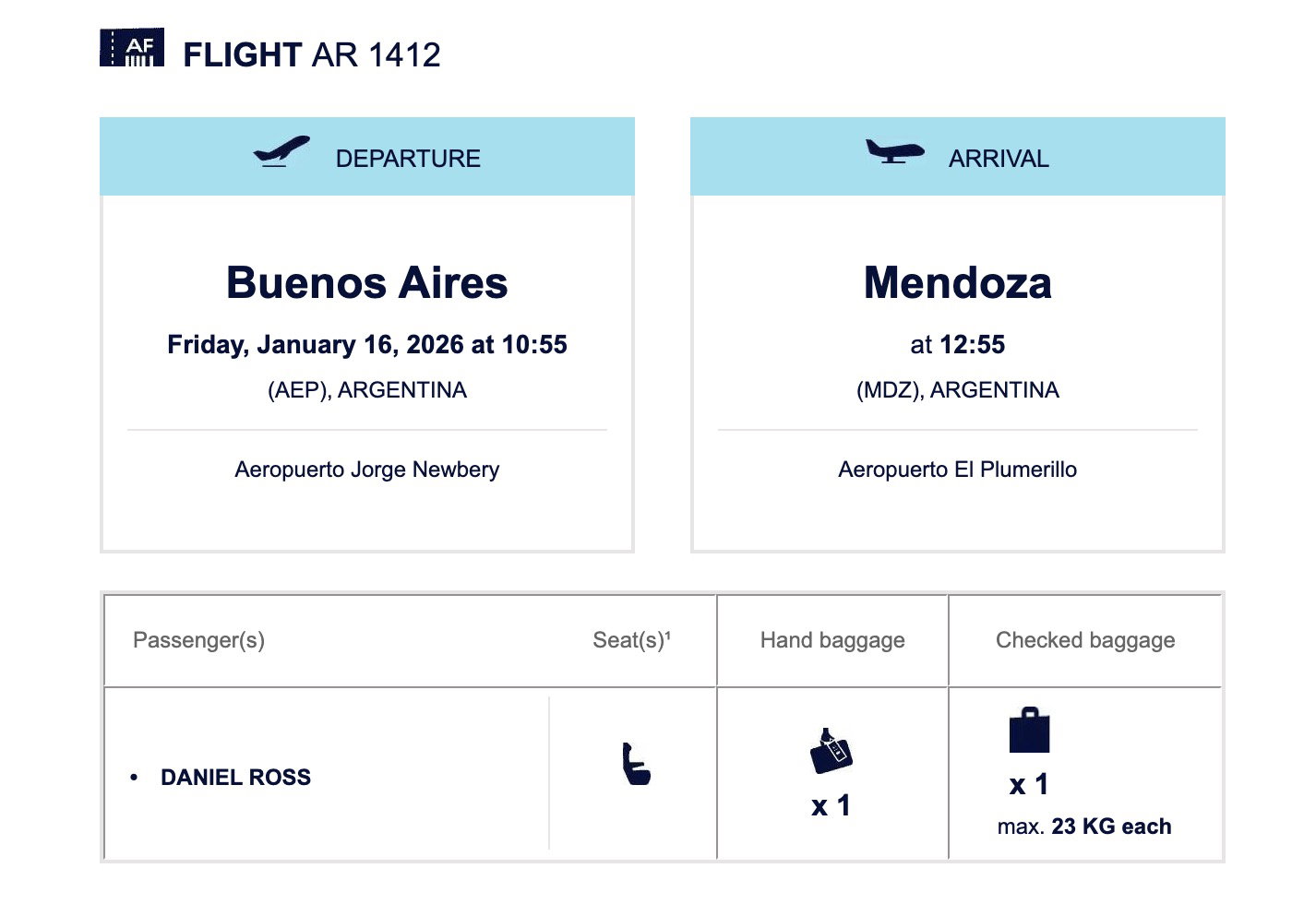
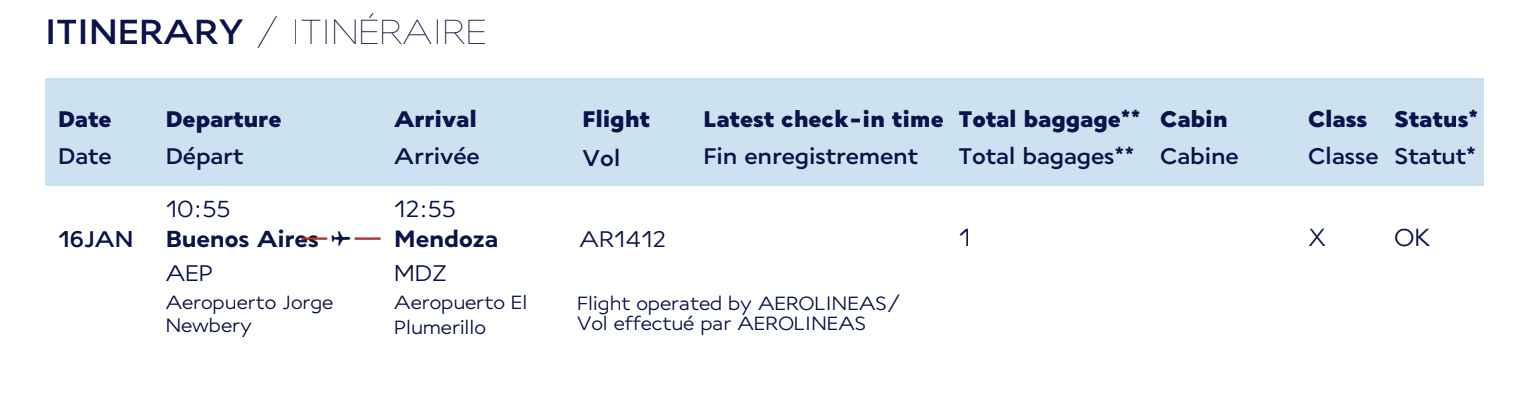
Again, the attached PDF stated that I’d have 1x checked bag included.
As the Argentinian scamsters would have it, I learned at check-in that the airline has a 15 kg weight limit for checked bags on domestic flights. I tried to plead my case and showed the rather unhelpful check-in agent my booking confirmation, but he basically said, “That means nothing.”
So they weigh your bag, give you a ticket, and then you have to exit the terminal building and find this little cashier where they collect their scammy little earnings. And what better place to proudly display a “SkyTeam Alliance Member” sign at the very desk where the airline also proudly collects baggage fees from SkyTeam elite status holders, even when traveling on award tickets?
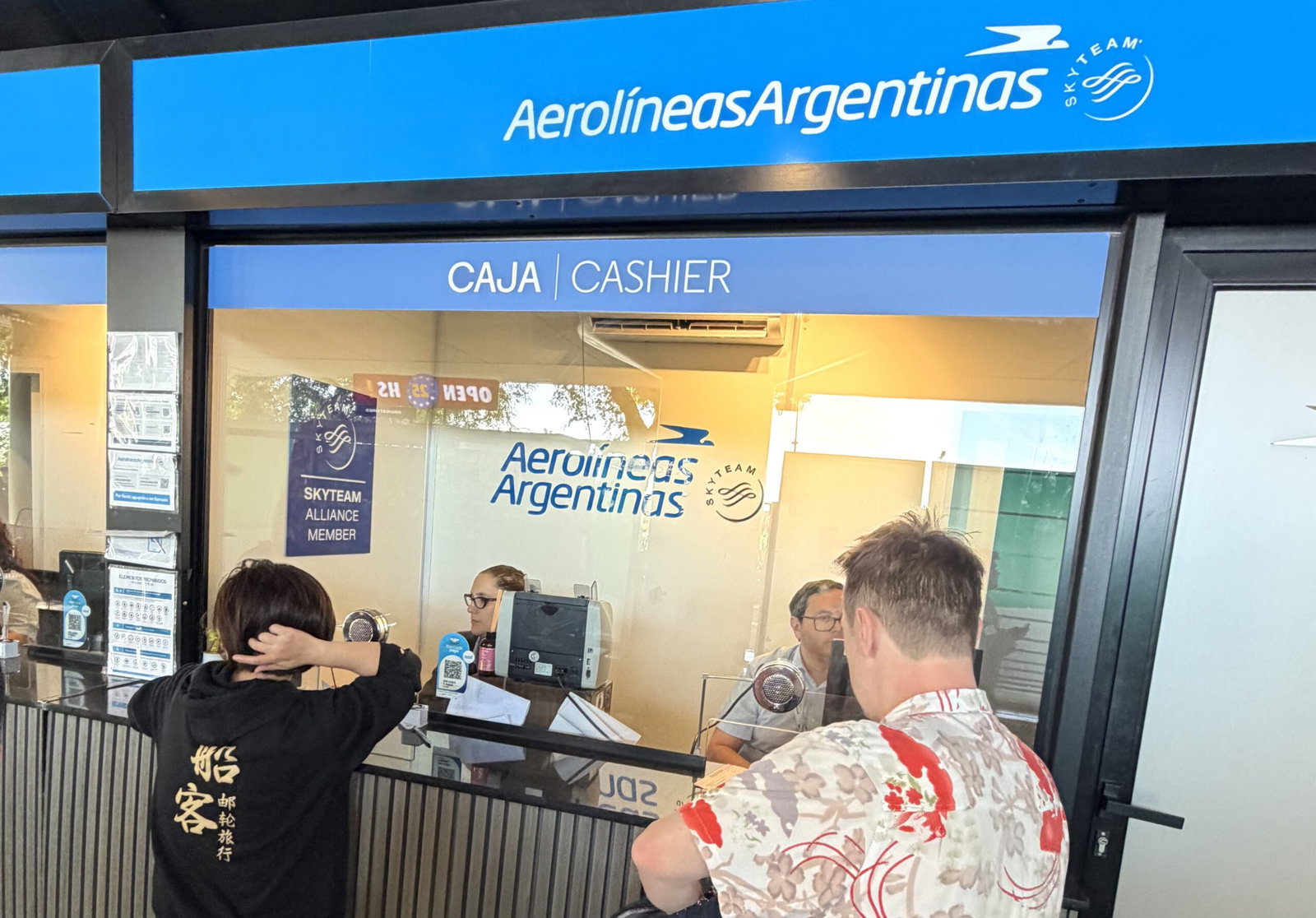
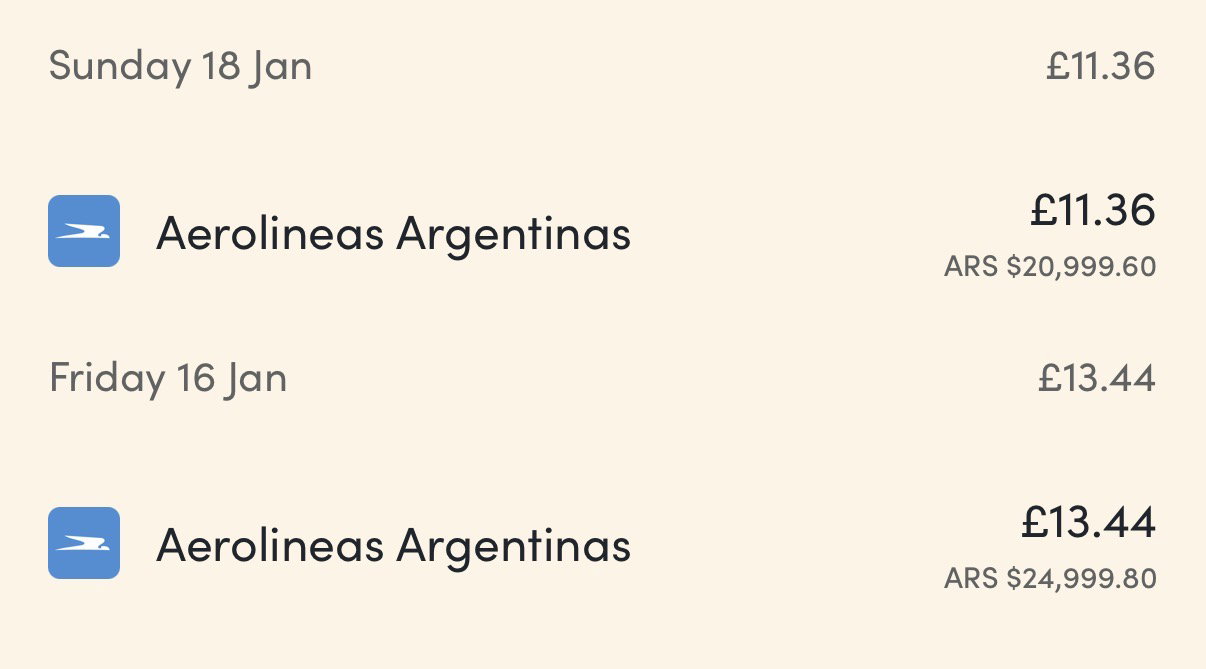
Once I’d been charged the fee of around $17, I had to join another queue back inside and show them I’d paid for the extra weight before they’d dispatch my bag. You might look at the $32 in fees I paid and think, “What is he complaining about?” But this isn’t about the actual amount of money; it’s the principle.
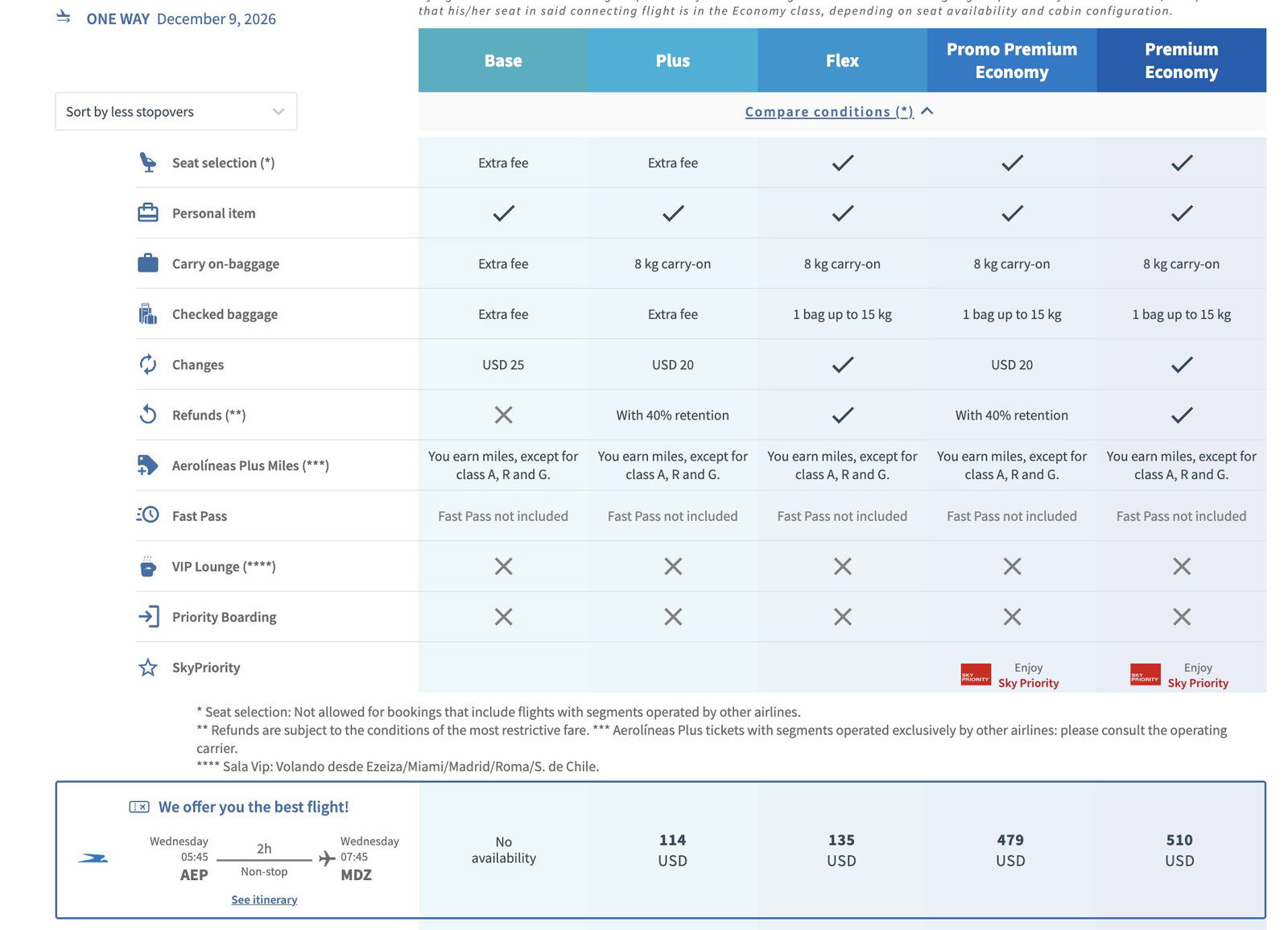
Only after the debacle did I learn the extent of Aerolíneas Argentinas’ domestic fare restrictions. Imagine paying $510 (more than 4 times the cheapest fare) for a “premium economy” ticket and still only getting 15 kg checked baggage allowance, no Fast Pass, no priority boarding (what?), and no lounge access. The latter isn’t such a big deal as Aerolíneas Argentinas doesn’t even have its own lounge at AEP. The real kicker is that Aerolíneas restricts SkyTeam‘s Sky Priority benefits to its 2 most expensive fares.
I didn’t feel like a valued SkyTeam Plus member
Airline loyalty is really important to me, and I generally value it more than the ability to redeem miles. Maybe I’ll get into that another day…
Things got off to a fairly normal start when I saw the Sky Priority check-in kiosks at Aeroparque.
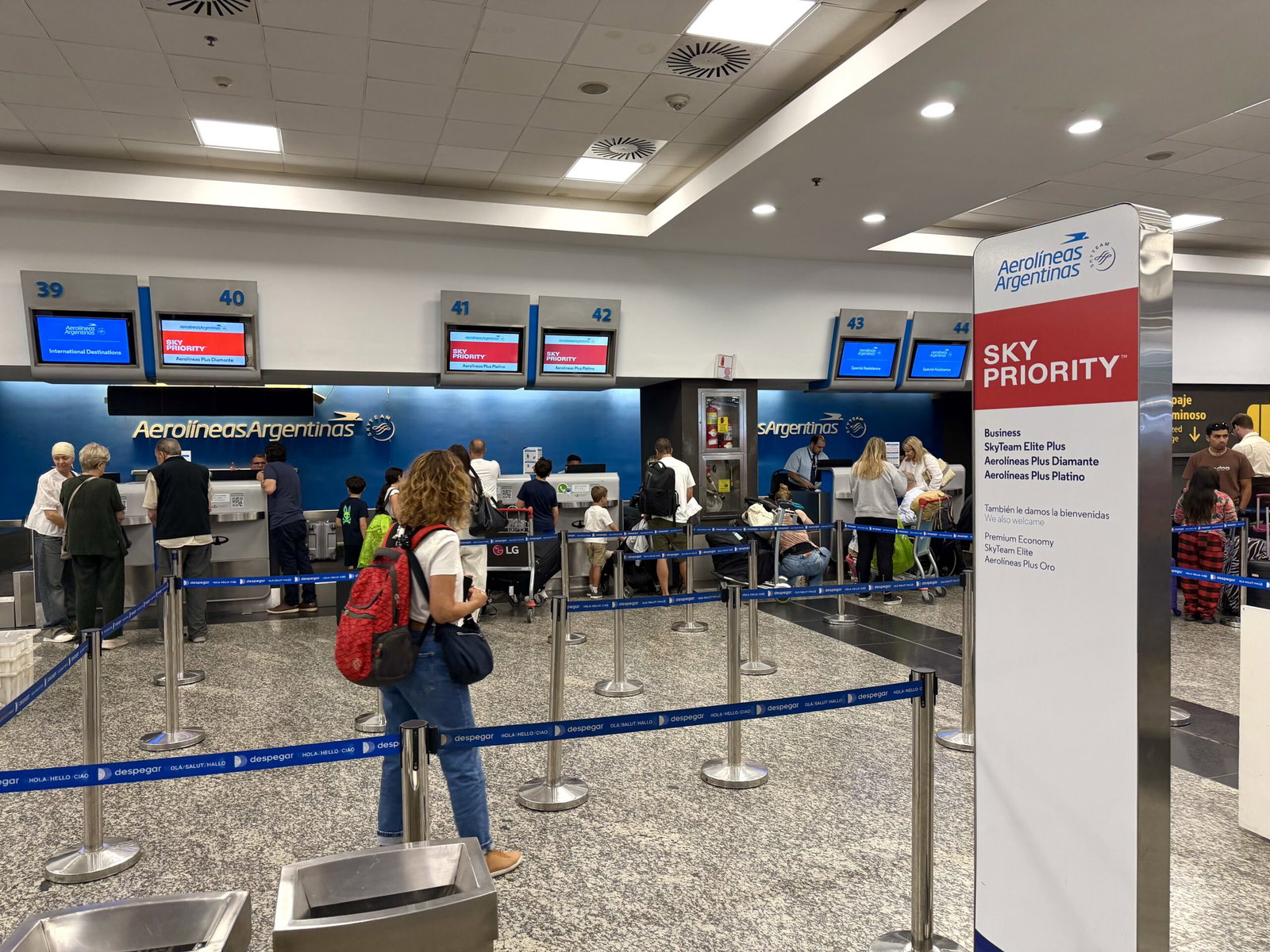
That feeling of normalcy lasted as long as it took me to get from the sign to the aforementioned conversation about the checked bag situation at the desk. Despite my very best efforts combining my Castilian Spanish and Geordie charm (we’re called Geordies where I’m from in the North East of England), the man at the check-in desk seemed to take real pleasure in explaining that the checked bag rules on my booking confirmation were irrelevant and I’d have to pay the fee.
For what it’s worth, Sky Priority check-in was also available at Mendoza.
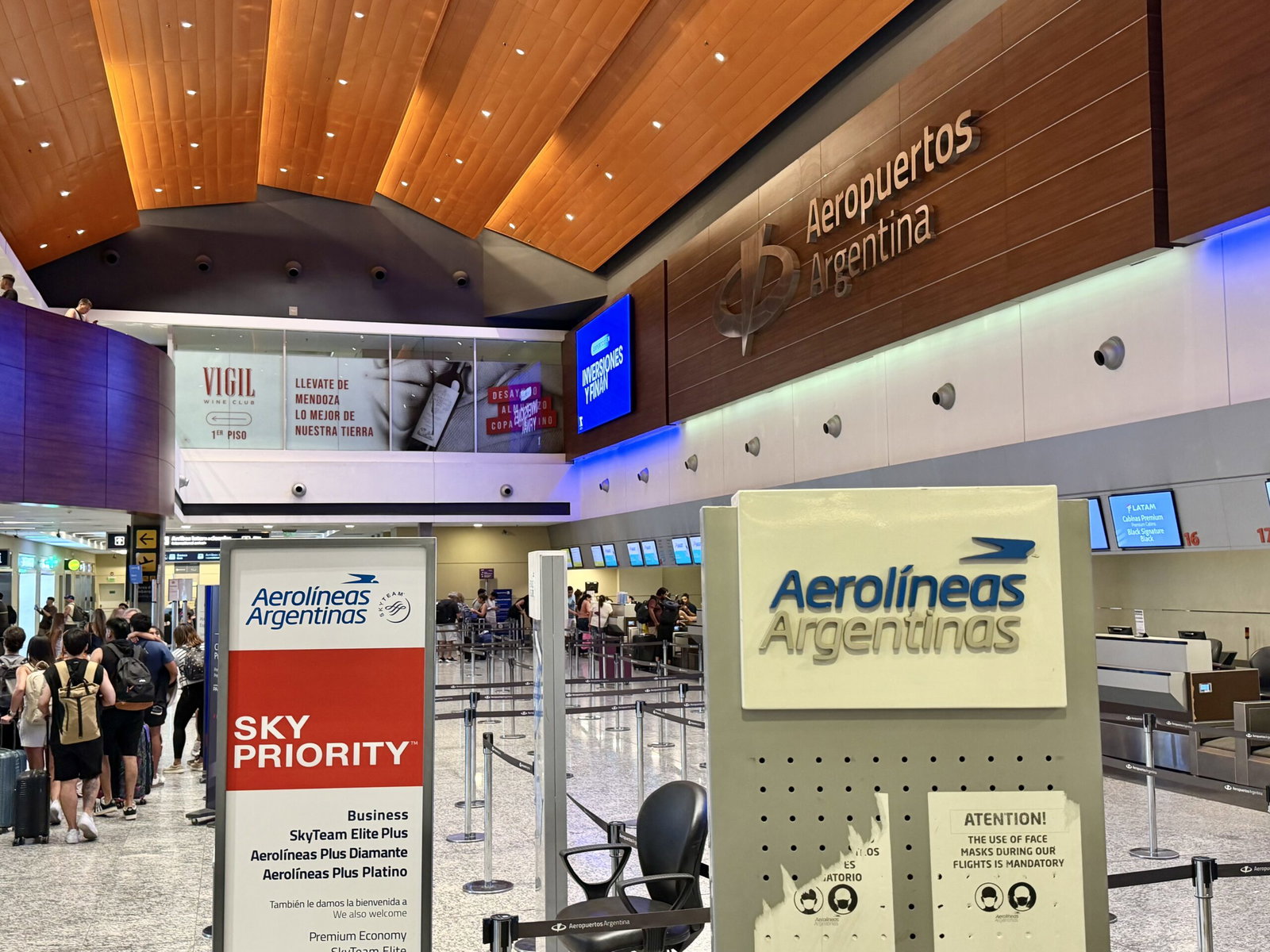
Being nickel-and-dimed for a checked bag by a flag carrier airline is shameful.
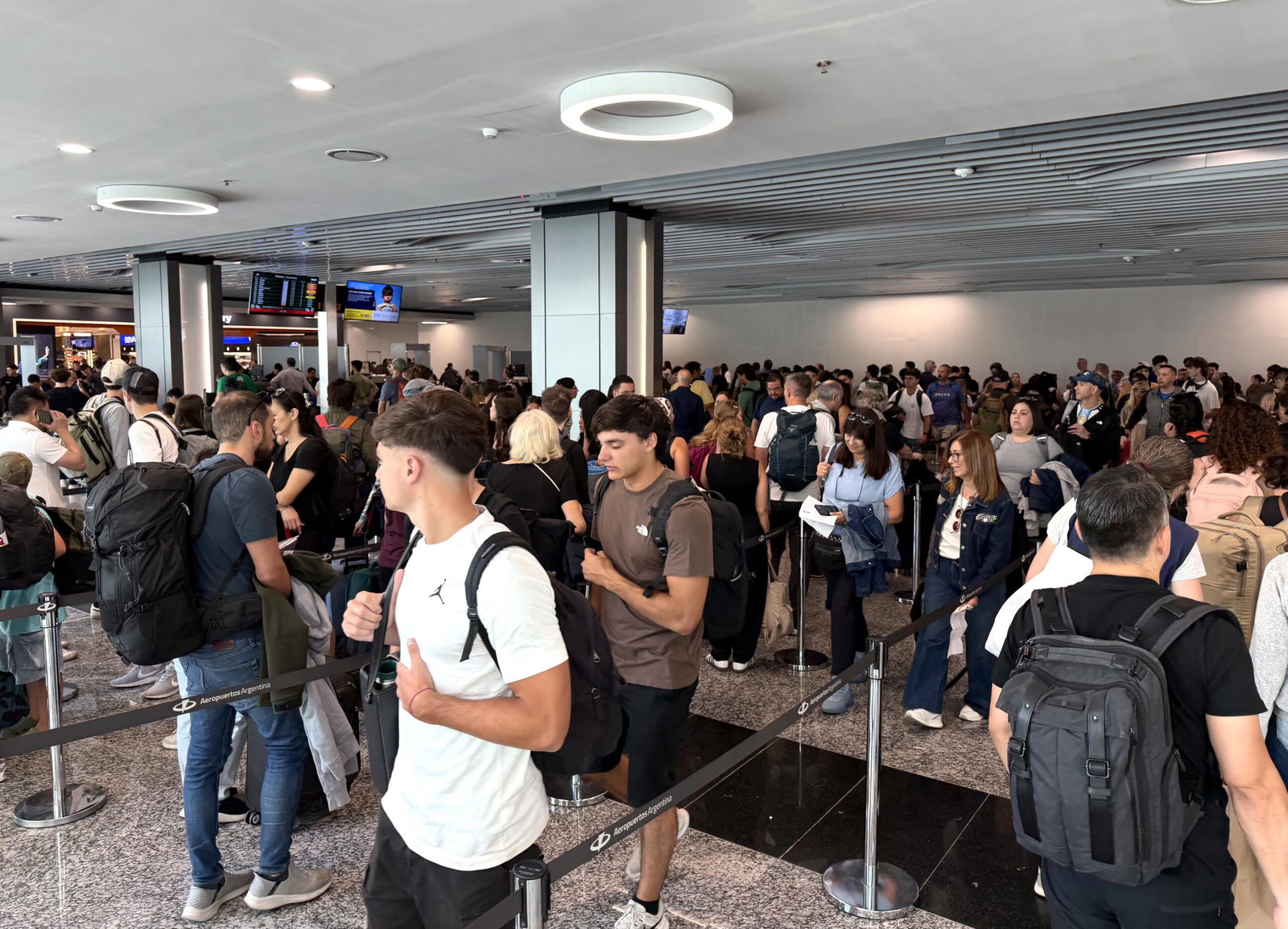
Back at Aeroparque, there was no fast track, and the security line was ridiculously long. That said, it’s rare in South America to have fast track lanes. For example, no matter whether you’re flying economy or first class (even Air France La Première), everyone waits in the same line to clear pre-departure passport control at São Paulo’s Guarulhos.
Thanks to my Priority Pass, I did have access to the surprisingly nice AMAE lounge in the national departures part of the airport.
The planes were dirty, outdated, and covered in advertising
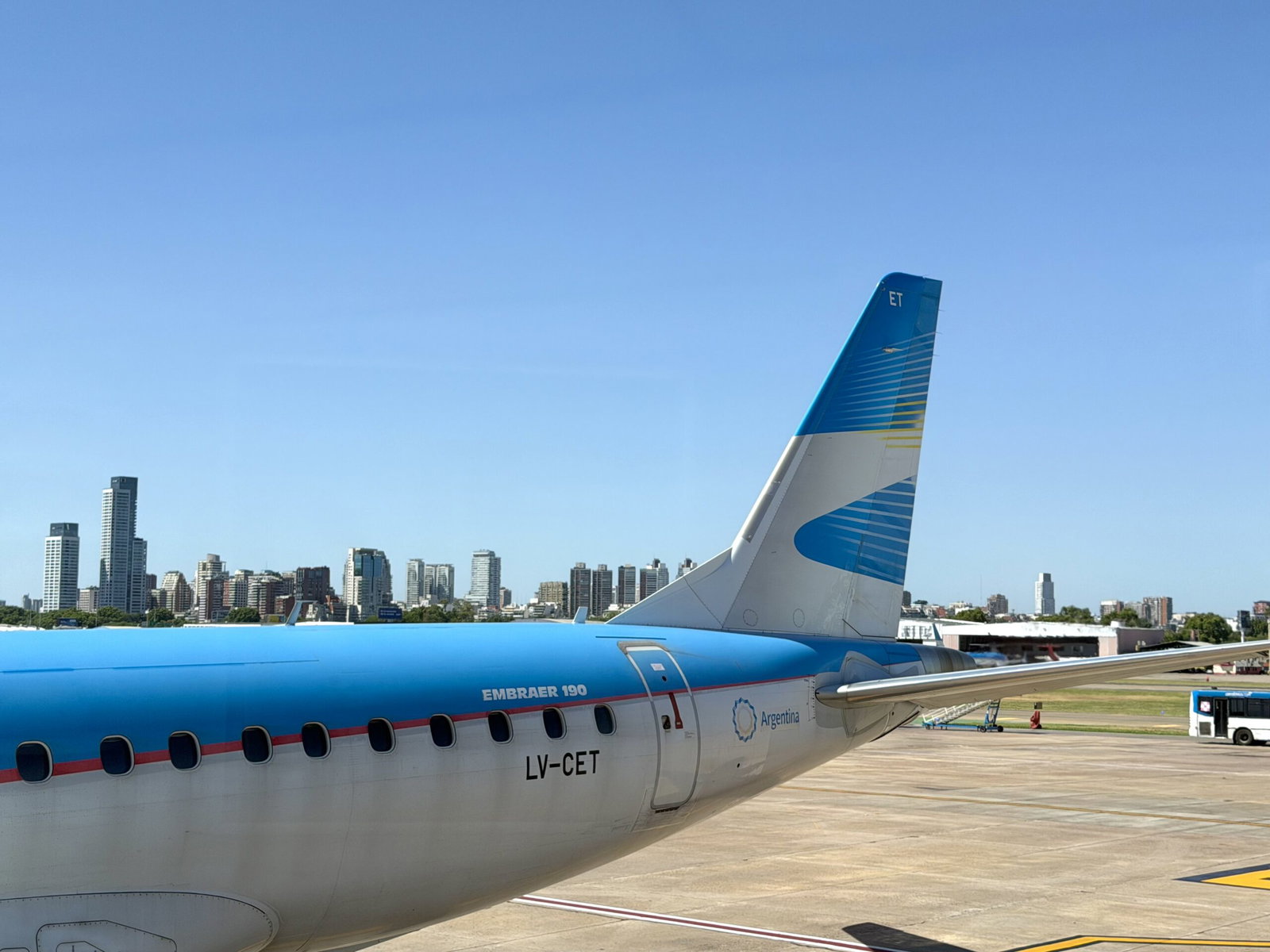
Even from the outside, my 15-year-old Embraer 190 looked like it had seen better days. The zebra-striped dirt streaks running from each window suggested this place hadn’t been washed or hit the maintenance hangar for a while.
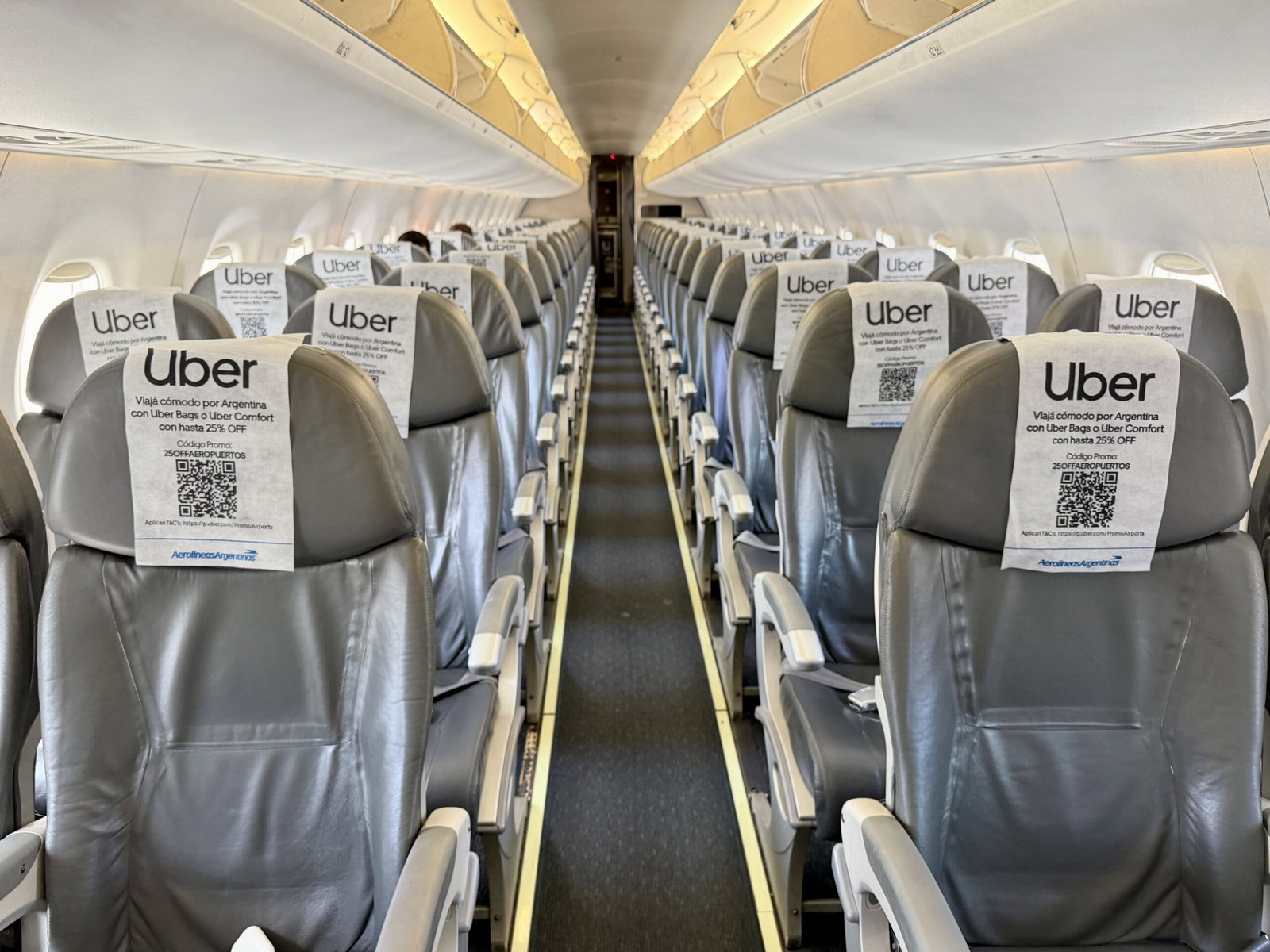
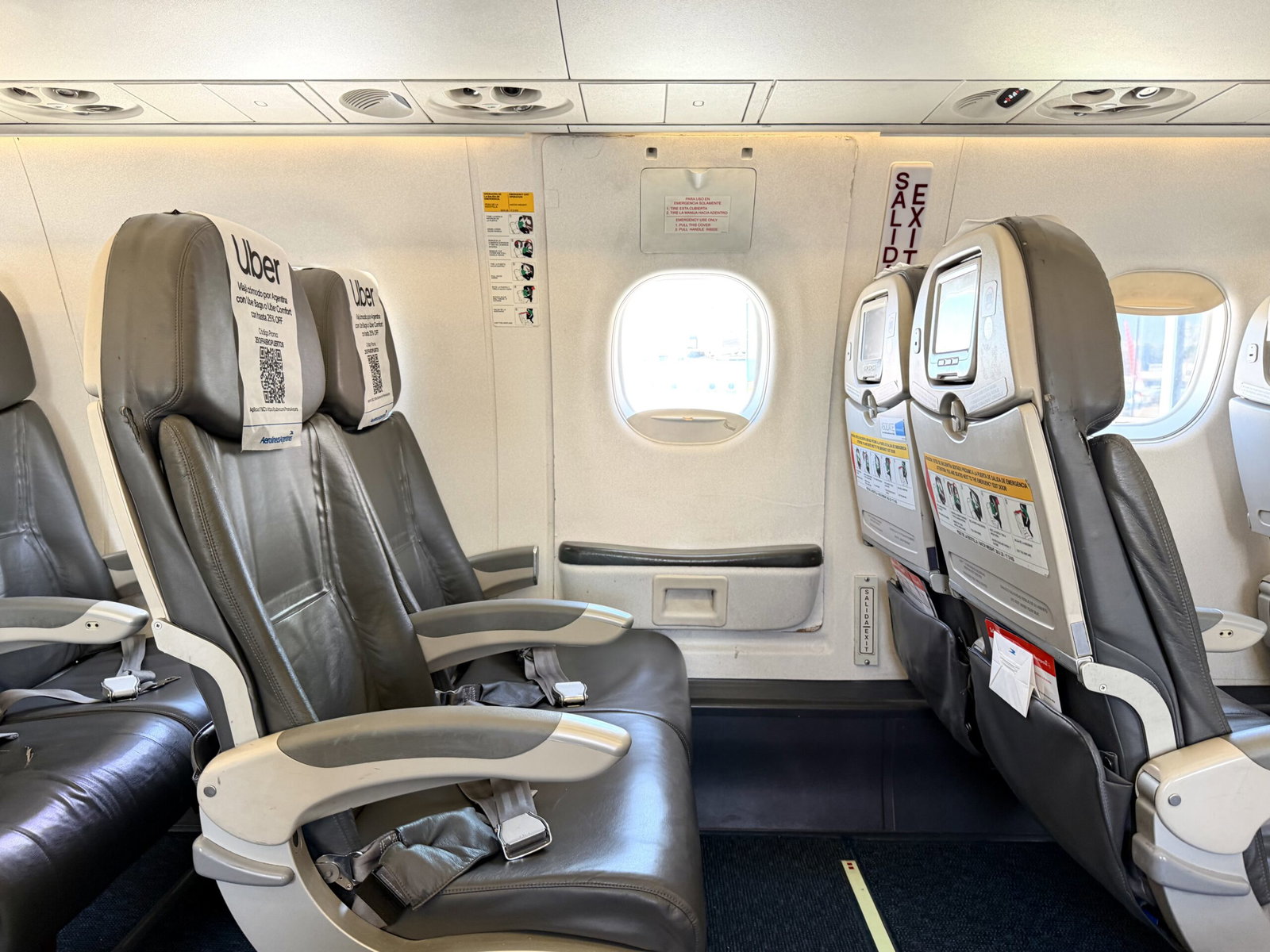
Inside the Embraer, however, could have been a lot worse. The older seats had thick padding, and despite being a small 2-2-configured cabin, it felt bright and spacious.
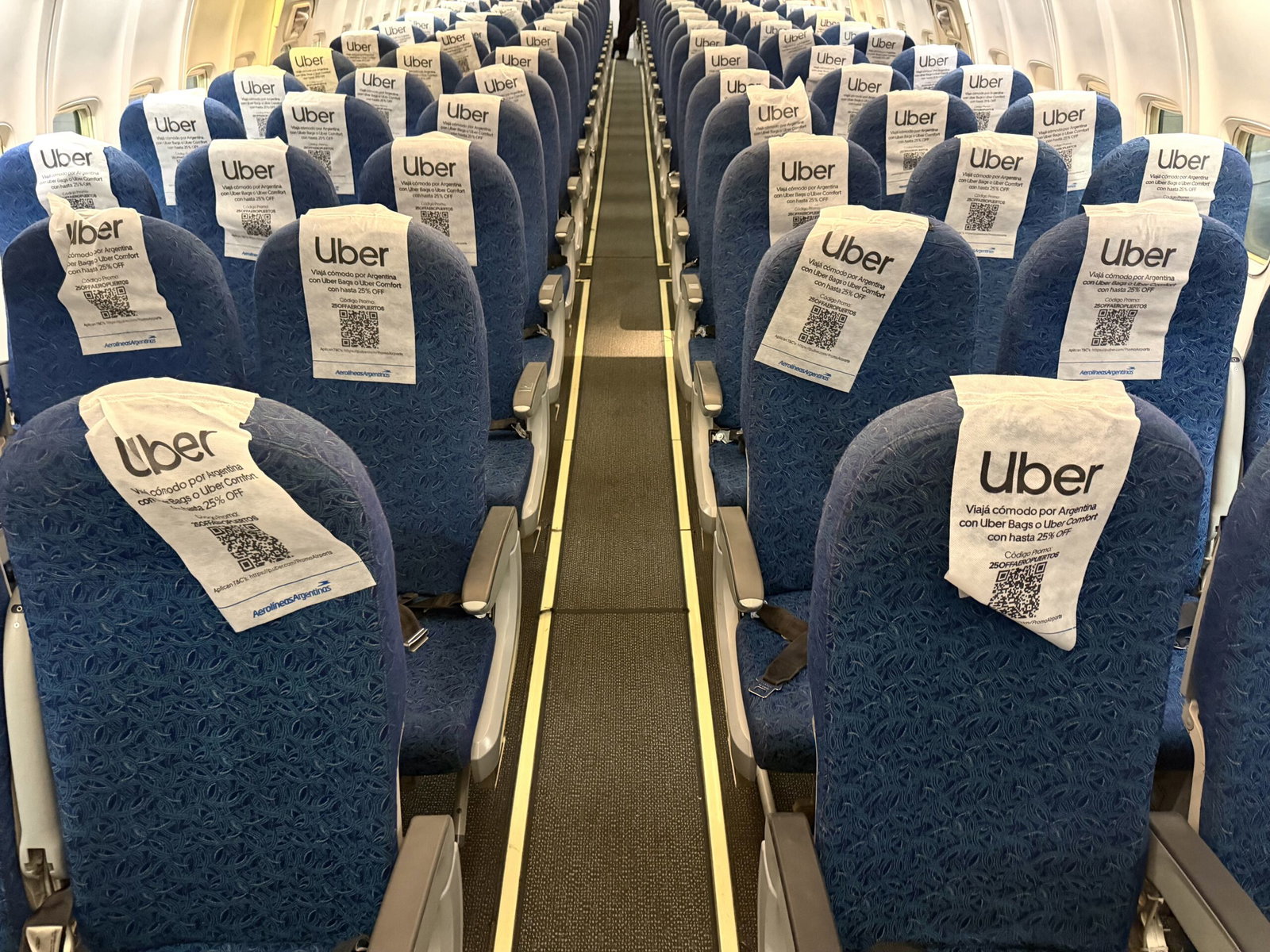
It was the Uber advertising on every single headrest that I found most jarring.
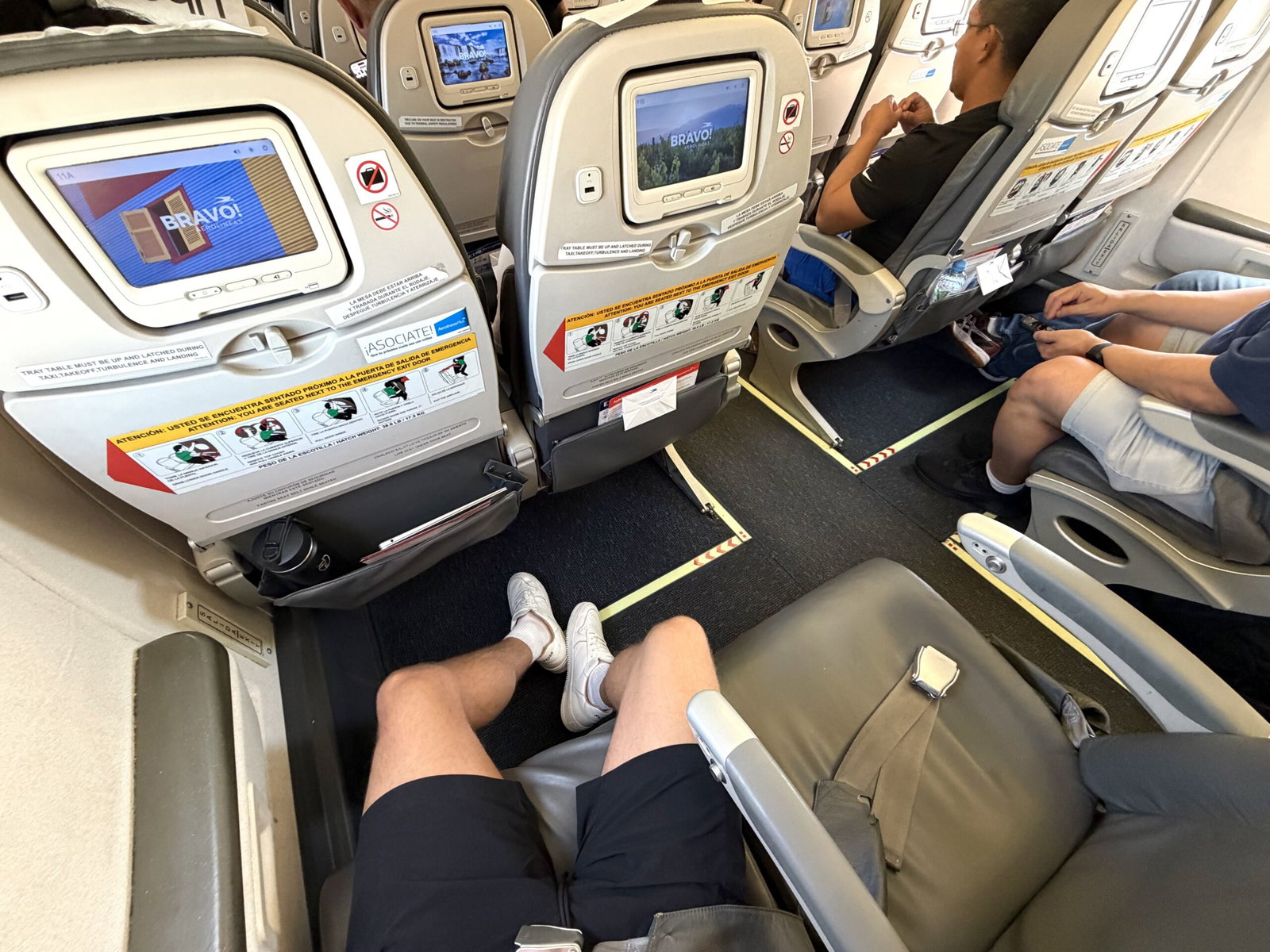
The legroom was decent, too. The retro seatback screens, on the other hand, were pretty much redundant.
It was stepping on board the 16-year-old Boeing 737-700 back to Buenos Aires that Aerolíneas Argentinas’ low-costness was most glaring. Looking at this, I would never guess this place belonged to a flag carrier. The seats were very uncomfortable, and I think I remember they didn’t recline either.
As for service, I don’t recall it being particularly good or particularly bad. Forgettable is probably the most accurate word.
Bottom line
Imagine the likes of Spirit (RIP) or Ryanair calling itself a national flag carrier; that’s basically what Aerolíneas Argentinas is. I’m planning a trip with my dad and brother for February next year that includes Argentina, and I will actively avoid flying Aerolíneas, even if it means forgoing the chance to earn any Flying Blue miles and XPs.
It’s almost as if the airline has been abandoned. After all, the only real competition is low-cost airlines at LATAM — the full-service carrier which dominates South America. Who knows, maybe things will change come 2028 when it takes delivery of new Airbus A330-900s and Boeing 737 MAXs.
If I were a power that be at SkyTeam, I’d definitely remove the airline from the alliance. And if I had my way, Aerolíneas Argentinas would be bought by LATAM, and the cherry on top would be LATAM joining SkyTeam. I should probably put a business case together for that…
