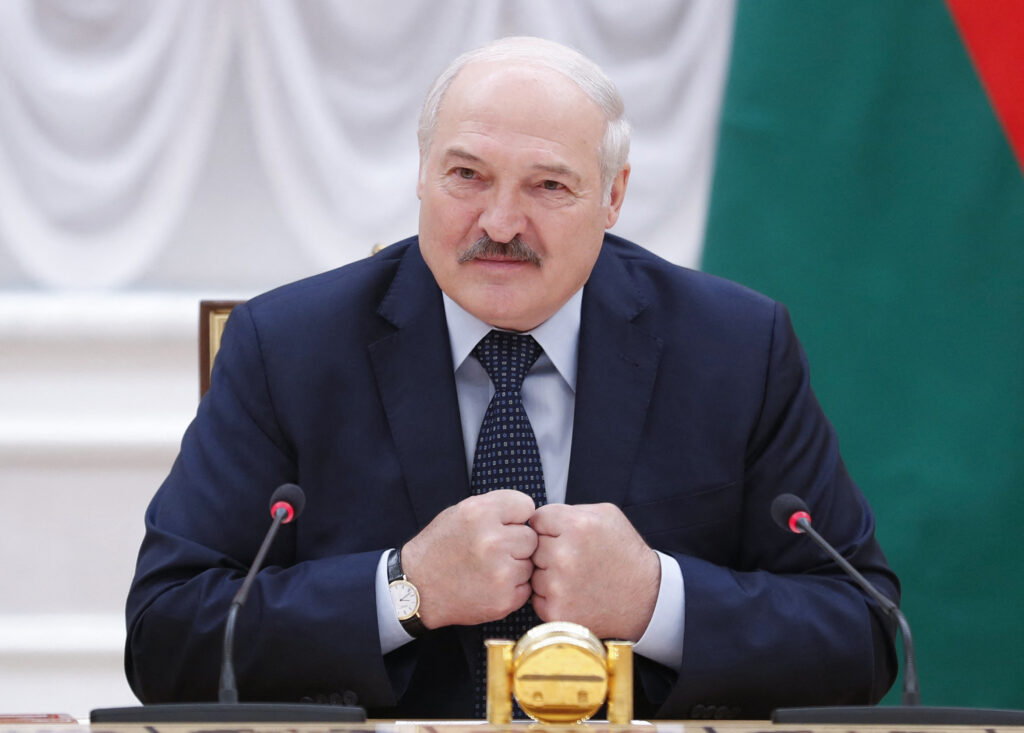

A Lancashire county councillor will be questioned by police next week about a post he shared on social media.
County Cllr Michael Lavalette – the independent member for the Preston Central division – will attend what he says has been described to him as a “voluntary police interview” on Monday (28 July).
It is understood at least two complaints were made to Lancashire Constabulary about a Facebook post in which he captioned an image of a demonstration against the ongoing war in Gaza with the words: “There is only one solution Intifada, Revolution”.
Read more: Lancashire’s Reform UK leader joins body speaking on behalf of local authorities
The statement quoted chants from the rally, which appeared in a video he had filmed at the event in London last month.
The Arab word “intifada” has a varied history and is defined by Encyclopedia Britannica as an “uprising or rebellion”. In English, however, it is most commonly associated with two periods of Palestinian uprising against Israeli occupation of the West Bank and Gaza Strip – which collectively resulted in more than 6,000 deaths on both sides of the conflict.
County Cllr Lavalette says the claim being made against him is that his use of the term amounted to “advocating violence against Jews”, which he says he “completely” denies.
“In my view, there’s no reasonable person who would look at my post and think that that was a call for an anti-Jewish pogrom.
“I do not believe that I have said anything that is remotely racist or antisemitic at all – and I will absolutely fight that. I’m a proud anti-racist.
“I think this is a clear breach of freedom of speech – they’re trying to close down people’s freedom of speech,” he told the LDRS.
However, Jeremy Dable, the Jewish community representative on Preston’s Faith Covenant, said he was “deeply angered” and felt “harassed and threatened” by the use of the word intifada, because of its “unambiguous historical association with periods of murderous violence against Jews”.
He added that the post came against the backdrop of a time when it was “getting increasingly difficult for a Jew to stand for office or to work in any form of education or to be a member of the health services – and announce that you’re Jewish”.
It is understood that the caption also prompted multiple complaints to Lancashire County Council from the wider Jewish community across the North West. However, the LDRS can reveal that these have been dismissed, because they were made from a personal social media account and not in a councillor capacity.
A spokesperson for the authority said it “does not endorse the views expressed” and that it had reminded County Cllr Lavalette – who sits as part of the Progressive Alliance official opposition at County Hall, made up of independent and Green Party members – of his “responsibilities in public office.”
Meanwhile, a spokesperson for Lancashire Police said: “We can confirm we have received a complaint related to a social media post on Facebook. An investigation is under way and enquiries ongoing.”
In Arabic, “intifada” has been applied to various popular protest movements that stop short of a revolution, according to Encyclopedia Britannica – including the 1952 uprising against the monarchy in Iraq and the bread riots in Egypt in 1977.
It has, however, been used “primarily within the context of the Israeli-Palestinian conflict” – to describe Palestinian uprisings – since the first period in that struggle to be defined as an intifada, between 1987 and 1993.
There were almost 2,000 deaths as a result of the ensuing violence, with the ratio of Palestinian to Israeli fatalities being slightly more than three to one.
A second, more violent, intifada followed from 2000-2005, in which the death toll came to around 4,300. The proportion of victims was split along similar lines, between Palestinians and Israelis, as the first.
Jeremy Dable says the two Palestinian intifadas chimed with the “historical definition” of the term, with both being characterised by violence.

“A defining feature [of the second intifada] was the targeting of public spaces, such as buses, where suicide bombings became routine,” he says.
“What it meant in Israel was that if you had two children going to school, you would send them on separate buses in the hope that at least one of them would come home alive. That’s intifada to me.”
However, County Cllr Lavalette told the LDRS that while he accepted “people can have their own interpretations”, the “technical translation” of the word is “a shaking off of the structures of oppression”.
“It is like the word ‘revolution’ or ‘resistance’ – that can mean anything. Resistance can mean walking along, protesting…[or] linking arms with somebody. And I suppose for some, in the Second World War, it can mean…attacking the Nazis.
“So there’s a spectrum of…actions that come from that – and the word doesn’t narrowly [boil] down to anything.”
Subscribe: Keep in touch directly with the latest headlines from Blog Preston, join our WhatsApp channel and subscribe for our twice-a-week email newsletter. Both free and direct to your phone and inbox.
Read more: See the latest Preston news and headlines